Kinohi Nishikawa – författare
Visar alla böcker från författaren Kinohi Nishikawa. Handla med fri frakt och snabb leverans.
4 produkter
4 produkter
Häftad, Engelska, 2019
294 kr
Skickas inom 5-8 vardagar
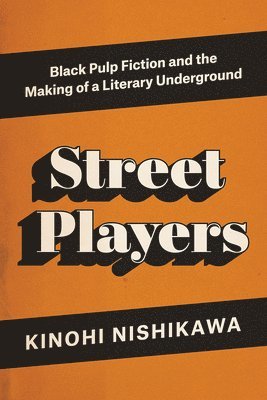
The uncontested center of the black pulp fiction universe for more than four decades was the Los Angeles publisher Holloway House. From the late 1960s until it closed in 2008, Holloway House specialized in cheap paperbacks with page-turning narratives featuring black protagonists in crime stories, conspiracy thrillers, prison novels, and Westerns. From Iceberg Slim’s Pimp to Donald Goines’s Never Die Alone, the thread that tied all of these books together—and made them distinct from the majority of American pulp—was an unfailing veneration of black masculinity. Zeroing in on Holloway House, Street Players explores how this world of black pulp fiction was produced, received, and recreated over time and across different communities of readers.Kinohi Nishikawa contends that black pulp fiction was built on white readers’ fears of the feminization of society—and the appeal of black masculinity as a way to counter it. In essence, it was the original form of blaxploitation: a strategy of mass-marketing race to suit the reactionary fantasies of a white audience. But while chauvinism and misogyny remained troubling yet constitutive aspects of this literature, from 1973 onward, Holloway House moved away from publishing sleaze for a white audience to publishing solely for black readers. The standard account of this literary phenomenon is based almost entirely on where this literature ended up: in the hands of black, male, working-class readers. When it closed, Holloway House was synonymous with genre fiction written by black authors for black readers—a field of cultural production that Nishikawa terms the black literary underground. But as Street Players demonstrates, this cultural authenticity had to be created, promoted, and in some cases made up, and there is a story of exploitation at the heart of black pulp fiction’s origins that cannot be ignored.
E-bok
Engelska, 2019567 kr
Läs direkt efter köp
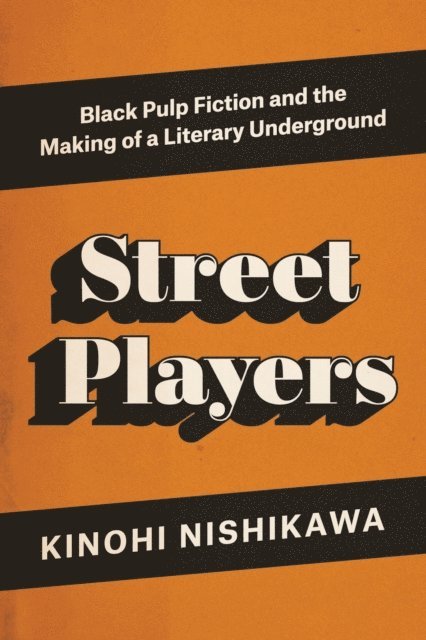
The uncontested center of the black pulp fiction universe for more than four decades was the Los Angeles publisher Holloway House. From the late 1960s until it closed in 2008, Holloway House specialized in cheap paperbacks with page-turning narratives featuring black protagonists in crime stories, conspiracy thrillers, prison novels, and Westerns. From Iceberg Slim’s Pimp to Donald Goines’s Never Die Alone, the thread that tied all of these books together—and made them distinct from the majority of American pulp—was an unfailing veneration of black masculinity. Zeroing in on Holloway House, Street Players explores how this world of black pulp fiction was produced, received, and recreated over time and across different communities of readers. Kinohi Nishikawa contends that black pulp fiction was built on white readers’ fears of the feminization of society—and the appeal of black masculinity as a way to counter it. In essence, it was the original form of blaxploitation: a strategy of mass-marketing race to suit the reactionary fantasies of a white audience. But while chauvinism and misogyny remained troubling yet constitutive aspects of this literature, from 1973 onward, Holloway House moved away from publishing sleaze for a white audience to publishing solely for black readers. The standard account of this literary phenomenon is based almost entirely on where this literature ended up: in the hands of black, male, working-class readers. When it closed, Holloway House was synonymous with genre fiction written by black authors for black readers—a field of cultural production that Nishikawa terms the black literary underground. But as Street Players demonstrates, this cultural authenticity had to be created, promoted, and in some cases made up, and there is a story of exploitation at the heart of black pulp fiction’s origins that cannot be ignored.
Inbunden, Engelska, 2027
1 034 kr
Kommande
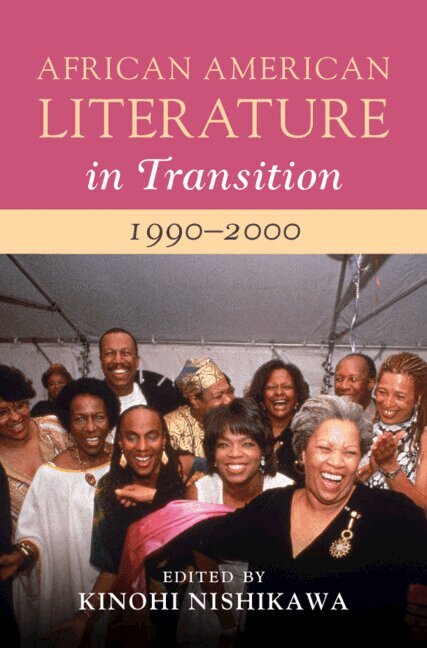
The book contains eleven chapters of original research whose objects of study span the fields of literary and cultural production, from novels, poetry, and plays to music, television, and film. This multimedia context is essential for understanding the development of African American literature in the 1990s, and each chapter provides an ample bibliography of primary and secondary sources for interdisciplinary study of the decade. The book's conceptual coherence is enhanced by dividing the eleven chapters into three thematic clusters: 'Culture, Commerce, and Criticism,' 'Gender, Genre, and Generations,' and 'Poetry, Performance, and Parody.' These clusters draw connections not only between their constituent chapters but also across media and bibliographies, bringing literary, historical, discursive, and cultural analysis to bear on the Black 1990s. The book's rationale and structure are clearly described in the introduction, which doubles as an outline of each chapter's argument and place within the volume.
Inbunden, Engelska, 2019
866 kr
Tillfälligt slut
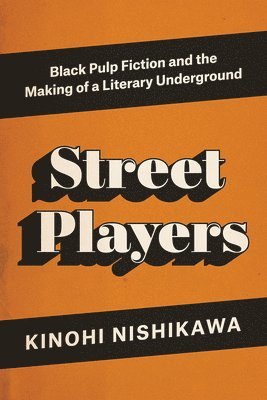
The uncontested center of the black pulp fiction universe for more than four decades was the Los Angeles publisher Holloway House. From the late 1960s until it closed in 2008, Holloway House specialized in cheap paperbacks with page-turning narratives featuring black protagonists in crime stories, conspiracy thrillers, prison novels, and Westerns. From Iceberg Slim’s Pimp to Donald Goines’s Never Die Alone, the thread that tied all of these books together—and made them distinct from the majority of American pulp—was an unfailing veneration of black masculinity. Zeroing in on Holloway House, Street Players explores how this world of black pulp fiction was produced, received, and recreated over time and across different communities of readers.Kinohi Nishikawa contends that black pulp fiction was built on white readers’ fears of the feminization of society—and the appeal of black masculinity as a way to counter it. In essence, it was the original form of blaxploitation: a strategy of mass-marketing race to suit the reactionary fantasies of a white audience. But while chauvinism and misogyny remained troubling yet constitutive aspects of this literature, from 1973 onward, Holloway House moved away from publishing sleaze for a white audience to publishing solely for black readers. The standard account of this literary phenomenon is based almost entirely on where this literature ended up: in the hands of black, male, working-class readers. When it closed, Holloway House was synonymous with genre fiction written by black authors for black readers—a field of cultural production that Nishikawa terms the black literary underground. But as Street Players demonstrates, this cultural authenticity had to be created, promoted, and in some cases made up, and there is a story of exploitation at the heart of black pulp fiction’s origins that cannot be ignored.