Kirilka Stavreva - Böcker
Visar alla böcker från författaren Kirilka Stavreva. Handla med fri frakt och snabb leverans.
4 produkter
4 produkter
612 kr
Skickas inom 10-15 vardagar
Dramatic and documentary representations of aggressive and garrulous women, while often casting such women as reckless and ultimately unsuccessful usurpers of cultural authority, simultaneously highlight, in contending narrative lines, their effective manipulation and even subversion of social and gender hierarchies. Words Like Daggers explores the scolding invectives, malevolent curses, and ecstatic prophesies of early modern women as attested in legal documents, letters, self-narratives, popular pamphlets, ballads, and dramas of the era. By examining the framing and performance of such violent female speech between the 1590s and the 1660s, Kirilka Stavreva dismantles the myth of the silent and obedient women who allegedly populated early modern England.Blending gender theory with detailed historical analysis, Words Like Daggers highlights the capacity of women’s language to shape gender and social relationships in the early modern era. Stavreva not only reconstructs the speech acts of individual contentious women but also examines the powerful performative potential of women’s violent speech, revealing how the stage, arguably the most influential cultural institution of the Renaissance, orchestrated and aestheticized women’s fighting words and, in so doing, showcased and augmented their cultural significance.
268 kr
Skickas inom 10-15 vardagar
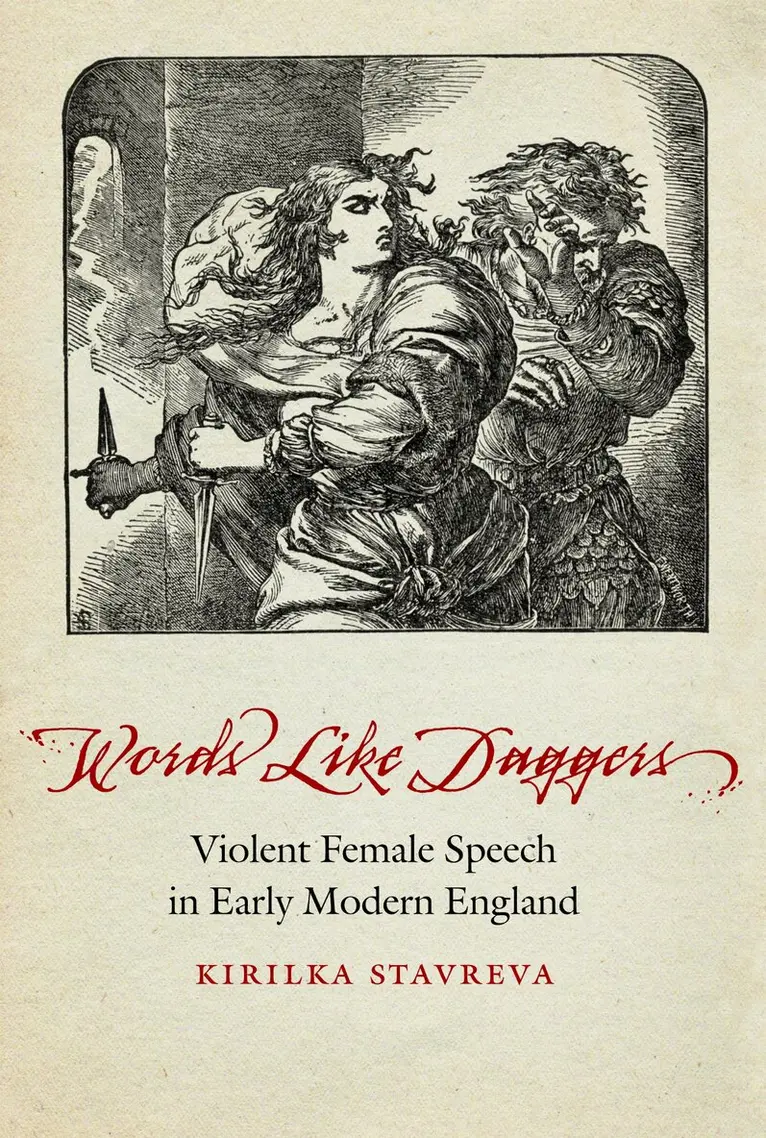
Dramatic and documentary representations of aggressive and garrulous women, while often casting such women as reckless and ultimately unsuccessful usurpers of cultural authority, simultaneously highlight, in contending narrative lines, their effective manipulation and even subversion of social and gender hierarchies. Words Like Daggers explores the scolding invectives, malevolent curses, and ecstatic prophesies of early modern women as attested in legal documents, letters, self-narratives, popular pamphlets, ballads, and dramas of the era. By examining the framing and performance of such violent female speech between the 1590s and the 1660s, Kirilka Stavreva dismantles the myth of the silent and obedient women who allegedly populated early modern England.Blending gender theory with detailed historical analysis, Words Like Daggers highlights the capacity of women’s language to shape gender and social relationships in the early modern era. Stavreva not only reconstructs the speech acts of individual contentious women but also examines the powerful performative potential of women’s violent speech, revealing how the stage, arguably the most influential cultural institution of the Renaissance, orchestrated and aestheticized women’s fighting words and, in so doing, showcased and augmented their cultural significance.
1 333 kr
Skickas
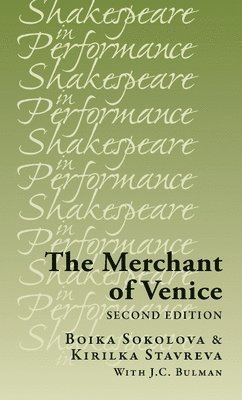
Boika Sokolova and Kirilka Stavreva’s second edition of the stage history of The Merchant of Venice interweaves into the chronology of James Bulman’s first edition richly contextualised chapters on Max Reinhardt, Peter Zadek, and the first production of the play in Mandatory Palestine, directed by Leopold Jessner. While the focus of the book is on post-1990s productions across Europe and the USA, and on film, the Segue provides a broad survey of the interpretative shifts in the play’s performance from the 1930s to the second decade of the twenty-first century. Individual chapters explore productions by Peter Zadek, Trevor Nunn, Robert Sturua, Edward Hall, Rupert Goold, Daniel Sullivan, and Karin Coonrod. An extensive film section including silent film offers close analysis of Don Selwyn’s Te Tangata Whai Rawa o Weniti and Michael Radford’s adaptation. Accessible and engaging, the book will interest students, academics, and general readers.
407 kr
Skickas inom 5-8 vardagar
Boika Sokolova and Kirilka Stavreva’s second edition of the stage history of The Merchant of Venice interweaves into the chronology of James Bulman’s first edition richly contextualised chapters on Max Reinhardt, Peter Zadek, and the first production of the play in Mandatory Palestine, directed by Leopold Jessner. While the focus of the book is on post-1990s productions across Europe and the USA, and on film, the Segue provides a broad survey of the interpretative shifts in the play’s performance from the 1930s to the second decade of the twenty-first century. Individual chapters explore productions by Peter Zadek, Trevor Nunn, Robert Sturua, Edward Hall, Rupert Goold, Daniel Sullivan, and Karin Coonrod. An extensive film section including silent film offers close analysis of Don Selwyn’s Te Tangata Whai Rawa o Weniti and Michael Radford’s adaptation. Accessible and engaging, the book will interest students, academics, and general readers.