Kirill Postoutenko – författare
Visar alla böcker från författaren Kirill Postoutenko. Handla med fri frakt och snabb leverans.
14 produkter
Ruler Personality Cults from Empires to Nation-States and Beyond
Symbolic Patterns and Interactional Dynamics
Av Kirill Postoutenko, Darin Stephanov
Inbunden, 2020
2586 kr
Lägg i varukorg
Encompassing five continents and twenty centuries, this book puts ruler personality cults on the crossroads of disciplines rarely, if ever, juxtaposed before: among its authors are historians, linguists, media scholars, political scientists and communication sociologists from Europe, the United …
Ruler Personality Cults from Empires to Nation-States and Beyond
Symbolic Patterns and Interactional Dynamics
Av Kirill Postoutenko, Darin Stephanov
Häftad, 2022
727 kr
Lägg i varukorg
Encompassing five continents and twenty centuries, this book puts ruler personality cults on the crossroads of disciplines rarely, if ever, juxtaposed before: among its authors are historians, linguists, media scholars, political scientists and communication sociologists from Europe, the United …
Ruler Personality Cults from Empires to Nation-States and Beyond
Symbolic Patterns and Interactional Dynamics
Av Darin Stephanov, Kirill Postoutenko
E-bok, 2020
856 kr
Lägg i varukorg
Encompassing five continents and twenty centuries, this book puts ruler personality cults on the crossroads of disciplines rarely, if ever, juxtaposed before: among its authors are historians, linguists, media scholars, political scientists and communication sociologists from Europe, the United …
Ruler Personality Cults from Empires to Nation-States and Beyond
Symbolic Patterns and Interactional Dynamics
Av Darin Stephanov, Kirill Postoutenko
E-bok, 2020
838 kr
Lägg i varukorg
Encompassing five continents and twenty centuries, this book puts ruler personality cults on the crossroads of disciplines rarely, if ever, juxtaposed before: among its authors are historians, linguists, media scholars, political scientists and communication sociologists from Europe, the United …
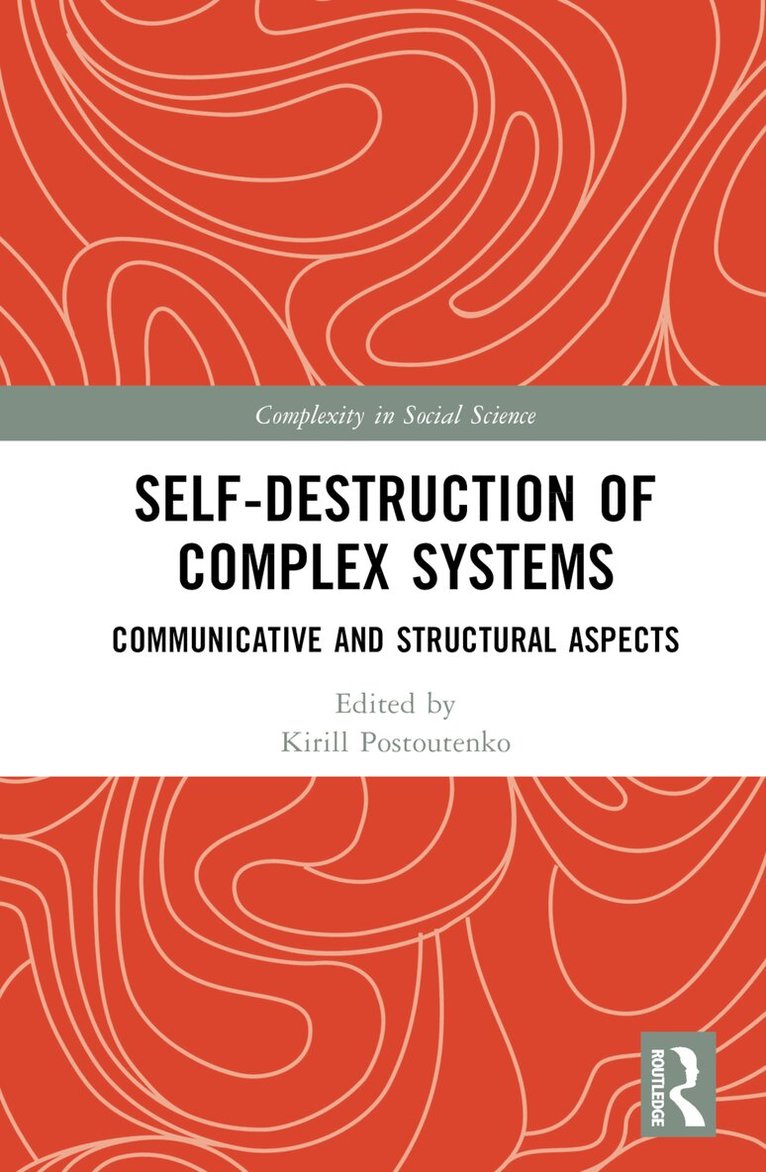
Self-Destruction of Complex Systems
Communicative and Structural Aspects
Inbunden, 2025
2512 kr
Lägg i varukorg
This book is the first attempt to provide a general theory of self-destruction in complex systems applicable to natural, social and cultural phenomena.The contributors work collaboratively to prove that many of the nondistributed complex systems in nature and society sooner or later experience …
Self-Destruction of Complex Systems
Communicative and Structural Aspects
Häftad, 2026
706 kr
Lägg i varukorg
This book is the first attempt to provide a general theory of self-destruction in complex systems applicable to natural, social and cultural phenomena.The contributors work collaboratively to prove that many of the nondistributed complex systems in nature and society sooner or later experience …
Self-Destruction of Complex Systems
Communicative and Structural Aspects
E-bok, 2025
805 kr
Lägg i varukorg
This book is the first attempt to provide a general theory of self-destruction in complex systems applicable to natural, social and cultural phenomena. The contributors work collaboratively to prove that many of the nondistributed complex systems in nature and society sooner or later experience …
Self-Destruction of Complex Systems
Communicative and Structural Aspects
E-bok, 2025
813 kr
Lägg i varukorg
This book is the first attempt to provide a general theory of self-destruction in complex systems applicable to natural, social and cultural phenomena. The contributors work collaboratively to prove that many of the nondistributed complex systems in nature and society sooner or later experience …
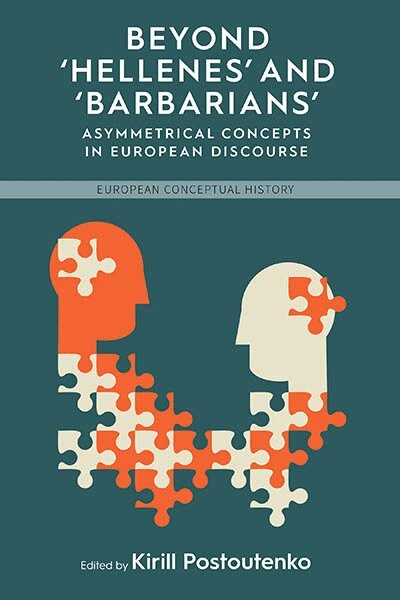
Beyond 'Hellenes' and 'Barbarians'
Asymmetrical Concepts in European Discourse
Inbunden, 2022
1936 kr
Lägg i varukorg
Forty years ago, German historian Reinhart Koselleck coined the notion of ‘asymmetrical concepts’, pointing at the asymmetry between standard self-ascriptions, such as ‘Hellenes’ or ‘Christians’, and pejorative other-references (‘Barbarians’ or ‘Pagans’) as a powerful weapon of cultural and …
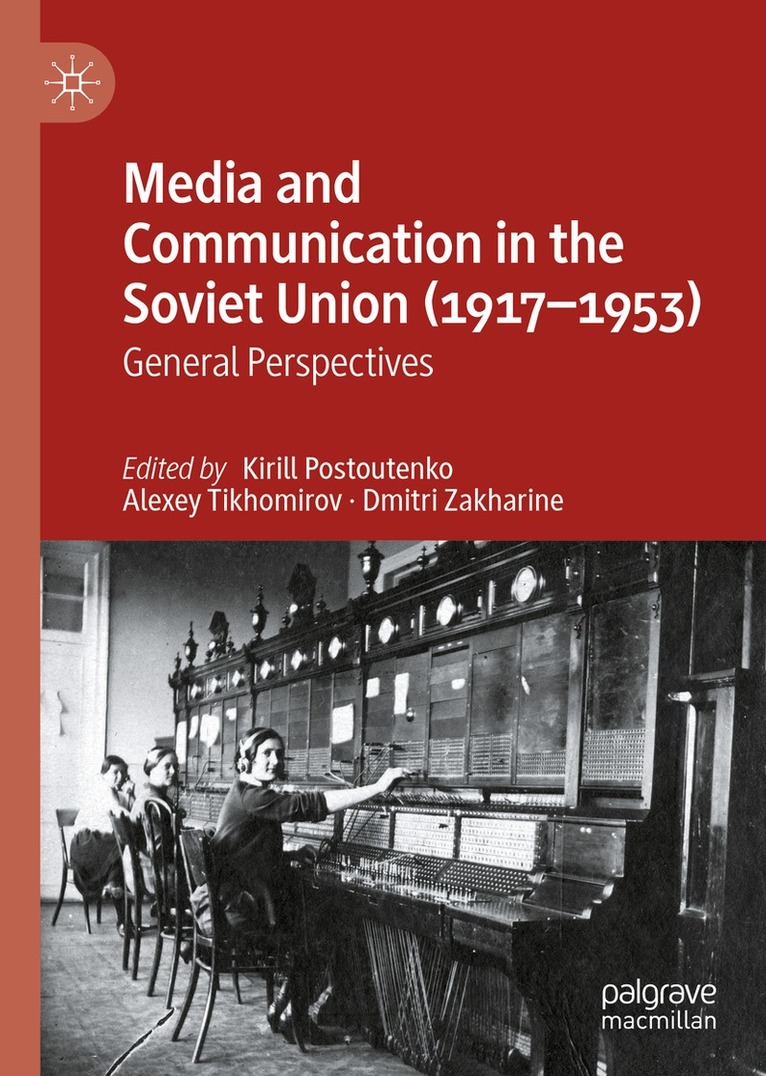
Media and Communication in the Soviet Union (1917–1953)
General Perspectives
Av Kirill Postoutenko, Alexey Tikhomirov m. fl.
Inbunden, 2022
1699 kr
Lägg i varukorg
This book provides a systematic account of media and communication development in Soviet society from the October Revolution to the death of Stalin. Summarizing earlier research and drawing upon previously unpublished archival materials, it covers the main aspects of public and private interaction …
Media and Communication in the Soviet Union (1917-1953)
General Perspectives
Av Dmitri Zakharine, Alexey Tikhomirov m. fl.
E-bok, 2022
2127 kr
Lägg i varukorg
This book provides a systematic account of media and communication development in Soviet society from the October Revolution to the death of Stalin. Summarizing earlier research and drawing upon previously unpublished archival materials, it covers the main aspects of public and private interaction …
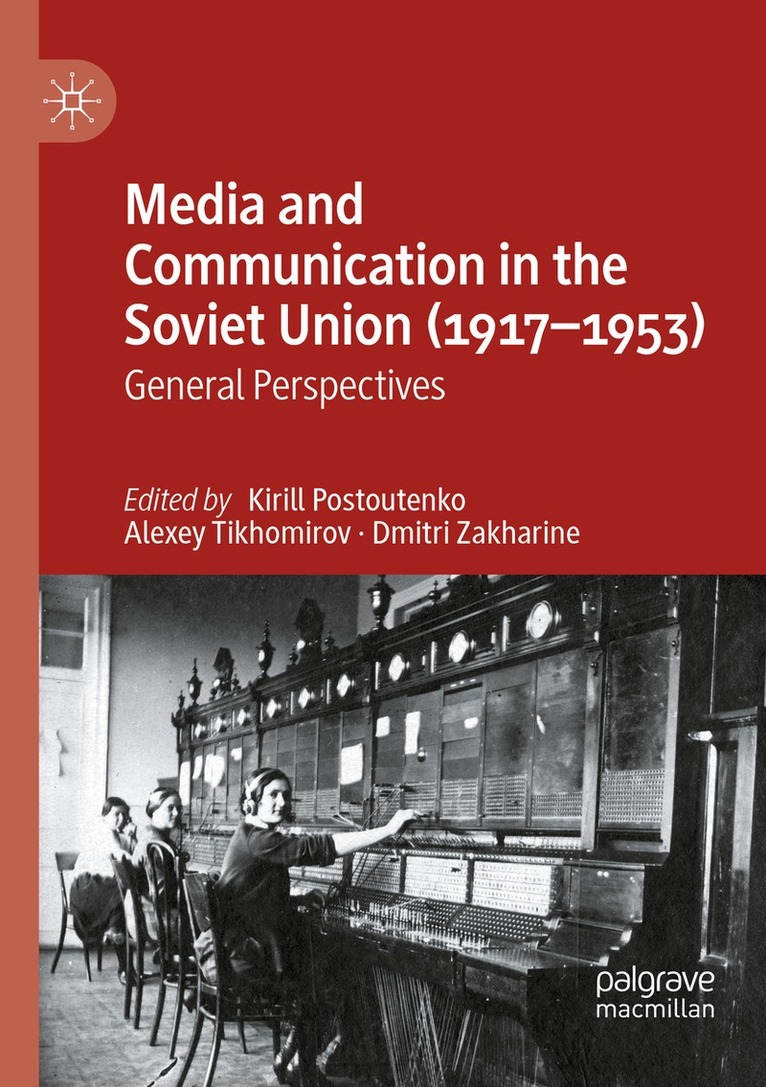
Media and Communication in the Soviet Union (1917–1953)
General Perspectives
Av Kirill Postoutenko, Alexey Tikhomirov m. fl.
Häftad, 2023
1699 kr
Lägg i varukorg
This book provides a systematic account of media and communication development in Soviet society from the October Revolution to the death of Stalin. Summarizing earlier research and drawing upon previously unpublished archival materials, it covers the main aspects of public and private interaction …
Totalitarian Communication
Hierarchies, Codes and Messages
Häftad, 2010
525 kr
Lägg i varukorg
Totalitarianism has been an object of extensive communicative research since its heyday: already in the late 1930s, such major cultural figures as George Orwell or Hannah Arendt were busy describing the visual and verbal languages of Stalinism and Nazism. After the war, many fashionable trends in …
Asymmetrical Concepts after Reinhart Koselleck
Historical Semantics and Beyond
Av Kirill Postoutenko, Kay Junge
E-bok
367 kr
Lägg i varukorg
Although the asymmetrical concepts have been well-known to scholars across the social sciences and humanities, their role in structuring the human world has never been an object of detailed research. 35 years ago Reinhart Koselleck sketched out the historical semantics of the oppositions …