Kirk Helliker – författare
638 kr
Skickas inom 10-15 vardagar
638 kr
Skickas inom 10-15 vardagar
582 kr
Skickas inom 10-15 vardagar
2 182 kr
Skickas inom 10-15 vardagar
2 182 kr
Skickas inom 10-15 vardagar
665 kr
Läs direkt efter köp
This book examines the everyday lives of ordinary Zimbabweans in the context of national crises in post-2000 Zimbabwe.
Throughout the literature of Zimbabwean studies, a consideration of everyday lives has been limited to informal trading and rarely applied as an analytical framework, despite the importance of understanding crisis-living with reference to the specific character of national crises across the African continent. This edited volume is one of the first in its field to theorise everyday Zimbabwean lives within the context of crisis, with three central themes addressed: urban and rural lives; men, women and HIV; and along and beyond the border. Chapters incorporate topics from child marriage and sexual practices, to climate change and social accountability, encompassing a shift in focus from macro-structures to how farm labourers, students, child-brides and other ordinary people negotiate gender, class and social dynamics within a dominant order. The introductory chapter offers an innovative analytical framing for the empirical chapters which follow, each providing micro-studies based on original qualitative fieldwork by early-career Zimbabwean scholars.
Everyday Crisis-Living in Contemporary Zimbabwe will appeal to students and scholars of sociology, anthropology and African Studies more broadly.
665 kr
Läs direkt efter köp
This book examines the everyday lives of ordinary Zimbabweans in the context of national crises in post-2000 Zimbabwe.
Throughout the literature of Zimbabwean studies, a consideration of everyday lives has been limited to informal trading and rarely applied as an analytical framework, despite the importance of understanding crisis-living with reference to the specific character of national crises across the African continent. This edited volume is one of the first in its field to theorise everyday Zimbabwean lives within the context of crisis, with three central themes addressed: urban and rural lives; men, women and HIV; and along and beyond the border. Chapters incorporate topics from child marriage and sexual practices, to climate change and social accountability, encompassing a shift in focus from macro-structures to how farm labourers, students, child-brides and other ordinary people negotiate gender, class and social dynamics within a dominant order. The introductory chapter offers an innovative analytical framing for the empirical chapters which follow, each providing micro-studies based on original qualitative fieldwork by early-career Zimbabwean scholars.
Everyday Crisis-Living in Contemporary Zimbabwe will appeal to students and scholars of sociology, anthropology and African Studies more broadly.
649 kr
Läs direkt efter köp
Based on extensive original fieldwork, this book examines the complex and diverse livelihoods of Zimbabwe’s Tonga people as they have developed over time, including in the wake of the country’s post- 2000 political and economic crises.
Despite being endowed with natural resources, the northwest region of Zimbabwe inhabited by the Tonga people is one of the most marginalised and underdeveloped parts of the country, neglected by both colonial and postcolonial governments. The Tonga- speaking people are a minority ethnic group that settled on either side of the Zambezi River around 1100 AD and remain deeply dependent on the river for their socio- economic livelihoods. This book reflects on the challenges faced by the Tonga people, from poor infrastructure, health and education facilities, to the issues caused by soil infertility and extremely low rainfall, which have been exacerbated by climate change. Many Tonga people were displaced by the construction of the Kariba Dam in the 1950s, and their access to the region’s natural resources has been restricted by successive governments. Showcasing the research of Zimbabwean scholars in particular, this book not only reflects on the vulnerabilities faced by the Tonga, but it also looks beyond these, to the livelihood practices that are thriving despite these challenges, and the ways in which livelihoods intertwine with Tonga culture and society more broadly.
Overall, this book highlights the resilience of the Tonga people in the face of years of politico- economic crisis and will be an important contribution to research on livelihoods, ethnic minorities and rural development in Africa.
649 kr
Läs direkt efter köp
Based on extensive original fieldwork, this book examines the complex and diverse livelihoods of Zimbabwe’s Tonga people as they have developed over time, including in the wake of the country’s post- 2000 political and economic crises.
Despite being endowed with natural resources, the northwest region of Zimbabwe inhabited by the Tonga people is one of the most marginalised and underdeveloped parts of the country, neglected by both colonial and postcolonial governments. The Tonga- speaking people are a minority ethnic group that settled on either side of the Zambezi River around 1100 AD and remain deeply dependent on the river for their socio- economic livelihoods. This book reflects on the challenges faced by the Tonga people, from poor infrastructure, health and education facilities, to the issues caused by soil infertility and extremely low rainfall, which have been exacerbated by climate change. Many Tonga people were displaced by the construction of the Kariba Dam in the 1950s, and their access to the region’s natural resources has been restricted by successive governments. Showcasing the research of Zimbabwean scholars in particular, this book not only reflects on the vulnerabilities faced by the Tonga, but it also looks beyond these, to the livelihood practices that are thriving despite these challenges, and the ways in which livelihoods intertwine with Tonga culture and society more broadly.
Overall, this book highlights the resilience of the Tonga people in the face of years of politico- economic crisis and will be an important contribution to research on livelihoods, ethnic minorities and rural development in Africa.
1 972 kr
Skickas inom 10-15 vardagar
568 kr
Skickas inom 10-15 vardagar
2 182 kr
Skickas inom 10-15 vardagar
652 kr
Skickas inom 10-15 vardagar
2 182 kr
Skickas inom 10-15 vardagar
688 kr
Läs direkt efter köp
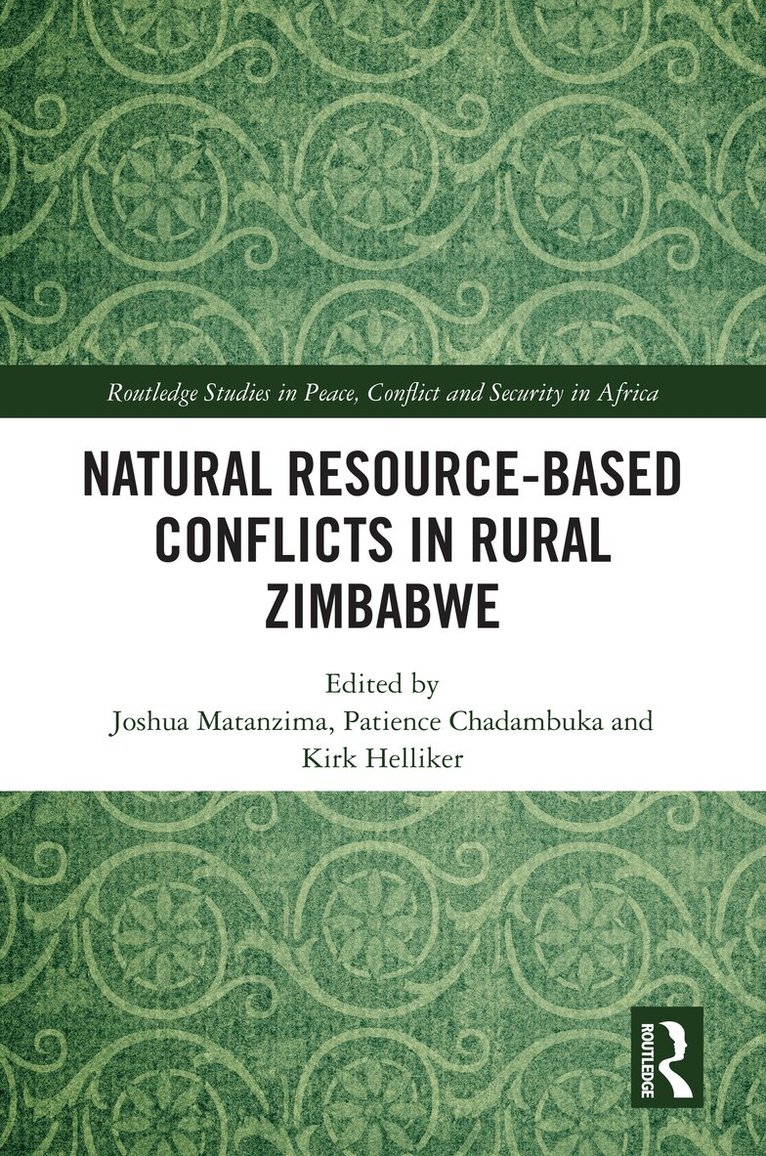
This book investigates the range of conflicts over land and other natural resources in contemporary Zimbabwe, considering the different forms these conflicts take, and the ensuing outcomes.
Zimbabwe is a country rich in natural resources, including land, wildlife, minerals, and water resources. These resources are integral to the formal and informal livelihoods of most Zimbabweans, as well as supporting many key industries. Wildlife, land, and water resources are also embedded in indigenous knowledge systems, religious beliefs, and rituals in many rural communities, forming an important part of people’s identity and sense of belonging. However, this book demonstrates the ways in which rural communities are being denied access to these resources and being displaced by extractive companies and the government. Their response is often to turn to violence to try to reclaim their lands. Drawing on original empirical research from different conflicts across Zimbabwe, the book also considers the issue in the context of problems such as climate change, human-wildlife conflicts, and politico-economic crises.
This book will be useful to policy makers, students, conservationists, and academics across the fields of sociology, human geography, development, political science, and environment studies.
688 kr
Läs direkt efter köp
This book investigates the range of conflicts over land and other natural resources in contemporary Zimbabwe, considering the different forms these conflicts take, and the ensuing outcomes.
Zimbabwe is a country rich in natural resources, including land, wildlife, minerals, and water resources. These resources are integral to the formal and informal livelihoods of most Zimbabweans, as well as supporting many key industries. Wildlife, land, and water resources are also embedded in indigenous knowledge systems, religious beliefs, and rituals in many rural communities, forming an important part of people’s identity and sense of belonging. However, this book demonstrates the ways in which rural communities are being denied access to these resources and being displaced by extractive companies and the government. Their response is often to turn to violence to try to reclaim their lands. Drawing on original empirical research from different conflicts across Zimbabwe, the book also considers the issue in the context of problems such as climate change, human-wildlife conflicts, and politico-economic crises.
This book will be useful to policy makers, students, conservationists, and academics across the fields of sociology, human geography, development, political science, and environment studies.
746 kr
Läs direkt efter köp
This book considers the historical and spatial dimensions of civil society in Zimbabwe’s Matabeleland region, an area suffering from severe development and democratic deficits over many decades.
Transcending an organisational conception of civil society and a simplistic state-civil society dualist understanding, it recognises the dynamic character of civil society as a social space, inclusive of less formalised associational forms of collective life, as well as the colonial character and legacies of civil society both analytically and empirically. The book facilitates a nuanced understanding of the specificities of the social, political and economic evolution of Matabeleland in colonial and post-colonial Zimbabwe, and the region’s troubled relations with the central state. Historically, it traces civil society in Matabeleland from the region’s resistance against the colonial-settler state to contemporary struggles for justice given the unresolved Gukurahundi legacy. Civil society is depicted as constituted by a set of complex and shifting struggles for justice, not simply between Matabeleland and the central state, but also internally within Matabeleland along multiple fault-lines including class and culture. The relevance of understanding civil society in Matabeleland, for Zimbabwe and Africa more widely, is brought to the fore.
The book will be of interest and value to scholars of civil society, politics and democratisation across the African continent.
746 kr
Läs direkt efter köp
This book considers the historical and spatial dimensions of civil society in Zimbabwe’s Matabeleland region, an area suffering from severe development and democratic deficits over many decades.
Transcending an organisational conception of civil society and a simplistic state-civil society dualist understanding, it recognises the dynamic character of civil society as a social space, inclusive of less formalised associational forms of collective life, as well as the colonial character and legacies of civil society both analytically and empirically. The book facilitates a nuanced understanding of the specificities of the social, political and economic evolution of Matabeleland in colonial and post-colonial Zimbabwe, and the region’s troubled relations with the central state. Historically, it traces civil society in Matabeleland from the region’s resistance against the colonial-settler state to contemporary struggles for justice given the unresolved Gukurahundi legacy. Civil society is depicted as constituted by a set of complex and shifting struggles for justice, not simply between Matabeleland and the central state, but also internally within Matabeleland along multiple fault-lines including class and culture. The relevance of understanding civil society in Matabeleland, for Zimbabwe and Africa more widely, is brought to the fore.
The book will be of interest and value to scholars of civil society, politics and democratisation across the African continent.
2 320 kr
Skickas inom 10-15 vardagar
730 kr
Läs direkt efter köp
For decades, most anti-capitalist and anti-imperialist movements identified radical transformation with capturing state power. The collapse of these statist projects from the 1970s led to a global crisis of left and working class politics. But crisis has also opened space for rediscovering alternative society-centred, anti-capitalist modes of bottom-up change, operating at a distance from the state. These have registered important successes in practice, such as the Zapatistas in Mexico, and Rojava in Syria. They have been a key influence on movements from Occupy in United States, to the landless in Latin America, to anti-austerity struggles in Europe and Asia, to urban movements in Africa. Their lineages include anarchism, syndicalism, autonomist Marxism, philosophers like Alain Badiou, and radical popular praxis. This path-breaking volume recovers this understanding of social transformation, long side-lined but now resurgent, like a seed in the soil that keeps breaking through and growing. It provides case studies with reference to South Africa and Zimbabwe, and includes a dossier of key texts from a century of anarchists, syndicalists, insurgent unionists and anti-apartheid activists in South Africa. Originating in an African summit of radical academics, struggle veterans and social movements, the book includes a preface from John Holloway.
The chapters in this book were originally published as a special issue in the Journal of Contemporary African Studies, with the addition of a new dossier on the history and voices of a century of politics at a distance from the state in South Africa.
730 kr
Läs direkt efter köp
For decades, most anti-capitalist and anti-imperialist movements identified radical transformation with capturing state power. The collapse of these statist projects from the 1970s led to a global crisis of left and working class politics. But crisis has also opened space for rediscovering alternative society-centred, anti-capitalist modes of bottom-up change, operating at a distance from the state. These have registered important successes in practice, such as the Zapatistas in Mexico, and Rojava in Syria. They have been a key influence on movements from Occupy in United States, to the landless in Latin America, to anti-austerity struggles in Europe and Asia, to urban movements in Africa. Their lineages include anarchism, syndicalism, autonomist Marxism, philosophers like Alain Badiou, and radical popular praxis. This path-breaking volume recovers this understanding of social transformation, long side-lined but now resurgent, like a seed in the soil that keeps breaking through and growing. It provides case studies with reference to South Africa and Zimbabwe, and includes a dossier of key texts from a century of anarchists, syndicalists, insurgent unionists and anti-apartheid activists in South Africa. Originating in an African summit of radical academics, struggle veterans and social movements, the book includes a preface from John Holloway.
The chapters in this book were originally published as a special issue in the Journal of Contemporary African Studies, with the addition of a new dossier on the history and voices of a century of politics at a distance from the state in South Africa.
720 kr
Läs direkt efter köp
Since the introduction of the fast track land reform programme in 2000, Zimbabwe has undergone major economic and political shifts and these have had a profound impact on both urban and rural livelihoods. This book provides rich empirical studies that examine a range of multi-faceted and contested livelihoods within the context of systemic crises. Taking a broad political economy approach, the chapters advance a grounded and in-depth understanding of emerging and shifting livelihood processes, strategies and resilience that foregrounds agency at household level.
Highlighting an emergent scholarship amongst young black scholars in Zimbabwe, and providing an understanding of how people and communities respond to socio-economic challenges, this book is an important read for scholars of African political economy, southern African studies and livelihoods.
720 kr
Läs direkt efter köp
Since the introduction of the fast track land reform programme in 2000, Zimbabwe has undergone major economic and political shifts and these have had a profound impact on both urban and rural livelihoods. This book provides rich empirical studies that examine a range of multi-faceted and contested livelihoods within the context of systemic crises. Taking a broad political economy approach, the chapters advance a grounded and in-depth understanding of emerging and shifting livelihood processes, strategies and resilience that foregrounds agency at household level.
Highlighting an emergent scholarship amongst young black scholars in Zimbabwe, and providing an understanding of how people and communities respond to socio-economic challenges, this book is an important read for scholars of African political economy, southern African studies and livelihoods.
371 kr
Skickas inom 5-8 vardagar
205 kr
Skickas inom 5-8 vardagar
1 525 kr
Skickas inom 10-15 vardagar
1 367 kr
Läs direkt efter köp
This book offers the first detailed scholarly examination of the nation-wide land occupations which spread across the Zimbabwean countryside from the year 2000, and led to the state’s fast track land reform programme. In an innovative way, it highlights the decentralized character of the occupations by recognizing significant spatial variation around a number of key themes, including historical memory, modes of mobilization and gender. A case study of the land occupations in Mashonaland Central Province, based on original research, adds empirical weight to the argument. In further identifying and understanding the specificities and complexities of the land occupations, the book also frames them by way of a nuanced comparative-historical analysis of the three zvimurenga. It thus examines the land occupations (referred to, likely controversially, as the ‘third chimurenga’) with reference to the original anti-colonial revolt from the 1890s (the first chimurenga) and the war of liberation in the 1970s (the second chimurenga). Further, the book engages critically with the ruling party’s chimurenga narrative and the hegemonic understanding of the land occupations within Zimbabwean studies.
This book is a crucial read for all scholars and students of post-2000 land and politics in Zimbabwe, but also for those more broadly interested in historical-comparative analyses of land struggles in Zimbabwe and beyond.
1 091 kr
Skickas inom 10-15 vardagar
1 634 kr
Skickas inom 10-15 vardagar
1 977 kr
Läs direkt efter köp
This book examines the impact of neoliberalism on peasant agriculture as a key livelihood strategy in Southern and Eastern Africa, against the background of the current development crisis and the crossroads that Southern and Eastern Africa faces. It systematically analyses how the neoliberal architecture has deepened extroverted production for capitalist accumulation and how this has been to the detriment of the rural labour force and small scale and communal landowners. Apart from examining how neoliberalism has triggered land alienations, the book further argues that such policies have also impacted negatively on food security in a number of ways. The book presents empirical evidence through twelve case studies, emerging from in-depth original fieldwork carried out in seven countries in the Southern and Eastern African region.
This book is a must-read for scholars of economics,sociology, anthropology, history, agrarian studies and political science, as well as practitioners and policy-makers, interested in a better understanding of the impact of the agrarian neoliberal restructuring on the peasantry in Southern Africa.