Kirk M. Summers – författare
Visar alla böcker från författaren Kirk M. Summers. Handla med fri frakt och snabb leverans.
4 produkter
4 produkter
Inbunden, Engelska, 2016
1 795 kr
Skickas inom 5-8 vardagar
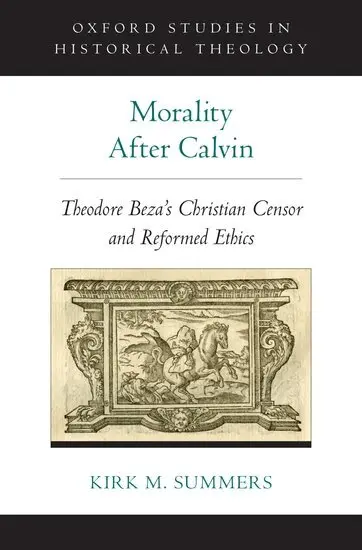
Morality after Calvin examines the development of ethical thought in the Reformed tradition immediately following the death of Calvin. The book explores a previously unstudied work of Theodore Beza, the Cato Censorius Christianus (1591). When read in conjunction with the works and correspondence of Beza and his colleagues (Simon Goulart, Lambert Daneau, Peter Martyr Vermigli, among others), the poems of the Cato reveal the theoretical underpinnings of the disciplinary activity during the period. Kirk M. Summers shows how the moral fervor of the latter half of the sixteenth century had its genesis in a well-formulated theology that viewed a Christian's sanctification as a process of restoration to an original order created by God.Morality propels one on the journey of life to the ultimate goal of peace and contentment in which God receives the glory. The principles that constitute this morality, therefore, look back to the very moment of creation, when God structured human relationships, established a certain order in nature, and issued commands. After the Fall, the Mosaic Law and Christ himself, to whom the faithful are united by the Holy Spirit, embody these principles. They include an ethos of listening, sincerity of life, engagement with one's calling, love of neighbor, respect for divinely ordained order, and a desire for the purity of the flock.
E-bok
PDF, Engelska, 20161 495 kr
Läs direkt efter köp
In Morality After Calvin, Kirk M. Summers examines the development of ethical thought in the Reformed Orthodox tradition immediately following the death of Calvin. Framed around a previously unstudied poetic work of French theologian Theodore Beza, the Cato Censorius Christianus (1591), and read in conjunction with the works and correspondence of Beza and his colleagues, the book reveals the theoretical underpinnings of the disciplinary activity during the period. The poems of the Cato show that the moral fervor of the latter half of the sixteenth century had its genesis in a well-formulated theology that viewed a Christian''s sanctification as a process of restoration to an original order created by God. For Beza the Christian life does not end with grace and salvation, but begins there.The principles of morality, in this theoretical framework, look back to the very moment of creation, when God structured human relationships, established a certain order in nature, and issued commands. The Mosaic Law and Christ himself embody these principles, which include an ethos of listening, sincerity of life, engagement with one''s calling, love of neighbor, respect for divine order, and a desire for the purity of the flock.With insight and dexterity, as well as the use of previously unavailable sources, Summers contributes this significant volume to the study of Beza and his place in the history of the Reformed Orthodoxy.
E-bok
Engelska, 20161 495 kr
Läs direkt efter köp
In Morality After Calvin, Kirk M. Summers examines the development of ethical thought in the Reformed Orthodox tradition immediately following the death of Calvin. Framed around a previously unstudied poetic work of French theologian Theodore Beza, the Cato Censorius Christianus (1591), and read in conjunction with the works and correspondence of Beza and his colleagues, the book reveals the theoretical underpinnings of the disciplinary activity during the period. The poems of the Cato show that the moral fervor of the latter half of the sixteenth century had its genesis in a well-formulated theology that viewed a Christian''s sanctification as a process of restoration to an original order created by God. For Beza the Christian life does not end with grace and salvation, but begins there.The principles of morality, in this theoretical framework, look back to the very moment of creation, when God structured human relationships, established a certain order in nature, and issued commands. The Mosaic Law and Christ himself embody these principles, which include an ethos of listening, sincerity of life, engagement with one''s calling, love of neighbor, respect for divine order, and a desire for the purity of the flock.With insight and dexterity, as well as the use of previously unavailable sources, Summers contributes this significant volume to the study of Beza and his place in the history of the Reformed Orthodoxy.
Häftad, Engelska, 2021
569 kr
Skickas inom 5-8 vardagar