
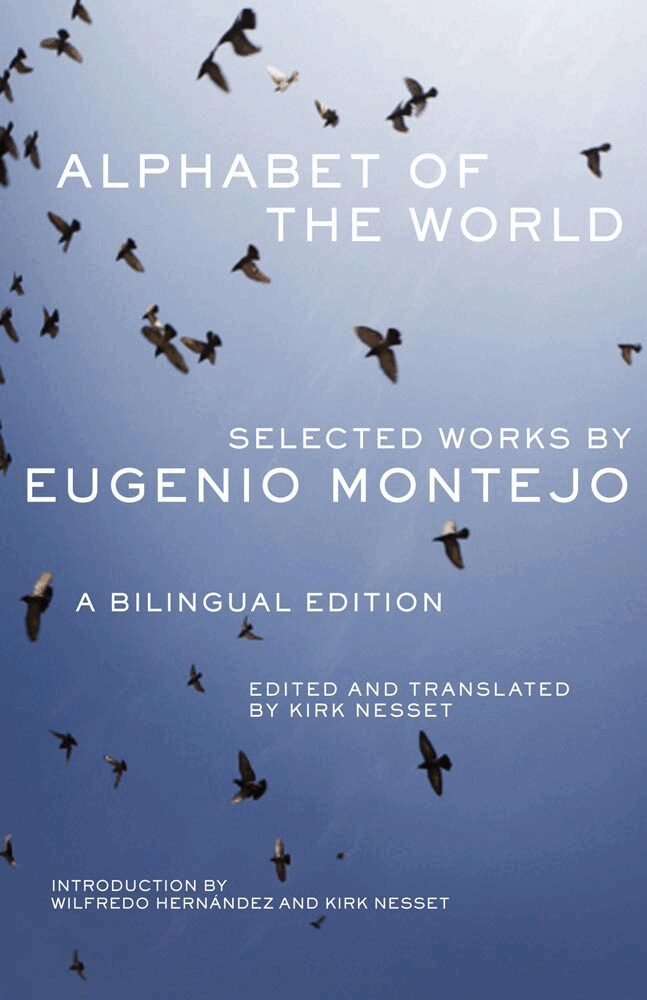
Eugenio Montejo was one of the most significant Latin American poets and essayists of the past half century. Montejo (who died in 2008) was awarded both the National Prize for Literature in his native Venezuela and the prestigious Octavio Paz International Poetry and Essay Prize. This long-overdue volume offers selections from all ten of Montejo's books of poetry, as well as a handful of exemplary prose works. All of the selections are presented here in the original Spanish, with translations in English by Kirk Nesset, a prize-winning American writer and poet.Alphabet of the World reveals Montejo's themes and stylistic range as it charts his formal and emotional trajectory. The poems offer meditations on the subject of time, on the immutability of spirit, on eros and birth, and on the role of language in all things human. The book also includes excerpts from Montejo's Notebook of Blas Coll and Guitar of the Horizon, and three complete essays selected specifically for the insight and depth they lend to his work in both genres.The book's introduction situates and appraises Montejo's achievement, exploring the corpus comprehensively. Alphabet of the World marks a major stride toward winning Montejo the English-speaking recognition he deserves.
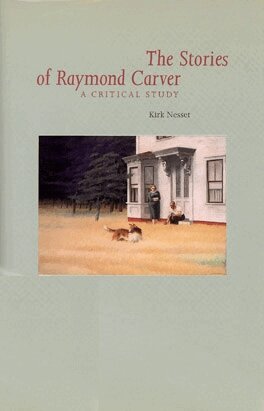
Raymond Carver, known in some circles as the "godfather of minimalism," has been credited by many as the rejuvenator of the once-dying American short story. (See the link on this page to a 2008 Kenyon Review story that discusses the recent controversy over the editing of Carver's stories.) Drawing on representative tales from each of Carver's major volumes of fiction, Nesset's critical exploration leads us deep into the heart of Carver country, an eerie post-industrial world of low-rent survivors. In the earliest fiction, the politics of sex are tied to politics of fortune and chance; marriage as an institution is capricious and unsettling. In later stories, the gesture of telling stories provides an escape for certain of these characters, metaphorically and otherwise; and in Carver's last stories, subtle strategies of language offer a similar, if more tentative release. From beginning to end, Carver's distinctive, highly imitative style is intrinsic to his subject and is crucial in presenting what Carver called the "dark side of Reagan's America."In this comprehensive study of Carver, Nesset discusses the relationship of minimalism and postmodern trends and the rise of new realism. By locating Carver in the gallery of American letters, Nesset shows him to be at once more simple and more complex than we might have believed, skillfully laying the groundwork for Carver studies to come.
Kirk Nesset’s Saint X chronicles the muted joy and despair of a millennial age, charting love’s ills and the grind of mortality. His figures are bizarre but familiar: people born under punches, shaken awake by rattles and flares, latter-day pilgrims who stare at the statue that stares at America; people for whom disobedience is still a first duty, and death but a question of style. Wearing bandages rather than smiles, they’re misshapen champions downed by self-bludgeons, perversely on foot while the saddled horse follows—and yet in each case, in each poem, they are honoured if not saved by nuanced reflection, measured perception, and the pleasures of song.
Eugenio Montejo was one of the most significant Latin American poets and essayists of the past half century. Montejo (who died in 2008) was awarded both the National Prize for Literature in his native Venezuela and the prestigious Octavio Paz International Poetry and Essay Prize. This long-overdue volume offers selections from all ten of Montejo's books of poetry, as well as a handful of exemplary prose works. All of the selections are presented here in the original Spanish, with translations in English by Kirk Nesset, a prize-winning American writer and poet.Alphabet of the World reveals Montejo's themes and stylistic range as it charts his formal and emotional trajectory. The poems offer meditations on the subject of time, on the immutability of spirit, on eros and birth, and on the role of language in all things human. The book also includes excerpts from Montejo's Notebook of Blas Coll and Guitar of the Horizon, and three complete essays selected specifically for the insight and depth they lend to his work in both genres.The book's introduction situates and appraises Montejo's achievement, exploring the corpus comprehensively. Alphabet of the World marks a major stride toward winning Montejo the English-speaking recognition he deserves.
Raymond Carver, known in some circles as the "godfather of minimalism," has been credited by many as the rejuvenator of the once-dying American short story. (See the link on this page to a 2008 Kenyon Review story that discusses the recent controversy over the editing of Carver's stories.) Drawing on representative tales from each of Carver's major volumes of fiction, Nesset's critical exploration leads us deep into the heart of Carver country, an eerie post-industrial world of low-rent survivors. In the earliest fiction, the politics of sex are tied to politics of fortune and chance; marriage as an institution is capricious and unsettling. In later stories, the gesture of telling stories provides an escape for certain of these characters, metaphorically and otherwise; and in Carver's last stories, subtle strategies of language offer a similar, if more tentative release. From beginning to end, Carver's distinctive, highly imitative style is intrinsic to his subject and is crucial in presenting what Carver called the "dark side of Reagan's America."In this comprehensive study of Carver, Nesset discusses the relationship of minimalism and postmodern trends and the rise of new realism. By locating Carver in the gallery of American letters, Nesset shows him to be at once more simple and more complex than we might have believed, skillfully laying the groundwork for Carver studies to come.
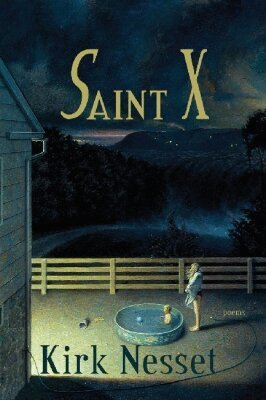
Kirk Nesset’s Saint X chronicles the muted joy and despair of a millennial age, charting love’s ills and the grind of mortality. His figures are bizarre but familiar: people born under punches, shaken awake by rattles and flares, latter-day pilgrims who stare at the statue that stares at America; people for whom disobedience is still a first duty, and death but a question of style. Wearing bandages rather than smiles, they’re misshapen champions downed by self-bludgeons, perversely on foot while the saddled horse follows—and yet in each case, in each poem, they are honoured if not saved by nuanced reflection, measured perception, and the pleasures of song.