Kirsti Andersen – författare
Visar alla böcker från författaren Kirsti Andersen. Handla med fri frakt och snabb leverans.
7 produkter
7 produkter
Inbunden, Engelska, 2006
3 690 kr
Skickas inom 10-15 vardagar
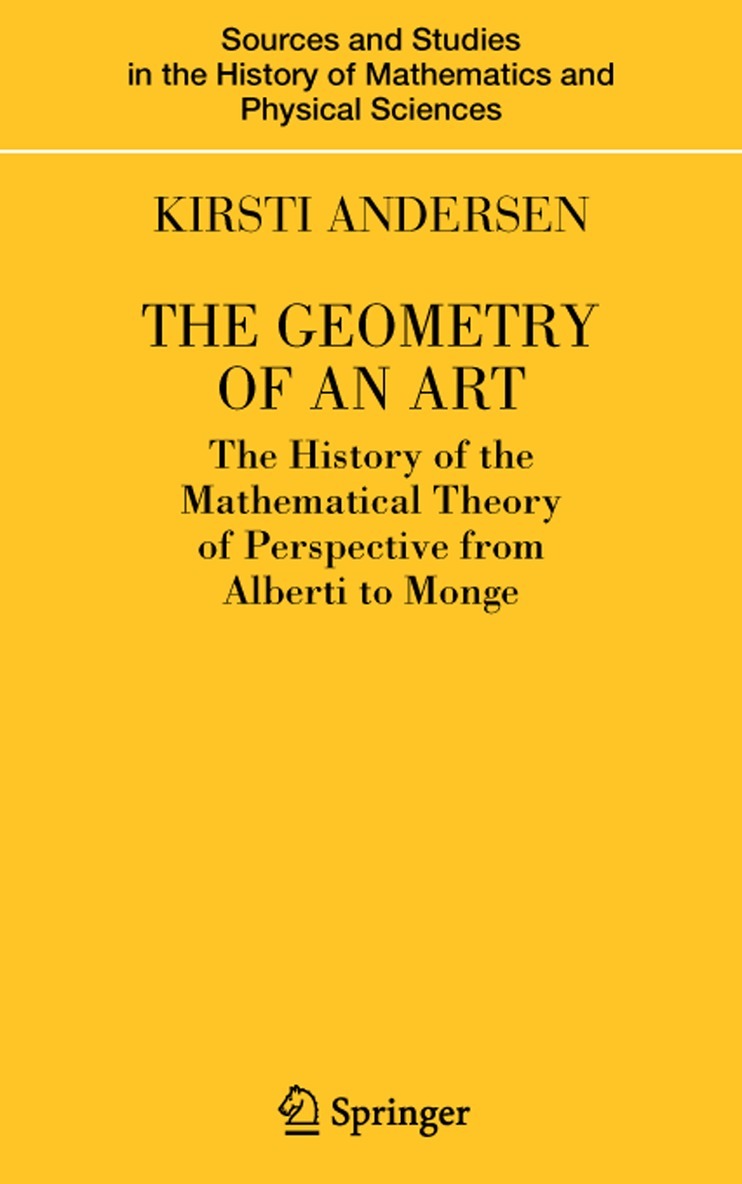
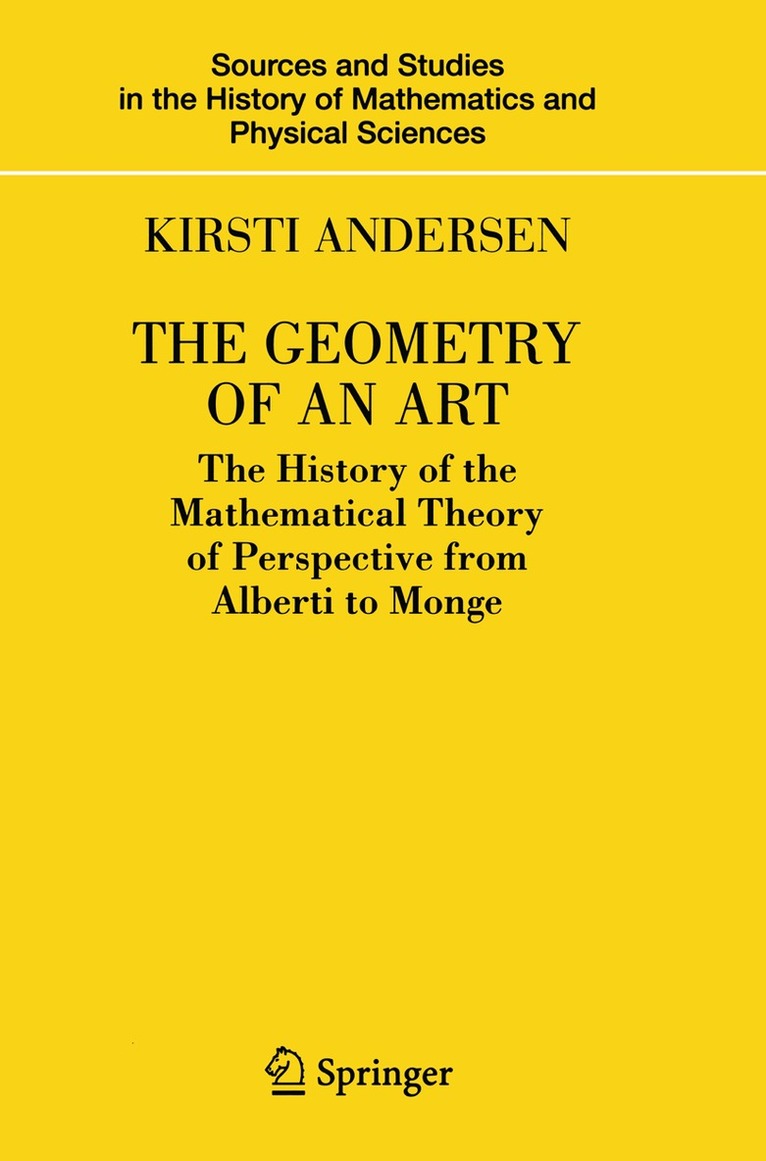
Key Issues ver since the late 1970s when Pia Holdt, a student of mine at the time, and Jed Buchwald, a colleague normally working in another field, made E me aware of how fascinating the history of perspective constructions is, I have wanted to know more. My studies have resulted in the present book, in which I am mainly concerned with describing how the understanding of the geometry behind perspective developed and how, and to what extent, new insights within the mathematical theoryof perspective influenced the way the discipline was presented in textbooks. In order to throw light on these aspects of the history of perspective, I have chosen to focus upon a number of key questions that I have divided into two groups. Questions Concerning the History of Geometrical Perspective • How did geometrical constructions of perspective images emerge? • How were they understood mathematically? • How did the geometrical constructions give rise to a mathematical theory of perspective? • How did this theory evolve? Inconnectionwith the last question it is natural to takeup the following themes.
E-bok
PDF, Engelska, 20084 267 kr
Läs direkt efter köp
Key Issues ver since the late 1970s when Pia Holdt, a student of mine at the time, and Jed Buchwald, a colleague normally working in another field, made E me aware of how fascinating the history of perspective constructions is, I have wanted to know more. My studies have resulted in the present book, in which I am mainly concerned with describing how the understanding of the geometry behind perspective developed and how, and to what extent, new insights within the mathematical theoryof perspective influenced the way the discipline was presented in textbooks. In order to throw light on these aspects of the history of perspective, I have chosen to focus upon a number of key questions that I have divided into two groups. Questions Concerning the History of Geometrical Perspective • How did geometrical constructions of perspective images emerge? • How were they understood mathematically? • How did the geometrical constructions give rise to a mathematical theory of perspective? • How did this theory evolve? Inconnectionwith the last question it is natural to takeup the following themes.
Del 10 - Sources in the History of Mathematics and Physical Sciences
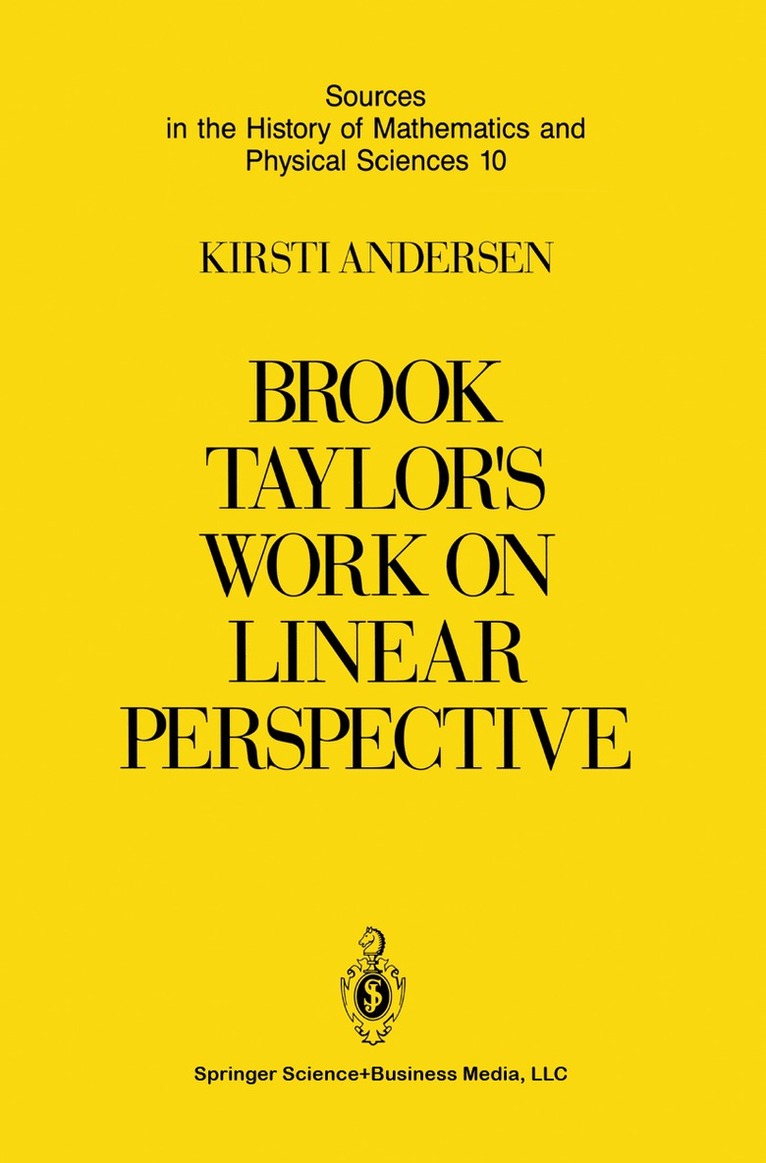
Brook Taylor’s Work on Linear Perspective
A Study of Taylor’s Role in the History of Perspective Geometry. Including Facsimiles of Taylor’s Two Books on Perspective
Inbunden, Engelska, 1991
1 091 kr
Skickas inom 10-15 vardagar
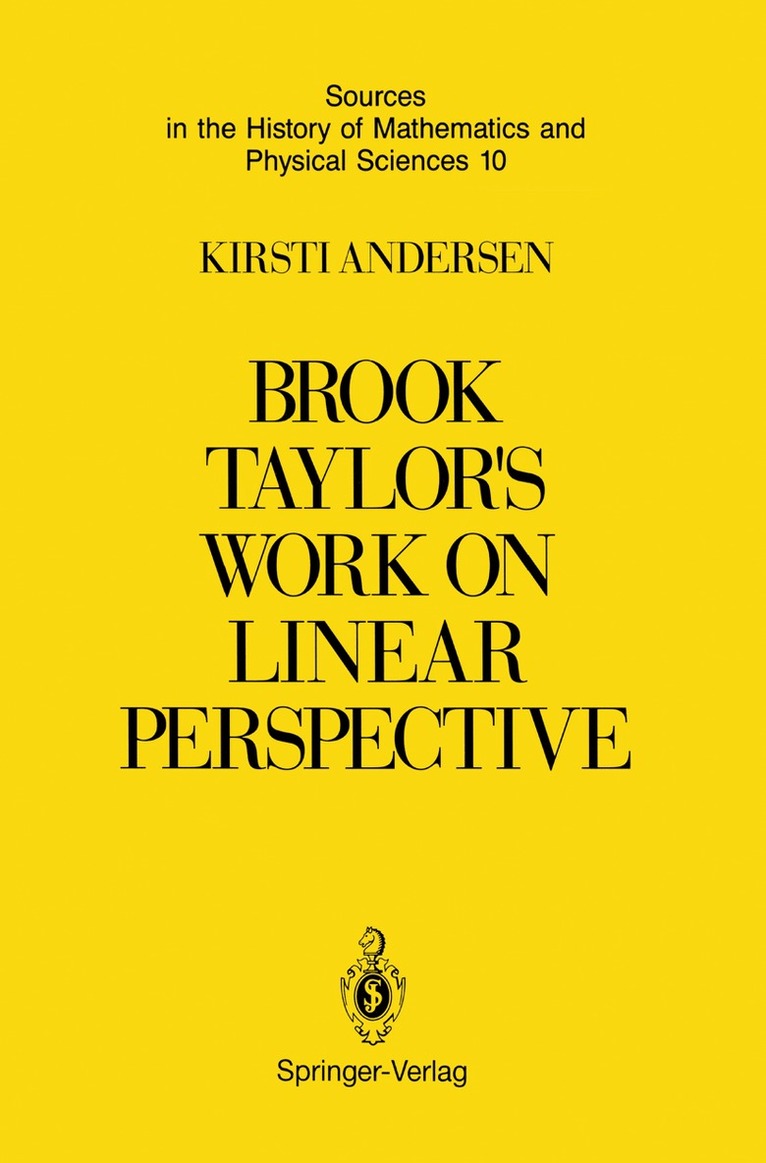
The aim of this book is to make accessible the two important but rare works of Brook Taylor and to describe his role in the history of linear perspective. Taylor's works, Linear Perspective and New Principles on Linear Perspective, are among the most important sources in the history of the theory of perspective. This text focuses on two aspects of this history. The first is the development, starting in the beginning of the 17th century, of a mathematical theory of perspective where gifted mathematicians used their creativity to solve basic problems of perspective and simultaneously were inspired to consider more general problems in the projective geometry. Taylor was one of the key figures in this development. The second aspect concerns the problem of transmitting the knowledge gained by mathematicians to the practitioners. Although Taylor's books were mathematical rather than challenging, he was the first mathematician to succeed in making the practitioners interested in teaching the theoretical foundation of perspective. He became so important in the development that he was named "the father of modern perspective" in England. The English school of Taylor followers contained among others the painter John Kirby and Joseph Highmore and the scientist Joseph Priestley. After its translation to Italian and French in the 1750s, Taylor's work became popular on the continent.
E-bok
PDF, Engelska, 20121 367 kr
Läs direkt efter köp
The aim of this book is to make accessible the two important but rare works of Brook Taylor and to describe his role in the history of linear perspective. Taylor''s works, Linear Perspective and New Principles on Linear Perspective, are among the most important sources in the history of the theory of perspective. This text focuses on two aspects of this history. The first is the development, starting in the beginning of the 17th century, of a mathematical theory of perspective where gifted mathematicians used their creativity to solve basic problems of perspective and simultaneously were inspired to consider more general problems in the projective geometry. Taylor was one of the key figures in this development. The second aspect concerns the problem of transmitting the knowledge gained by mathematicians to the practitioners. Although Taylor''s books were mathematical rather than challenging, he was the first mathematician to succeed in making the practitioners interested in teaching the theoretical foundation of perspective. He became so important in the development that he was named "the father of modern perspective" in England. The English school of Taylor followers contained among others the painter John Kirby and Joseph Highmore and the scientist Joseph Priestley. After its translation to Italian and French in the 1750s, Taylor''s work became popular on the continent.
Del 10 - Sources in the History of Mathematics and Physical Sciences
Brook Taylor’s Work on Linear Perspective
A Study of Taylor’s Role in the History of Perspective Geometry. Including Facsimiles of Taylor’s Two Books on Perspective
Häftad, Engelska, 2012
1 091 kr
Skickas inom 10-15 vardagar
The aim of this book is to make accessible the two important but rare works of Brook Taylor and to describe his role in the history of linear perspective. Taylor's works, Linear Perspective and New Principles on Linear Perspective, are among the most important sources in the history of the theory of perspective. This text focuses on two aspects of this history. The first is the development, starting in the beginning of the 17th century, of a mathematical theory of perspective where gifted mathematicians used their creativity to solve basic problems of perspective and simultaneously were inspired to consider more general problems in the projective geometry. Taylor was one of the key figures in this development. The second aspect concerns the problem of transmitting the knowledge gained by mathematicians to the practitioners. Although Taylor's books were mathematical rather than challenging, he was the first mathematician to succeed in making the practitioners interested in teaching the theoretical foundation of perspective. He became so important in the development that he was named "the father of modern perspective" in England. The English school of Taylor followers contained among others the painter John Kirby and Joseph Highmore and the scientist Joseph Priestley. After its translation to Italian and French in the 1750s, Taylor's work became popular on the continent.
Häftad, Engelska, 2020
791 kr
Skickas inom 5-8 vardagar
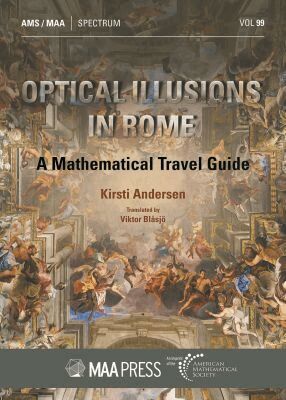
Optical Illusions in Rome is a beautifully written and richly illustrated guide that takes the reader on a tour through ingenious uses of geometry to create illusory impressions of space and grandeur in Italian Renaissance art and architecture in the Eternal City. The book takes us to some of the most striking and historically important uses of optical illusion and includes works of Peruzzi, Borromini, and Pozzo. The artworks are analyzed geometrically and placed in their historical context. The notes on visiting the art described make the volume the perfect companion for a study trip to Rome. A chapter on the principles of perspective geometry and a collection of exercises make the book a wonderful resource for a module on perspective in a geometry or art history course. The mathematical discussion is kept at a level accessible to a reader with a familiarity with high school geometry.Kirsti Andersen is a distinguished historian of mathematics and emerita faculty at Aarhus University. Her previous book, The Geometry of an Art, is widely recognized as the definitive work on the history of the use of perspective in European art. Viktor Blasjo, the translator, is a historian of mathematics on the faculty at Utrecht University. Blasjo has won both the Ford and Polya prizes for expository writing from the Mathematical Association of America.
Häftad, Engelska, 2016
3 583 kr
Skickas inom 10-15 vardagar
Key Issues ver since the late 1970s when Pia Holdt, a student of mine at the time, and Jed Buchwald, a colleague normally working in another field, made E me aware of how fascinating the history of perspective constructions is, I have wanted to know more. My studies have resulted in the present book, in which I am mainly concerned with describing how the understanding of the geometry behind perspective developed and how, and to what extent, new insights within the mathematical theoryof perspective influenced the way the discipline was presented in textbooks. In order to throw light on these aspects of the history of perspective, I have chosen to focus upon a number of key questions that I have divided into two groups. Questions Concerning the History of Geometrical Perspective • How did geometrical constructions of perspective images emerge? • How were they understood mathematically? • How did the geometrical constructions give rise to a mathematical theory of perspective? • How did this theory evolve? Inconnectionwith the last question it is natural to takeup the following themes.