Klaus Gartner – författare
1 672 kr
Läs direkt efter köp
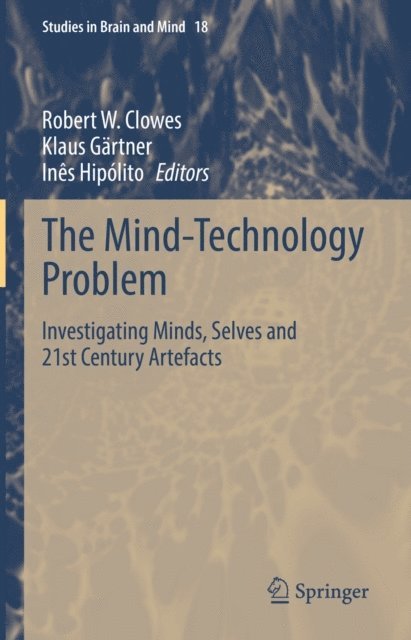
This edited book deepens the engagement between 21st century philosophy of mind and the emerging technologies which are transforming our environment. Many new technologies appear to have important implications for the human mind, the nature of our cognition, our sense of identity and even perhaps what we think human beings are. They prompt questions such as: Would an uploaded mind be ''me''? Does our reliance on smart phones, or wearable gadgets enhance or diminish the human mind? and: How does our deep reliance upon ambient artificial intelligence change the shape of the human mind?
Readers will discover the best philosophical analysis of what current and near future 21st technology means for the metaphysics of mind. Important questions are addressed on matters relating to the extended mind and the distributed self. Expert authors explore the role that the ubiquitous smart phone might have in creating new forms of self-knowledge. They consider machine consciousness, brain enhancement and smart ambient technology, and what they can tell us about phenomenal consciousness.
While ideas of artificial general intelligence, cognitive enhancements and the smart environment are widely commented on, serious analysis of their philosophical implications is only getting started. These contributions from top scholars are therefore very timely, and are of particular relevance to students and scholars of the philosophy of mind, philosophy of technology, computer science and psychology.1 687 kr
Läs direkt efter köp
This book addresses the urgent need for a large and systematic analysis of current interdisciplinary (ID) research and practice. It demonstrates how ID is essentially a cognitive phenomenon, something different from the frivolous and inconsequential attempt of trying to overcome the disciplinary competencies and exigencies. By ID, the authors show that it is a manifestation of the transversal rationality that underlies current scientific activity. It is the very progress of specialized disciplines that requires interdisciplinary new research practices and new forms of articulation between domains, something that has a strong impact on the traditional disciplinary structure of scientific and educational institutions.
Divided into two parts, the book presents a conceptual framework as well as several case studies on ID practices. The book aims at covering three main themes. It contributes to the stabilization of ID meaning and characterizes the main ID theorizations whichhave been proposed until now. It builds an innovative and broad understanding of the several ID determinations as an essentially cognitive phenomenon and of its institutional implications at the level of disciplinary structures and curricular organization. Finally, it distinguishes and maps the diversity of ID procedures and practices which are being used and tested by contemporary scientific and educational institutions. This book is addressed to philosophers, scientists and every one interested in science production and reproduction, including science teaching.