Klaus S. Davidowicz – författare
Visar alla böcker från författaren Klaus S. Davidowicz. Handla med fri frakt och snabb leverans.
6 produkter
6 produkter
E-bok
PDF, Tyska, 2015939 kr
Läs direkt efter köp
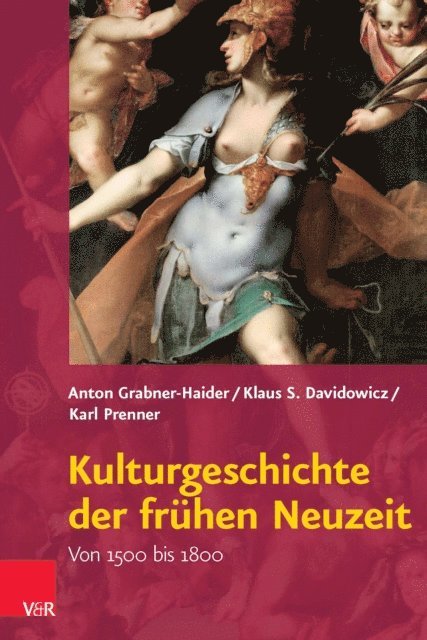
Anton Grabner-Haider, Klaus S. Davidowicz und Karl Prenner erschließen neue Zugänge zum Verständnis der Kultur und Lebenswelt des 19. Jahrhunderts in allen Ländern und Regionen Europas. Sie bieten wichtige Impulse, um auch unsere Gegenwartskultur besser zu verstehen. Ein Schwerpunkt liegt auf den geistigen und philosophischen Ideen, welche diesen Zeitabschnitt in Europa geprägt haben. Denn es waren die kulturellen und die politischen Eliten, welche die Kultur dieser Zeit getragen haben. Grabner-Haider stellt die wirtschaftlichen und sozialen Prozesse, die Dynamik der philosophischen Ideen, die großen politischen Ideologien des Nationalismus, des Traditionalismus, der Romantik, des Sozialismus, des Antisemitismus, der Rassenlehre, des Imperialismus und des Militarismus vor. Er zeichnet ausführlich die Besonderheiten der protestantischen und der katholischen Lebenswelten, zum Teil auch der russischen und der griechischen Ostkirche nach und skizziert kurz die politischen Prozesse und Dynamiken. Breiter dargelegt werden die Entwicklungen der Naturwissenschaften, vor allem der Physik, der Chemie, der Biologie, der Medizin, aber auch die Erkenntnisse der Astronomie und der Mathematik, die Erfindungen der Technik. Schließlich gibt Grabner-Haider einen Überblick über das Literaturschaffen in allen Ländern Europas, über die Formen der Malerei, über die Musik, über die Baukunst und die Architektur. Denn in der Kunst spiegeln sich immer konkrete Lebenserfahrungen, aber auch philosophische Ideen. Davidowicz und Prenner legen die jüdische Lebenswelt und die islamische Kultur übersichtlich und umfassend dar.
E-bok
PDF, Tyska, 2014931 kr
Läs direkt efter köp
Anton Grabner-Haider, Karl Prenner, and Klaus S. Davidowicz present the cultural history of Europe in an extensive and consistent manner. The view of cultural anthropology and of the pragmatical philosophy is chosen. The complex network of the way of life, the world of existence and the interpretation of existence in Europe in the times between 1500 and 1800 will be sharply described. The authors deal with the economical, the technical and social developments, the evolution of natural sciences and the beginning of humanistic and democratic thinking. They focus on the developments in the field of religion (reformation), on the impulses of critical philosophy (enlightenment) and on the political consequences (revolutions). The organization of reign is clearly transformed. Special interest is given to the works of literature and poetry, to the development of painting and architecture and last but not least to the oevres of musical composition in this periode. Two sections of the book focus the Jewish and the Islamic culture in Europe. The intention is to choose some new models of interpretation of this periode, so that false interpretations can be released.
E-bok
PDF, Tyska, 2016513 kr
Läs direkt efter köp
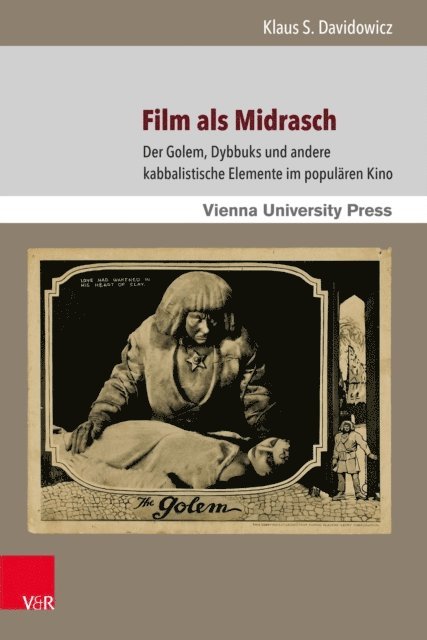
The book explores the conscious usage of Jewish mystical themes and motifs in popular (as well as arthouse) cinema from the silent film era to the present. This historical, as well as geographic, arc spanning from Paul Wegener''s Golem (1920) to films such as David Goyer''s The Unborn (2009), Ang Lee''s Life of Pi (2012) or David Aronofsky''s Noah (2014), is held together by a tightly argued and detailed discussion of both the kabbalist elements themselves and their presence in film and television.Organized in four interrelated parts, the study focuses on mystical secrets of the Hebrew alphabet (where each letter is attributed a numerical value and each number has a hidden meaning), the idea of the Dybbuk as an exiled soul looking for a bodily home, the Lurianic concepts of Tzimtzum (contraction) and Tikkun olam (repair of the world) and, finally, the legend of the Golem, whose Prague origins have been reworked not only in numerous movies but also in popular US television shows including the X-Files and The Simpsons.
E-bok
PDF, Tyska, 2026477 kr
Läs direkt efter köp
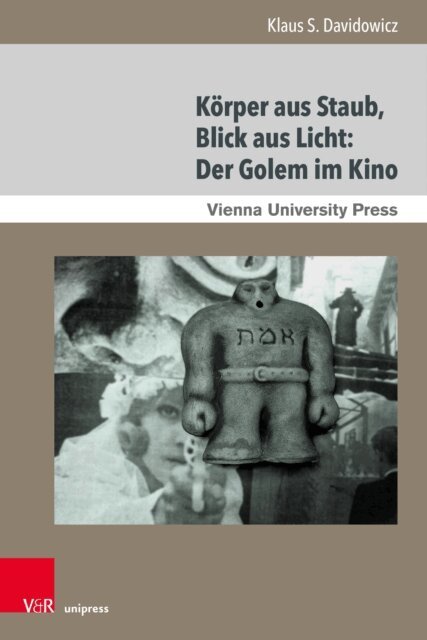
Der Golem geht ins Kino - und bleibt dort. Klaus S. Davidowicz spurt dem uralten Mythos des Golems auf der Leinwand nach: vom stummen Wachter Prags bis zur plastinierten Barbie - als Monster, Retter, Erinnerung, Rebellion. Ein faszinierendes Filmbuch, das tief blickt: in judische Mystik, kabbalistische Buchstabentanze und moderne Filmikonen wie Blade Runner oder Inglourious Basterds. In der Filmgeschichte wurde ein Wesen aus Lehm und Legende zum Spiegel judischer Erfahrung, kultureller Angste und kunstlerischer Visionen. Neben Klassikern analysiert Klaus S. Davidowicz auch viele fast vergessene, uberraschende oder bislang ubersehene Filme - kenntnisreich, fesselnd und mit einem Gespur fur das Magische im Medium Film. The Golem goes to the movies and stays there. Klaus S. Davidowicz traces the ancient myth of the Golem across the silver screen: from the silent guardian of Prague to plastinated Barbie as monster, savior, memory, rebellion. This is a film book that looks deeper: into Jewish mysticism, kabbalistic letter-magic, and modern cinema icons like Blade Runner and Inglourious Basterds. The Golem is more than legend it's a way of thinking, a mirror, a question posed to creation itself. Davidowicz shows how a creature of clay and myth became a reflection of Jewish experience, cultural anxiety, and artistic vision. Alongside classics he analyzes many forgotten, surprising, or overlooked films with insight, passion, and a sense for the magical power of cinema.
Inbunden, Tyska, 2026
540 kr
Skickas inom 3-6 vardagar
Inbunden, Tyska, 2026
370 kr
Skickas inom 3-6 vardagar