Kok-Kwang Phoon - Böcker
Visar alla böcker från författaren Kok-Kwang Phoon. Handla med fri frakt och snabb leverans.
19 produkter
19 produkter
3 161 kr
Skickas inom 10-15 vardagar
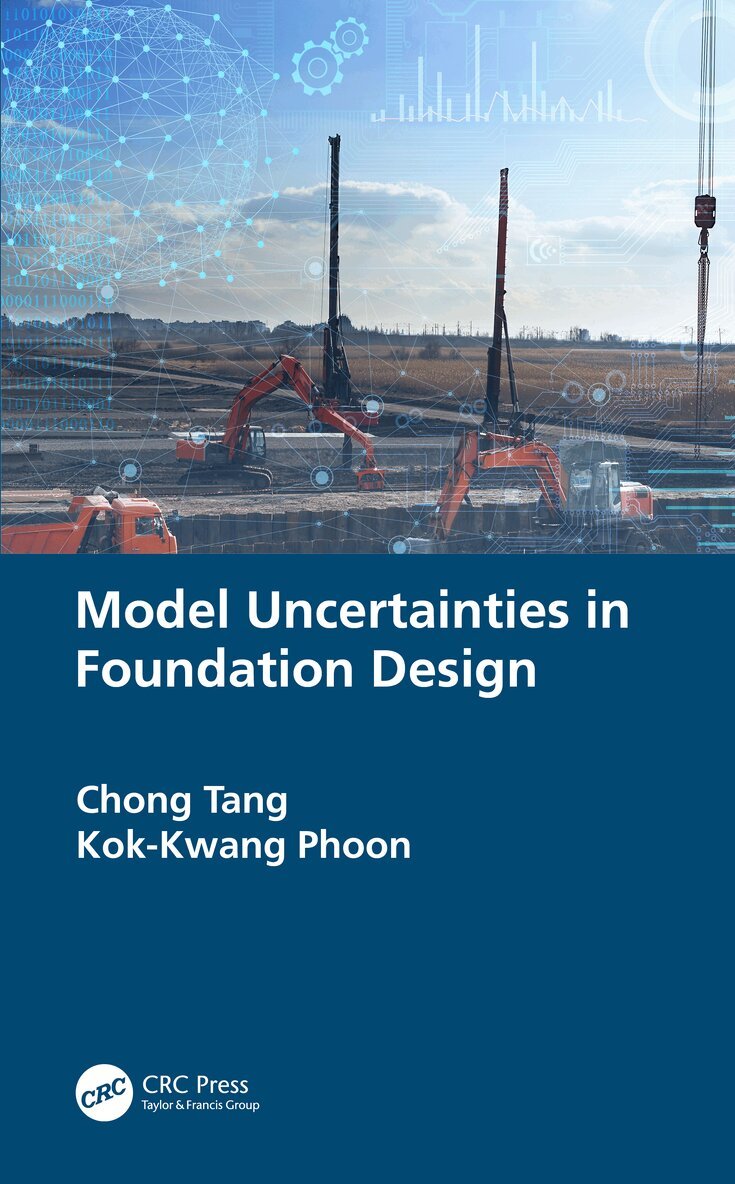
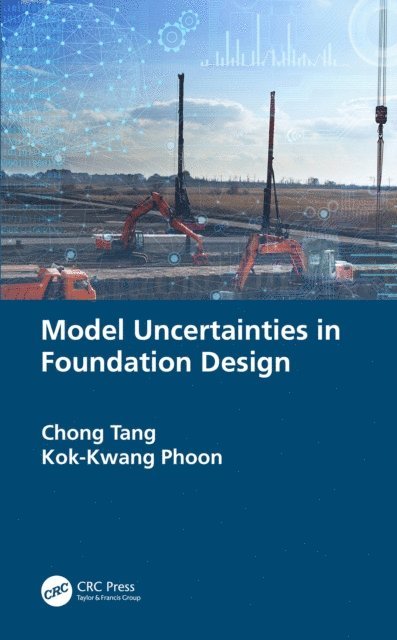
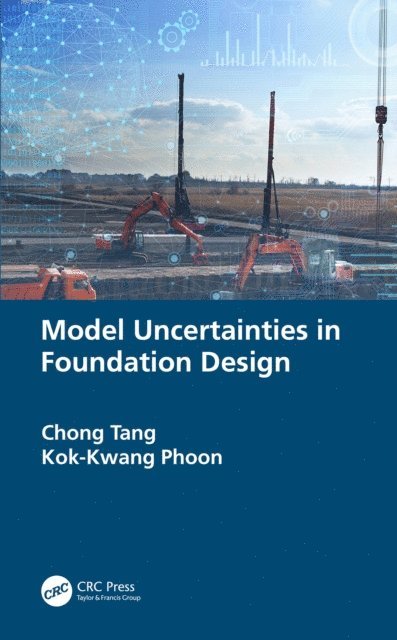
Model Uncertainties in Foundation Design is unique in the compilation of the largest and the most diverse load test databases to date, covering many foundation types (shallow foundations, spudcans, driven piles, drilled shafts, rock sockets and helical piles) and a wide range of ground conditions (soil to soft rock).All databases with names prefixed by NUS are available upon request. This book presents a comprehensive evaluation of the model factor mean (bias) and coefficient of variation (COV) for ultimate and serviceability limit state based on these databases. These statistics can be used directly for AASHTO LRFD calibration.Besides load test databases, performance databases for other geo-structures and their model factor statistics are provided. Based on this extensive literature survey, a practical three-tier scheme for classifying the model uncertainty of geo-structures according to the model factor mean and COV is proposed. This empirically grounded scheme can underpin the calibration of resistance factors as a function of the degree of understanding – a concept already adopted in the Canadian Highway Bridge Design Code and being considered for the new draft for Eurocode 7 Part 1 (EN 1997-1:202x). The helical pile research in Chapter 7 was recognised by the 2020 ASCE Norman Medal.
1 200 kr
Skickas inom 10-15 vardagar
Model Uncertainties in Foundation Design is unique in the compilation of the largest and the most diverse load test databases to date, covering many foundation types (shallow foundations, spudcans, driven piles, drilled shafts, rock sockets and helical piles) and a wide range of ground conditions (soil to soft rock).All databases with names prefixed by NUS are available upon request. This book presents a comprehensive evaluation of the model factor mean (bias) and coefficient of variation (COV) for ultimate and serviceability limit state based on these databases. These statistics can be used directly for AASHTO LRFD calibration.Besides load test databases, performance databases for other geo-structures and their model factor statistics are provided. Based on this extensive literature survey, a practical three-tier scheme for classifying the model uncertainty of geo-structures according to the model factor mean and COV is proposed. This empirically grounded scheme can underpin the calibration of resistance factors as a function of the degree of understanding – a concept already adopted in the Canadian Highway Bridge Design Code and being considered for the new draft for Eurocode 7 Part 1 (EN 1997-1:202x). The helical pile research in Chapter 7 was recognised by the 2020 ASCE Norman Medal.
Reliability-Based Design in Geotechnical Engineering
Computations and Applications
Häftad, Engelska, 2019
915 kr
Skickas inom 10-15 vardagar
Reliability-based design is the only engineering methodology currently available which can ensure self-consistency in both physical and probabilistic terms. It is also uniquely compatible with the theoretical basis underlying other disciplines such as structural design. It is especially relevant as geotechnical design becomes subject to increasing codification and to code harmonization across national boundaries and material types. Already some codes of practice describe the principles and requirements for safety, serviceability, and durability of structures in reliability terms.This book presents practical computational methods in concrete steps that can be followed by practitioners and students. It also provides geotechnical examples illustrating reliability analysis and design. It aims to encourage geotechnical engineers to apply reliability-based design in a realistic context that recognises the complex variabilities in geomaterials and model uncertainties arising from a profession steeped in empiricism. By focusing on learning through computations and examples, this book serves as a valuable reference for engineers and a resource for students.
Reliability-Based Design in Geotechnical Engineering
Computations and Applications
Inbunden, Engelska, 2008
2 692 kr
Skickas inom 10-15 vardagar
Reliability-based design is the only engineering methodology currently available which can ensure self-consistency in both physical and probabilistic terms. It is also uniquely compatible with the theoretical basis underlying other disciplines such as structural design. It is especially relevant as geotechnical design becomes subject to increasing codification and to code harmonization across national boundaries and material types. Already some codes of practice describe the principles and requirements for safety, serviceability, and durability of structures in reliability terms.This book presents practical computational methods in concrete steps that can be followed by practitioners and students. It also provides geotechnical examples illustrating reliability analysis and design. It aims to encourage geotechnical engineers to apply reliability-based design in a realistic context that recognises the complex variabilities in geomaterials and model uncertainties arising from a profession steeped in empiricism. By focusing on learning through computations and examples, this book serves as a valuable reference for engineers and a resource for students.
2 423 kr
Skickas inom 10-15 vardagar
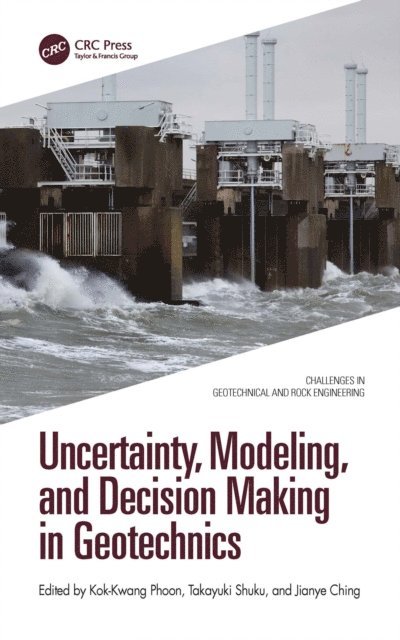
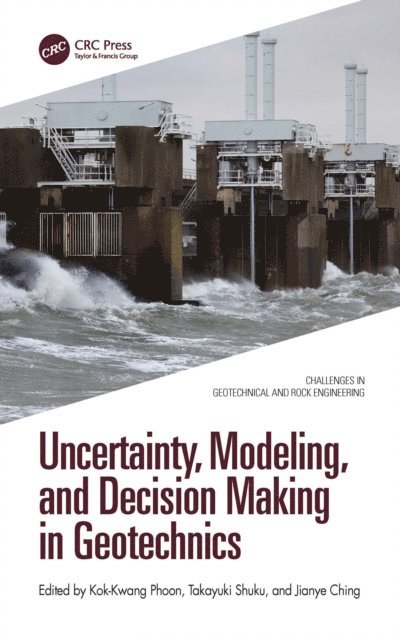
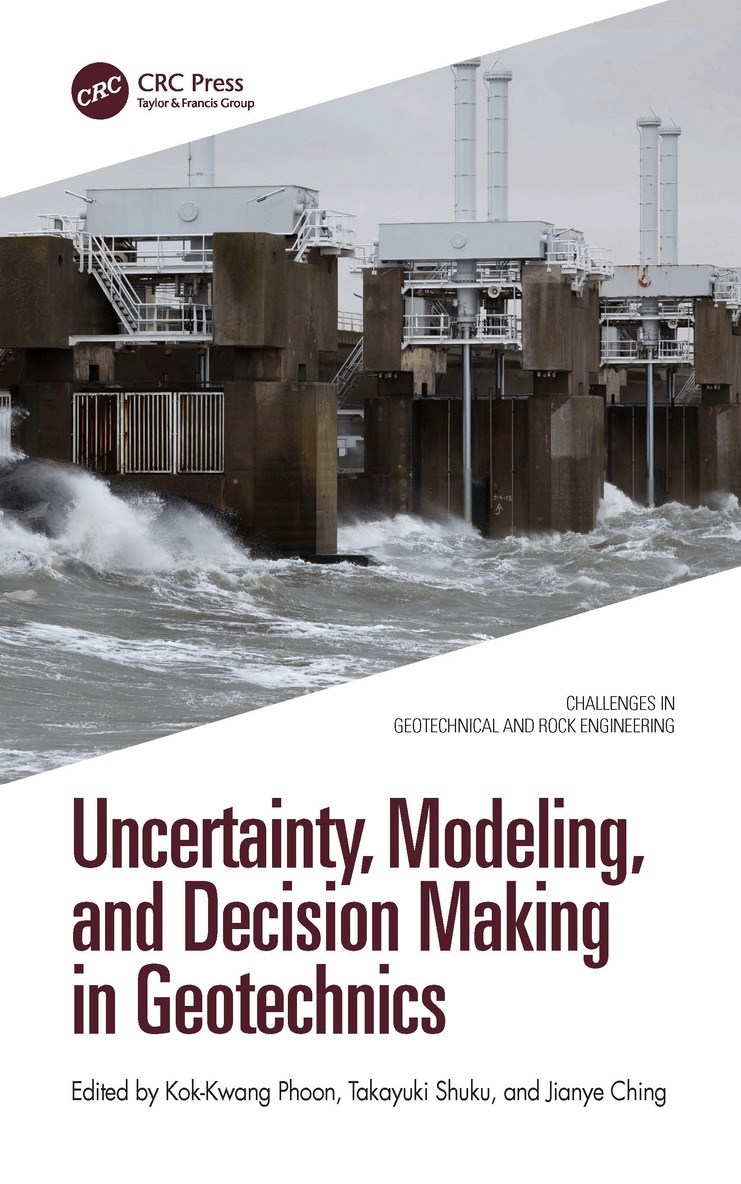
Uncertainty, Modeling, and Decision Making in Geotechnics shows how uncertainty quantification and numerical modeling can complement each other to enhance decision-making in geotechnical practice, filling a critical gap in guiding practitioners to address uncertainties directly.The book helps practitioners acquire a working knowledge of geotechnical risk and reliability methods and guides them to use these methods wisely in conjunction with data and numerical modeling. In particular, it provides guidance on the selection of realistic statistics and a cost-effective, accessible method to address different design objectives, and for different problem settings, and illustrates the value of this to decision-making using realistic examples.Bringing together statistical characterization, reliability analysis, reliability-based design, probabilistic inverse analysis, and physical insights drawn from case studies, this reference guide from an international team of experts offers an excellent resource for state-of-the-practice uncertainty-informed geotechnical design for specialist practitioners and the research community.
1 010 kr
Skickas inom 10-15 vardagar
Uncertainty, Modeling, and Decision Making in Geotechnics shows how uncertainty quantification and numerical modeling can complement each other to enhance decision-making in geotechnical practice, filling a critical gap in guiding practitioners to address uncertainties directly.The book helps practitioners acquire a working knowledge of geotechnical risk and reliability methods and guides them to use these methods wisely in conjunction with data and numerical modeling. In particular, it provides guidance on the selection of realistic statistics and a cost-effective, accessible method to address different design objectives, and for different problem settings, and illustrates the value of this to decision-making using realistic examples.Bringing together statistical characterization, reliability analysis, reliability-based design, probabilistic inverse analysis, and physical insights drawn from case studies, this reference guide from an international team of experts offers an excellent resource for state-of-the-practice uncertainty-informed geotechnical design for specialist practitioners and the research community.
5 182 kr
Skickas inom 10-15 vardagar
Databases for Data-Centric Geotechnics forms a definitive reference and guide to databases in geotechnical and rock engineering, to enhance decision-making in geotechnical practice using data-driven methods.The first volume pertains to site characterization. The opening chapter presents a deep analysis of site data attributes, including the establishment of a new taxonomy of site data under “4S” (site generalizations, spatial features, sampling characteristics, and smart data) to provide a novel agenda for data-driven site characterization. Type 3 machine learning methods (disruptive value) are possible as sensors become more pervasive and more intelligent. A comprehensive overview of site characterization information is also presented with a focus on its availability, coverage, value to decision making, and challenges. The following 13 chapters then present databases of soil and rock properties and the application of these databases to rock socket behavior, rock classification, settlement on soft marine clays, permeability of fine-grained soils, and liquefaction among others.The second volume pertains to geotechnical structures. The opening chapter presents a substantial survey of performance databases and the effectiveness of our prediction models in matching the field measurements in these databases, based on (1) full-scale field tests, (2) 39 prediction exercises organized as a part of international conferences, and (3) comparison between numerical analyses and in-situ or field measurements conducted by the French LCPC. The focus is on the evaluation of the statistical degree of confidence in predicting various of quantities of interest such as capacity and deformation. The following 18 chapters then present databases on the performance of shallow foundations, spudcan foundations, deep foundations, anchors and pipelines, retaining systems and excavations, and landslides.The databases were compiled from studies undertaken in many countries including Austria, Australia, Brazil, Canada, China, France, Finland, Germany, India, Iran, Japan, Korea, Malaysia, Mexico, New Zealand, Norway, Singapore, Sweden, Thailand, UK and USA.Databases for Data-Centric Geotechnics represents the most diverse and comprehensive assembly of database research in a single publication (consisting of two volumes) to date. It follows from Model Uncertainties for Foundation Design, also published by CRC Press, and suits specialist geotechnical engineers, researchers and graduate students.
2 356 kr
Skickas inom 10-15 vardagar
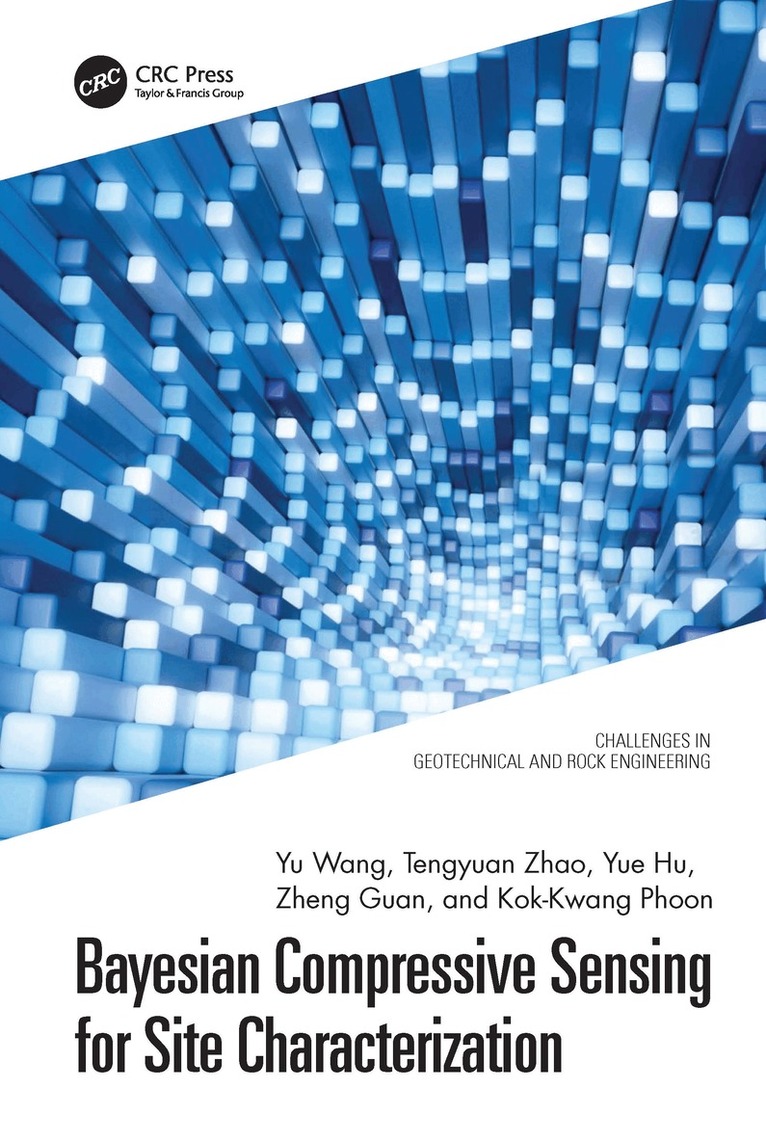
Site characterization is indispensable to good geotechnical or rock engineering practice as every site is unique, but technical, budget, time, or access constraints typically result in only a tiny fraction of the underground soil and rock in a site being visually inspected, sampled, or tested. This leads to a long- lasting challenge of sparse measurements in geo- sciences and engineering. This book introduces Bayesian compressive sensing or sampling (BCS) as a highly efficient spatial data analytic and simulation method for the efficient modelling of spatial geo- data from sparse measurements, with quantified reliability and uncertainty to further optimize site characterization. It provides the necessary theory and computational tools for setting up and solving a sparse spatial data modeling problem using BCS. This book suits graduate students, academics, researchers, and engineers interested in site characterization from sparse measurements in geotechnical and rock engineering, and also those modeling other spatially varying phenomena such as air quality data, soil or water pollution data, and meteorological data. This is supplemented with a software called Analytics of Sparse Spatial Data using Bayesian compressive sampling/ sensing and illustrative examples, and enables hands- on experience of spatial data analytics and simulation using sparse measurements.
2 222 kr
Skickas inom 10-15 vardagar
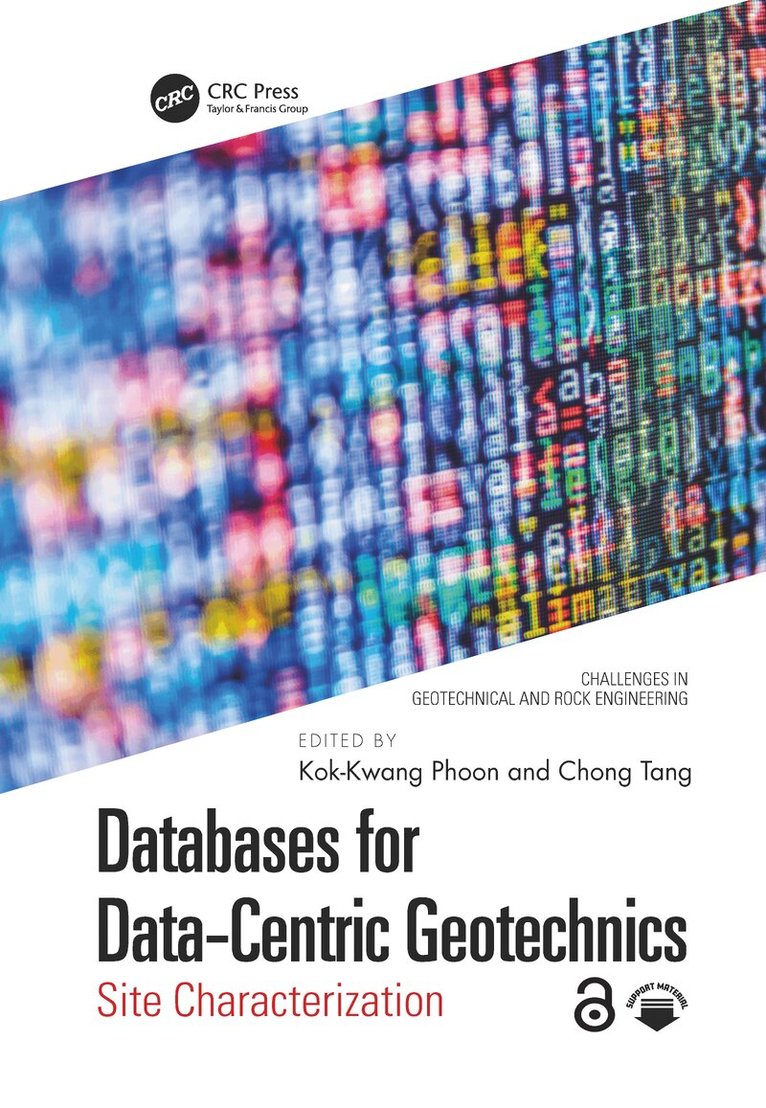
Databases for Data-Centric Geotechnics forms a definitive reference and guide to databases in geotechnical and rock engineering, to enhance decision-making in geotechnical practice using data-driven methods. This first volume pertains to site characterization. The opening chapter presents an in-depth analysis of site data attributes, including the establishment of a new taxonomy of site data under “4S” (site generalizations, spatial features, sampling characteristics, and smart data) to provide a novel agenda for data-driven site characterization. Type 3 machine learning methods (disruptive value) are possible as sensors become more pervasive and more intelligent. A comprehensive overview of site characterization information is also presented with a focus on its availability, coverage, value to decision making, and challenges. The remaining 13 chapters cover databases of soil and rock properties and the application of these databases to rock socket behavior, rock classification, settlement on soft marine clays, permeability of fine-grained soils, and liquefaction among others. The databases were compiled from studies undertaken in many countries including Austria, Australia, Brazil, Canada, China, France, Finland, Germany, India, Iran, Japan, Korea, Malaysia, Mexico, New Zealand, Norway, Singapore, Sweden, Thailand, the United Kingdom, and the United States.This volume on site characterization is a companion to the volume on geotechnical structures. Databases for Data-Centric Geotechnics represents the most diverse and comprehensive assembly of database research in a single publication (consisting of two volumes) to date. It follows from Model Uncertainties for Foundation Design, also published by CRC Press, and suits specialist geotechnical engineers, researchers and graduate students.Chapter 6 of this book is freely available as a downloadable Open Access PDF at http://www.taylorfrancis.com under a Creative Commons [(CC BY)] 4.0 license.
2 222 kr
Skickas inom 10-15 vardagar
Databases for Data-Centric Geotechnics forms a definitive reference and guide to databases in geotechnical and rock engineering, to enhance decision-making in geotechnical practice using data-driven methods. This second volume pertains to geotechnical structures. The opening chapter presents a substantial survey of performance databases and the effectiveness of our prediction models in matching the field measurements in these databases, based on (1) full-scale field tests, (2) 39 prediction exercises organized as a part of international conferences, and (3) comparison between numerical analyses and in-situ or field measurements conducted by the French LCPC. The focus is on the evaluation of the statistical degree of confidence in predicting various of quantities of interest such as capacity and deformation. The following 18 chapters then present databases on the performance of shallow foundations, spudcan foundations, deep foundations, anchors and pipelines, retaining systems and excavations, and landslides. The databases were compiled from studies undertaken in many countries such as Australia, Belgium, Bolivia, Brazil, Canada, China, Egypt, France, Germany, Hungary, Iran, Ireland, Japan, Kenya, Malaysia, Netherlands, Norway, Poland, Portugal, South Africa, the United Kingdom and the United States.This volume on geotechnical structures is a companion to the volume on site characterization. Databases for Data-Centric Geotechnics represents the most diverse and comprehensive assembly of database research in a single publication (consisting of two volumes) to date. It follows from Model Uncertainties for Foundation Design, also published by CRC Press, and suits specialist geotechnical engineers, researchers and graduate students.Chapter 10 of this book is freely available as a downloadable Open Access PDF at http://www.taylorfrancis.com under a Creative Commons [Attribution (CC BY)] 4.0 license.
2 548 kr
Kommande
Machine learning and other digital technologies fed with large datasets offer a major set of tools for practical geotechnical design. Large language models and other generative AIs can perform cognitive tasks currently undertaken by humans -- and might even predict the next event based on some time series. This depends on a balance of data centricity, fit-for (and transformative) practice, and geotechnical context, and can be achieved by the integration of information, data, techniques, tools, perspectives, concepts, theories, along with experience from both geotechnical engineering and machine learning in computer science. And yet good engineering and research outcomes are still dependent on how practice (which includes the workforce) is improved or even transformed in the longer term to better serve end-users. This collection of focused chapters from a group of specialists presents principles and broader up to date practice of machine learning, along with a number of example areas of site characterization, design and construction in geotechnics.This book is essential for sophisticated practitioners as well as graduate student.
1 321 kr
Skickas inom 10-15 vardagar
Establishes Geotechnical Reliability as Fundamentally Distinct from Structural ReliabilityReliability-based design is relatively well established in structural design. Its use is less mature in geotechnical design, but there is a steady progression towards reliability-based design as seen in the inclusion of a new Annex D on "Reliability of Geotechnical Structures" in the third edition of ISO 2394. Reliability-based design can be viewed as a simplified form of risk-based design where different consequences of failure are implicitly covered by the adoption of different target reliability indices. Explicit risk management methodologies are required for large geotechnical systems where soil and loading conditions are too varied to be conveniently slotted into a few reliability classes (typically three) and an associated simple discrete tier of target reliability indices. Provides Realistic Practical Guidance Risk and Reliability in Geotechnical Engineeringmakes these reliability and risk methodologies more accessible to practitioners and researchers by presenting soil statistics which are necessary inputs, by explaining how calculations can be carried out using simple tools, and by presenting illustrative or actual examples showcasing the benefits and limitations of these methodologies.With contributions from a broad international group of authors, this text: Presents probabilistic models suited for soil parametersProvides easy-to-use Excel-based methods for reliability analysisConnects reliability analysis to design codes (including LRFD and Eurocode 7)Maximizes value of information using Bayesian updatingContains efficient reliability analysis methods Accessible To a Wide AudienceRisk and Reliability in Geotechnical Engineering presents all the "need-to-know" information for a non-specialist to calculate and interpret the reliability index and risk of geotechnical structures in a realistic and robust way. It suits engineers, researchers, and students who are interested in the practical outcomes of reliability and risk analyses without going into the intricacies of the underlying mathematical theories.
3 663 kr
Skickas inom 10-15 vardagar
Establishes Geotechnical Reliability as Fundamentally Distinct from Structural ReliabilityReliability-based design is relatively well established in structural design. Its use is less mature in geotechnical design, but there is a steady progression towards reliability-based design as seen in the inclusion of a new Annex D on "Reliability of Geotechnical Structures" in the third edition of ISO 2394. Reliability-based design can be viewed as a simplified form of risk-based design where different consequences of failure are implicitly covered by the adoption of different target reliability indices. Explicit risk management methodologies are required for large geotechnical systems where soil and loading conditions are too varied to be conveniently slotted into a few reliability classes (typically three) and an associated simple discrete tier of target reliability indices. Provides Realistic Practical Guidance Risk and Reliability in Geotechnical Engineeringmakes these reliability and risk methodologies more accessible to practitioners and researchers by presenting soil statistics which are necessary inputs, by explaining how calculations can be carried out using simple tools, and by presenting illustrative or actual examples showcasing the benefits and limitations of these methodologies.With contributions from a broad international group of authors, this text: Presents probabilistic models suited for soil parametersProvides easy-to-use Excel-based methods for reliability analysisConnects reliability analysis to design codes (including LRFD and Eurocode 7)Maximizes value of information using Bayesian updatingContains efficient reliability analysis methods Accessible To a Wide AudienceRisk and Reliability in Geotechnical Engineering presents all the "need-to-know" information for a non-specialist to calculate and interpret the reliability index and risk of geotechnical structures in a realistic and robust way. It suits engineers, researchers, and students who are interested in the practical outcomes of reliability and risk analyses without going into the intricacies of the underlying mathematical theories.
Soil Mechanics And Geotechnical Engineering (12arc) - Proceedings Of The Twelfth Asian Regional Conference (In 2 Volumes, With Cd-rom)
Inbunden, Engelska, 2003
6 442 kr
Tillfälligt slut
Volume 1 of this book comprises about 240 papers presented at the Twelfth Asian Regional Conference on Soil Mechanics and Geotechnical Engineering. These papers showcase the latest developments and know-how in design and construction practices as well as theoretical advances in various geotechnical engineering fields. The majority of the contributors are from Asian countries, notably Japan, Korea, China, Taiwan, Singapore and India; a good number of papers are from outside Asia.Volume 2 is a post-conference volume comprising keynote lectures on soil dynamics and earthquake engineering, major mass rapid transit, high speed railway and dam projects, and soil reinforcement, delivered by prominent researchers and practising engineers. Thematic lectures and panel presentations on specific geotechnical engineering topics such as natural disasters, land reclamation, limit state design and earth reinforcement, from conference sessions organized by technical committees, are also included. In addition, this volume presents the written discussions of the conference sessions.The proceedings have been selected for coverage in:
Limit State Design In Geotechnical Engineering Practice, Proceedings Of The International Workshop Lsd2003 (With Cd-rom)
Häftad, Engelska, 2003
1 014 kr
Tillfälligt slut
This publication contains the abstracts of 20 papers, the majority of which were presented at the International Workshop on Limit State Design in Geotechnical Engineering Practice (LSD2003). The complete contributions are available in the accompanying CD-ROM (special lecture not included). The topics covered include: performance-based and limit state design philosophies; issues arising from the implementation of limit state design codes; elaborations of “measured values”, “derived values” and “characteristic values”; reliability-based methodologies for analytical calibration of partial factors; and application of partial factors in FEM where highly nonlinear force-deformation behaviors may govern.
Hydroinformatics - Proceedings Of The 6th International Conference (In 2 Volumes, With Cd-rom)
Inbunden, Engelska, 2004
8 884 kr
Tillfälligt slut
Hydroinformatics addresses cross-disciplinary issues ranging from technological and sociological to more general environmental concerns, including an ethical perspective. It covers the application of information technology in the widest sense to problems of the aquatic environment.This two-volume publication contains about 250 high quality papers contributed by authors from over 50 countries. The proceedings present many exciting new findings in the emerging subjects, as well as their applications, such as: data mining, data assimilation, artificial neural networks, fuzzy logic, genetic algorithms and genetic programming, chaos theory and support vector machines, geographic information systems and virtual imaging, decision support and management systems, Internet-based technologies.This book provides an excellent reference to researchers, graduate students, practitioners, and all those interested in the field of hydroinformatics.
Geotechnical Engineering For Disaster Mitigation And Rehabilitation - Proceedings Of The International Conference (With Cd-rom)
Inbunden, Engelska, 2005
2 847 kr
Tillfälligt slut
After the devastating disaster caused by the tsunami on 26 December 2004, disaster mitigation and rehabilitation have become some of the most pressing topics for discussion in geotechnical engineering and related professions. Some of the most important contributions to this discussion were made during the International Conference on Geotechnical Engineering for Disaster Mitigation and Rehabilitation, the first of its kind held in the Asia-Pacific region. It was organized by the Joint Working Group on Geotechnical Engineering for Disaster Mitigation and Rehabilitation (JWG-DMR), which is supported by national geotechnical societies from Australia, China, India, Indonesia, Japan, South Korea, Southeast Asia (comprising Malaysia, Singapore, Taiwan and Thailand) and Sri Lanka.Disaster management encompasses diverse topics such as natural disasters (tsunamis, earthquakes, landslides, etc.), mitigation (early warning and prediction systems, hazard mapping, risk analysis, coastal protection works, etc.), rehabilitation and reconstruction (difficult soils and ground treatment, design against earthquakes and other natural disasters, etc.), and many others, including soil dynamics, liquefaction, stability, and environmental protection. This volume contains over 100 high quality papers contributed by authors from participating countries, including keynote and invited lectures delivered by eminent researchers and practitioners. The proceedings will benefit the geotechnical profession as a whole, in particular those who are involved in disaster prevention, mitigation, rehabilitation and reconstruction works. In addition, the contributions will add impetus to research and development in this important domain: the long-term goal is to mitigate the unacceptable magnitude of destruction and the number of human lives lost such as in the recent 2004 tsunami tragedy.
New Generation Design Codes For Geotechnical Engineering Practice - Taipei 2006 (With Cd-rom) - Proceedings Of The International Symposium
Häftad, Engelska, 2006
1 118 kr
Tillfälligt slut
Communication of design risk within a transparent and rational framework is necessary in view of the increasing interest in code harmonization, public involvement in defining acceptable risk levels, and risk-sharing among client, consultant, insurer, and financier. Activities in code harmonization are particularly noteworthy. For the geotechnical engineering profession, there is added pressure for it to undergo a significant revamp because structural and geotechnical design are increasingly incompatible. The contributions in this volume tackle the important issues relating to new generation geotechnical design codes, in a bid to move geotechnical engineers forward together with the significant changes occurring at the global level.
2 834 kr
Tillfälligt slut
This proceedings contains 89 papers from 25 countries and regions, including 14 keynote lectures and 17 invited lectures, presented at the Third International Conference on Geotechnical Engineering for Disaster Mitigation and Rehabilitation (3ICGEDMAR 2011) together with the Fifth International Conference on Geotechnical & Highway Engineering (5ICGHE), which was held in Semarang, Indonesia, from 18 to 20 May 2011. This is the third conference in the GEDMAR conference series. The first was held in Singapore from 12 to 13 December 2005 and the second in Nanjing, China, from 30 May to 2 June 2008.The proceedings is divided into three sections: keynote papers, invited papers and conference papers under which there are six sub-sections: Case Studies on Recent Disasters; Soil Behaviours and Mechanisms for Hazard Analysis; Disaster Mitigation and Rehabilitation Techniques; Risk Analysis and Geohazard Assessment; Innovation Foundations for Rail, Highway, and Embankments; and Slope Failures and Remedial Measures.The conference is held under the auspices of the International Society for Soil Mechanics and Geotechnical Engineering (ISSMGE) Technical Committee TC-303: Coastal and River Disaster Mitigation and Rehabilitation, TC-203: Earthquake Geotechnical Engineering and Associated Problems, TC-302: Forensic Geotechnical Engineering, TC-304: Engineering Practice of Risk Assessment and Management, TC-213: Geotechnics of Soil Erosion, TC-202: Transportation Geotechnics, TC-211: Ground Improvement, Southeast Asian Geotechnical Society (SEAGS), Association of Geotechnical Societies in Southeast Asia (AGSSEA), and Road Engineering Association of Asia & Australasia (REAAA).