Konstantinos Theofilatos – författare
Visar alla böcker från författaren Konstantinos Theofilatos. Handla med fri frakt och snabb leverans.
5 produkter
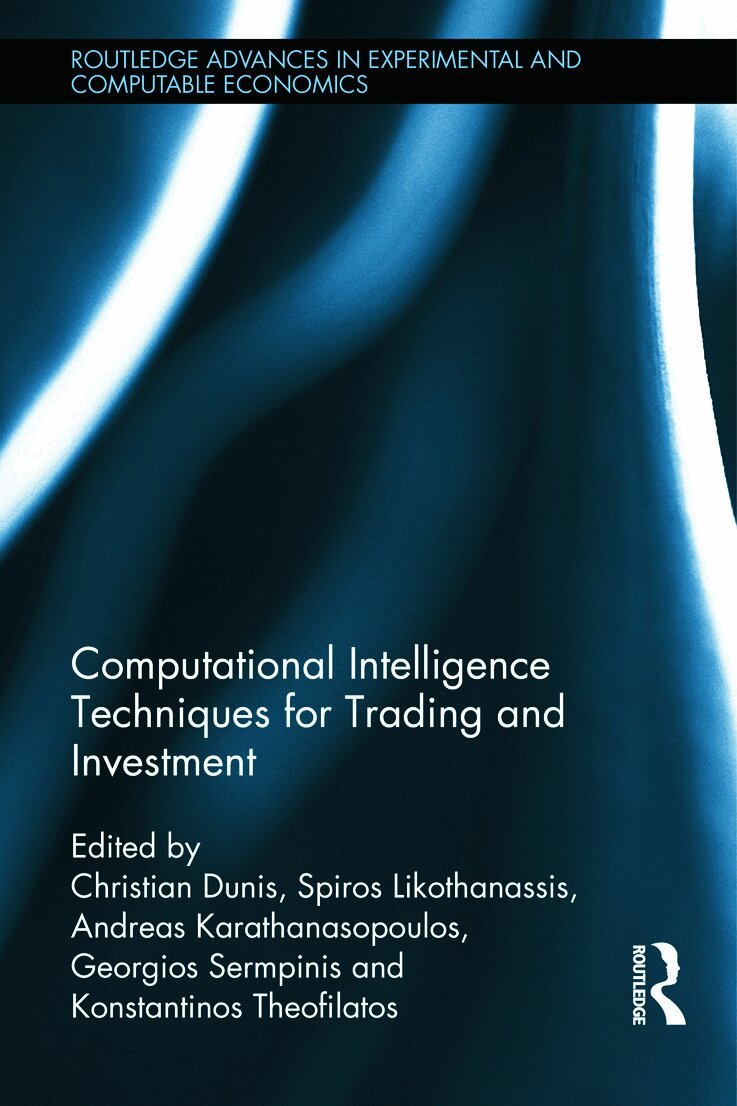
Computational Intelligence Techniques for Trading and Investment
Av Christian Dunis, Spiros Likothanassis m. fl.
Inbunden, 2014
785 kr
Lägg i varukorg
Computational intelligence, a sub-branch of artificial intelligence, is a field which draws on the natural world and adaptive mechanisms in order to study behaviour in changing complex environments. This book provides an interdisciplinary view of current technological advances and challenges …
Computational Intelligence Techniques for Trading and Investment
Av Konstantinos Theofilatos, Georgios Sermpinis m. fl.
E-bok, 2014
856 kr
Lägg i varukorg
Computational intelligence, a sub-branch of artificial intelligence, is a field which draws on the natural world and adaptive mechanisms in order to study behaviour in changing complex environments. This book provides an interdisciplinary view of current technological advances and challenges …
Computational Intelligence Techniques for Trading and Investment
Av Konstantinos Theofilatos, Georgios Sermpinis m. fl.
E-bok, 2014
838 kr
Lägg i varukorg
Computational intelligence, a sub-branch of artificial intelligence, is a field which draws on the natural world and adaptive mechanisms in order to study behaviour in changing complex environments. This book provides an interdisciplinary view of current technological advances and challenges …
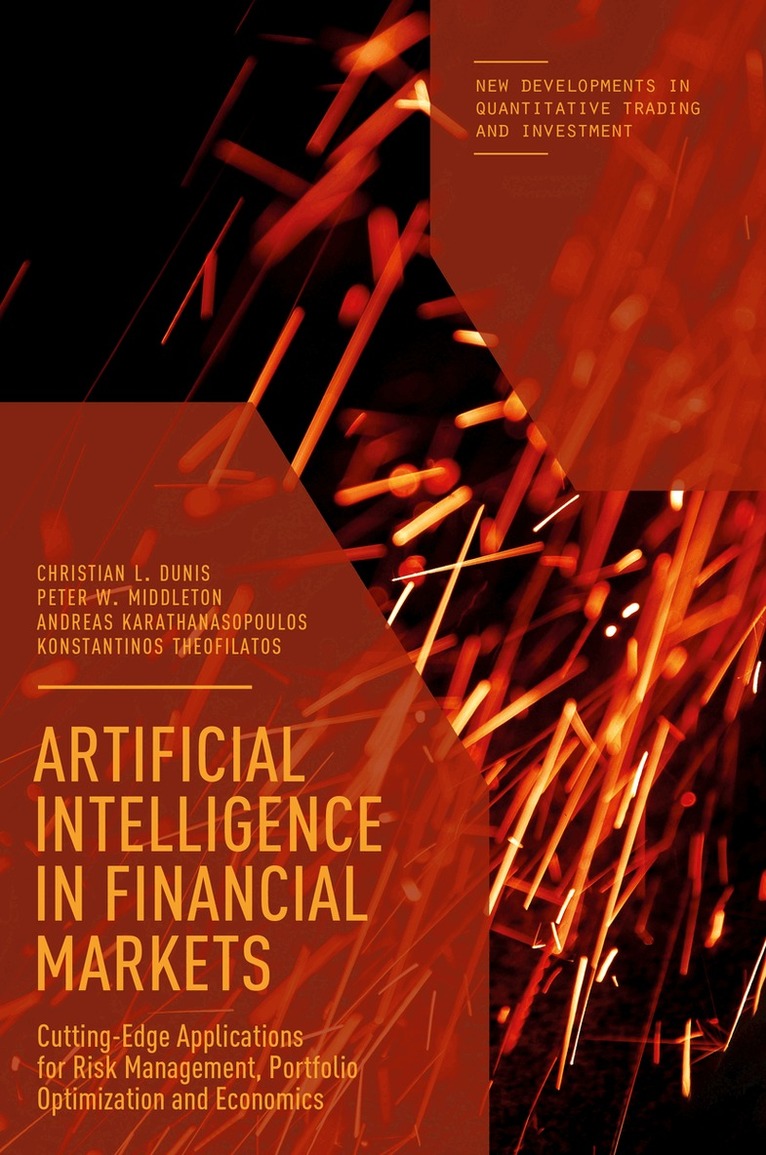
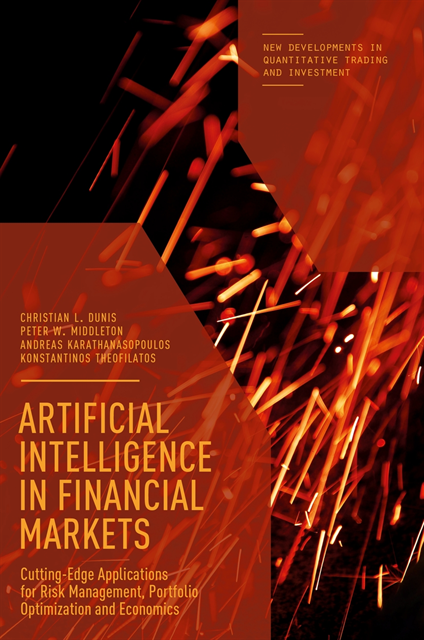
Artificial Intelligence in Financial Markets
Cutting Edge Applications for Risk Management, Portfolio Optimization and Economics
Av Christian L. Dunis, Peter W. Middleton m. fl.
Inbunden, 2017
1131 kr
Lägg i varukorg
As technology advancement has increased, so to have computational applications for forecasting, modelling and trading financial markets and information, and practitioners are finding ever more complex solutions to financial challenges. Neural networking is a highly effective, trainable algorithmic …
Artificial Intelligence in Financial Markets
Cutting Edge Applications for Risk Management, Portfolio Optimization and Economics
Av Konstantinos Theofilatos, Andreas Karathanasopolous m. fl.
E-bok, 2016
1562 kr
Lägg i varukorg
As technology advancement has increased, so to have computational applications for forecasting, modelling and trading financial markets and information, and practitioners are finding ever more complex solutions to financial challenges. Neural networking is a highly effective, trainable algorithmic …