Konstantinos Tsanis – författare
Visar alla böcker från författaren . Handla med fri frakt och snabb leverans.
4 produkter
4 produkter
E-bok
PDF, Engelska, 2010481 kr
Läs direkt efter köp
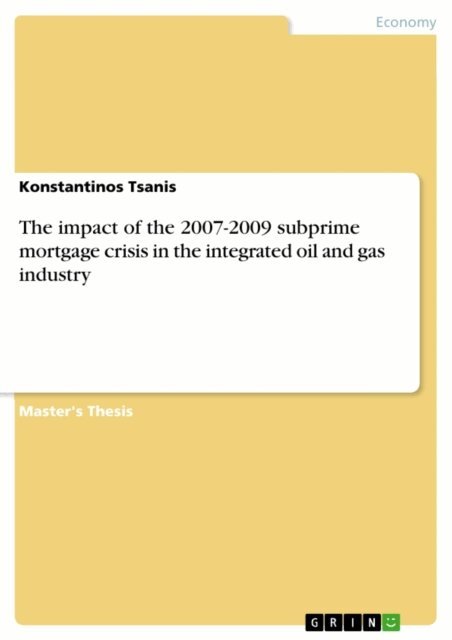
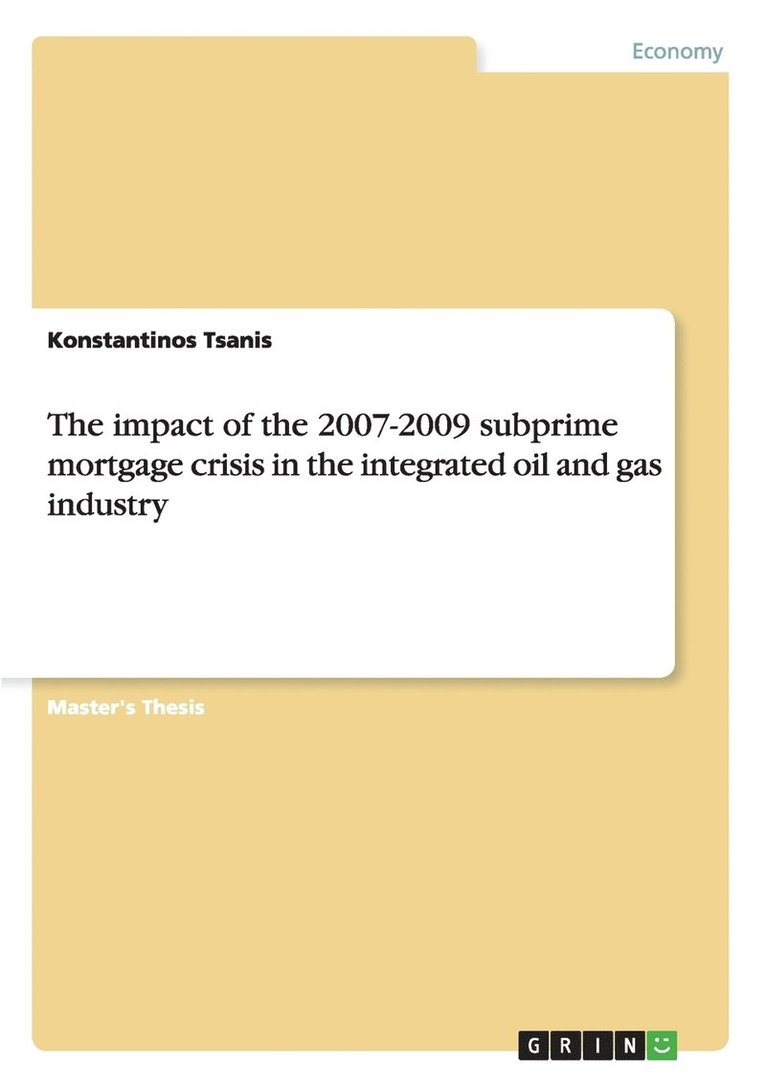
Master's Thesis from the year 2009 in the subject Business economics - Investment and Finance, grade: 69%, University of Edinburgh, language: English, abstract: The years 2007-2009 the global economy has been affected by the subprime mortgages crisis, which has its origins in the extremely risky positions that some banks and financial institutions held. When defaults in payments started, and banks started facing problems in their payments, lending between banks became more difficult, and through the contagion of the global financial system, the crisis spread around the world. This crisis affected many industries. The current paper attempts to examine the impact of the 2007-2009 subprime mortgage crisis in the integrated oil and gas industry. Energy, and subsequently oil and gas, are vital for many other industries, as well as for individuals and households. The impact of the crisis is examined through a multimethod approach: Questionnaires, which were sent to executives of oil and gas companies, are analysed in the beginning, followed by analysis of basic figures of the financial statements of the 200 biggest oil and gas companies. Findings are supplemented by the examination of the analysts recommendations, for a number of years. Finally, the mergers and acquisitions between oil and gas companies are examined. This paper, has the characteristic that it investigates an event which is still unfolding. As a result, there is not established information about some topics, such as the specific causes of the crisis. Therefore, the emerging literature on some topics is analysed, and specialists reports are included, to compare and contrast findings. Results show that, even though energy, and subsequently oil and gas, are necessary for almost every industry, the decrease in global demand, as well as the lower oil prices, will lead to a decrease in long term investing. Furthermore, sales of companies are expected to be lower, and this will oblige companies to find ways to reduce the costs, in all the levels of their value chain.
Häftad, Engelska, 2010
863 kr
Skickas inom 3-6 vardagar
Inbunden, Engelska, 2025
3 661 kr
Skickas inom 10-15 vardagar
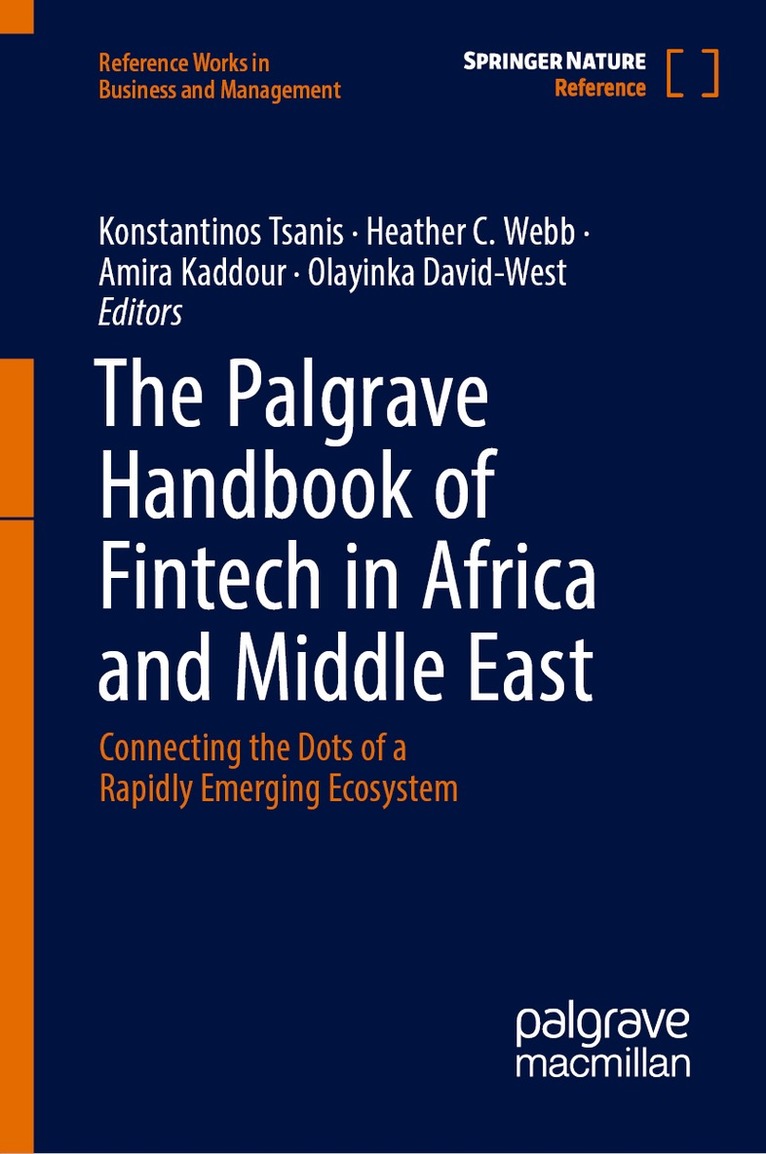
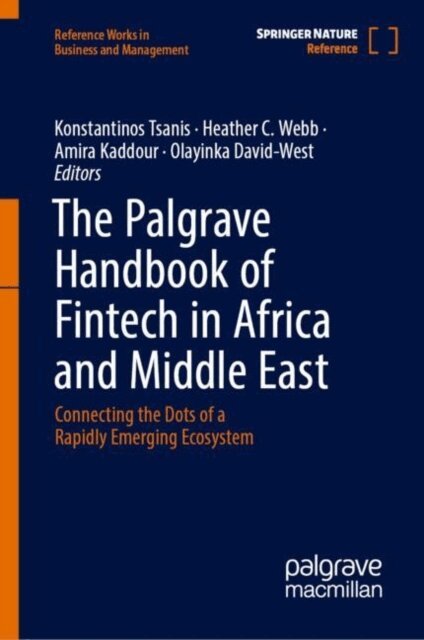
This book tells the African FinTech stories and provides a comprehensive overview of the current situations within the five economic zones in Africa - the Southern African Development Community (SADC), the East African Community (EAC), the Economic Community of West African States (ECOWAS), the Common Market for Eastern and Southern Africa (COMESA), and the Arab Maghreb Union (AMU), North Africa and the GCC countries. It explores the intersection of finance and technology, highlighting the latest trends and innovations in the African FinTech landscape, and examines the technology behind financial services in Africa, including mobile money services, blockchain, and digital payment solutions. It addresses the economic impact of FinTech on African countries, including how it is transforming financial inclusion, entrepreneurship, and investment. It discusses the regulatory and policy environment for FinTech in Africa and Middle East, including how governments and policymakers are responding to the growth of the sector and what challenges they face with real-life examples of African entrepreneurs who are leveraging technology to innovate and disrupt traditional financial services, highlighting their successes, challenges, and impact on the sector. It offers real-world case studies to illustrate how FinTech is being used in African and Middle East communities with a deeper understanding of its impact on individuals and businesses. It will be helpful for entrepreneurs, academics, bankers, consultants, investors, and policymakers.
E-bok
Engelska, 20254 562 kr
Läs direkt efter köp
This book tells the African FinTech stories and provides a comprehensive overview of the current situations within the five economic zones in Africa - the Southern African Development Community (SADC), the East African Community (EAC), the Economic Community of West African States (ECOWAS), the Common Market for Eastern and Southern Africa (COMESA), and the Arab Maghreb Union (AMU), North Africa and the GCC countries. It explores the intersection of finance and technology, highlighting the latest trends and innovations in the African FinTech landscape, and examines the technology behind financial services in Africa, including mobile money services, blockchain, and digital payment solutions. It addresses the economic impact of FinTech on African countries, including how it is transforming financial inclusion, entrepreneurship, and investment. It discusses the regulatory and policy environment for FinTech in Africa and Middle East, including how governments and policymakers are responding to the growth of the sector and what challenges they face with real-life examples of African entrepreneurs who are leveraging technology to innovate and disrupt traditional financial services, highlighting their successes, challenges, and impact on the sector. It offers real-world case studies to illustrate how FinTech is being used in African and Middle East communities with a deeper understanding of its impact on individuals and businesses. It will be helpful for entrepreneurs, academics, bankers, consultants, investors, and policymakers.