Kosuke Mizuno – författare
Visar alla böcker från författaren Kosuke Mizuno. Handla med fri frakt och snabb leverans.
4 produkter
4 produkter
Catastrophe and Regeneration in Indonesia's Peatlands
Ecology, Economy and Society
Häftad, Engelska, 2016
432 kr
Skickas inom 3-6 vardagar
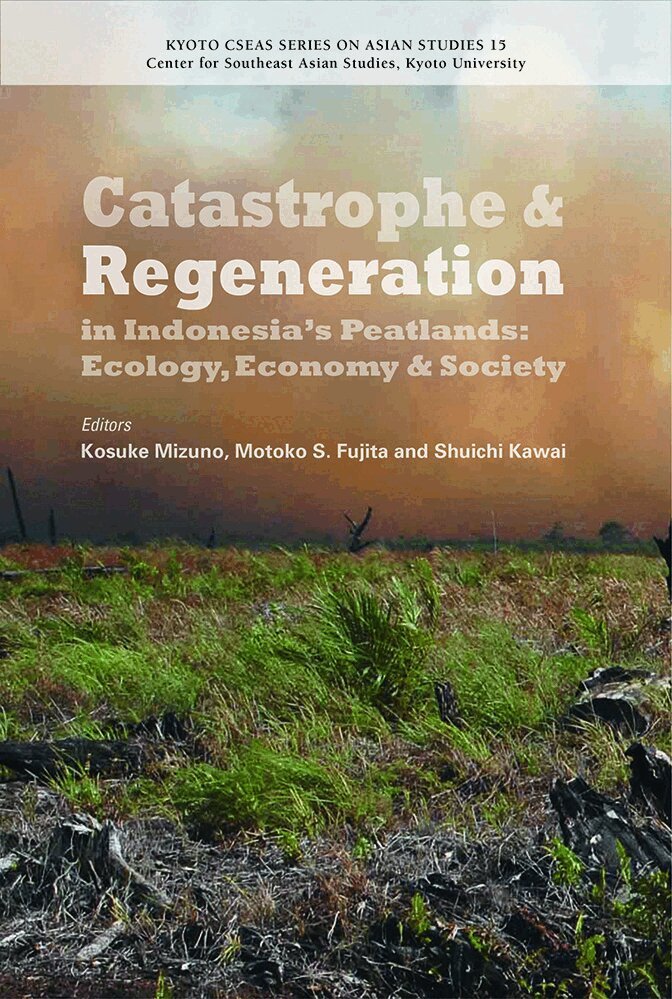
The serious degradation of the vast peatlands of Indonesia since the 1990s is the proximate cause of the haze that endangers public health in Indonesian Sumatra and Borneo, and also in neighbouring Singapore, Malaysia and Thailand. Moreover peatlands that have been drained and cleared for plantations are a major contributor to greenhouse gas emissions. This new book explains the degradation of peat soils and outlines a potential course of action to deal with the catastrophe looming over the region. Concerted action will be required to reduce peatland fires, and a successful policy needs to enhance social welfare and economic survival, support natural conservation and provide a return on investment if there is to be a sustainable society in the peatlands.This book argues that regeneration is possible through a new policy of people’s forestry that includes reforestation and rewetting peat soils. The data come from a major long-term research effort—the humanosphere project—that coordinates work done by researchers from the physical, natural and human or social sciences.
541 kr
Skickas inom 10-15 vardagar
This open access book deals with restoring degraded peatlands to help mitigate global warming, to which SDG 15 and SDG 13 are directly related. The book analyzes peatland degradation and restoration of the Indonesian peatland ecosystem through the integrated lens of resilience, vulnerability, adaptation, and transformation. It sheds light on what constitutes "resilience" of the peat swamp forest, digs deeper into local knowledge in developing the studies on institutions, governance, and ecological conditions that support the resilience of the peat swamp forest to elaborate on the idea of transformation in today's degraded peatlands.While peat swamp forests may be resilient, they remain highly vulnerable. The book analyzes restoration efforts through rewetting, revegetation, and rehabilitation of the local livelihoods with the concepts of adaptation and transformation. The integrated analysis covers fieldwork of more than a decade and various aspects such as agrarian and socialchanges, biological changes (birds, mammals, and termites), carbon emission, water control, timber use, revegetation efforts, and the Indonesia Sustainable Palm Oil (ISPO) program implementation. It also employs the ideas of vulnerability, resilience, adaptability, and transformation based on expanded studies on peatlands and observations of and participation in multiple efforts to prevent fires and restore the degraded peatland by researchers, the government, non-government organizations (NGOs), private companies, and last but not least, the local people. The discussion includes the period of pre-degradation and several efforts at peatland restoration for a better understanding and analysis of the long-term peatland dynamics.
631 kr
Skickas inom 5-8 vardagar
434 kr
Skickas inom 10-15 vardagar
This open access book deals with restoring degraded peatlands to help mitigate global warming, to which SDG 15 and SDG 13 are directly related. The book analyzes peatland degradation and restoration of the Indonesian peatland ecosystem through the integrated lens of resilience, vulnerability, adaptation, and transformation. It sheds light on what constitutes "resilience" of the peat swamp forest, digs deeper into local knowledge in developing the studies on institutions, governance, and ecological conditions that support the resilience of the peat swamp forest to elaborate on the idea of transformation in today's degraded peatlands.While peat swamp forests may be resilient, they remain highly vulnerable. The book analyzes restoration efforts through rewetting, revegetation, and rehabilitation of the local livelihoods with the concepts of adaptation and transformation. The integrated analysis covers fieldwork of more than a decade and various aspects such as agrarian and socialchanges, biological changes (birds, mammals, and termites), carbon emission, water control, timber use, revegetation efforts, and the Indonesia Sustainable Palm Oil (ISPO) program implementation. It also employs the ideas of vulnerability, resilience, adaptability, and transformation based on expanded studies on peatlands and observations of and participation in multiple efforts to prevent fires and restore the degraded peatland by researchers, the government, non-government organizations (NGOs), private companies, and last but not least, the local people. The discussion includes the period of pre-degradation and several efforts at peatland restoration for a better understanding and analysis of the long-term peatland dynamics.