K.R. Padiyar – författare
Visar alla böcker från författaren K.R. Padiyar. Handla med fri frakt och snabb leverans.
7 produkter
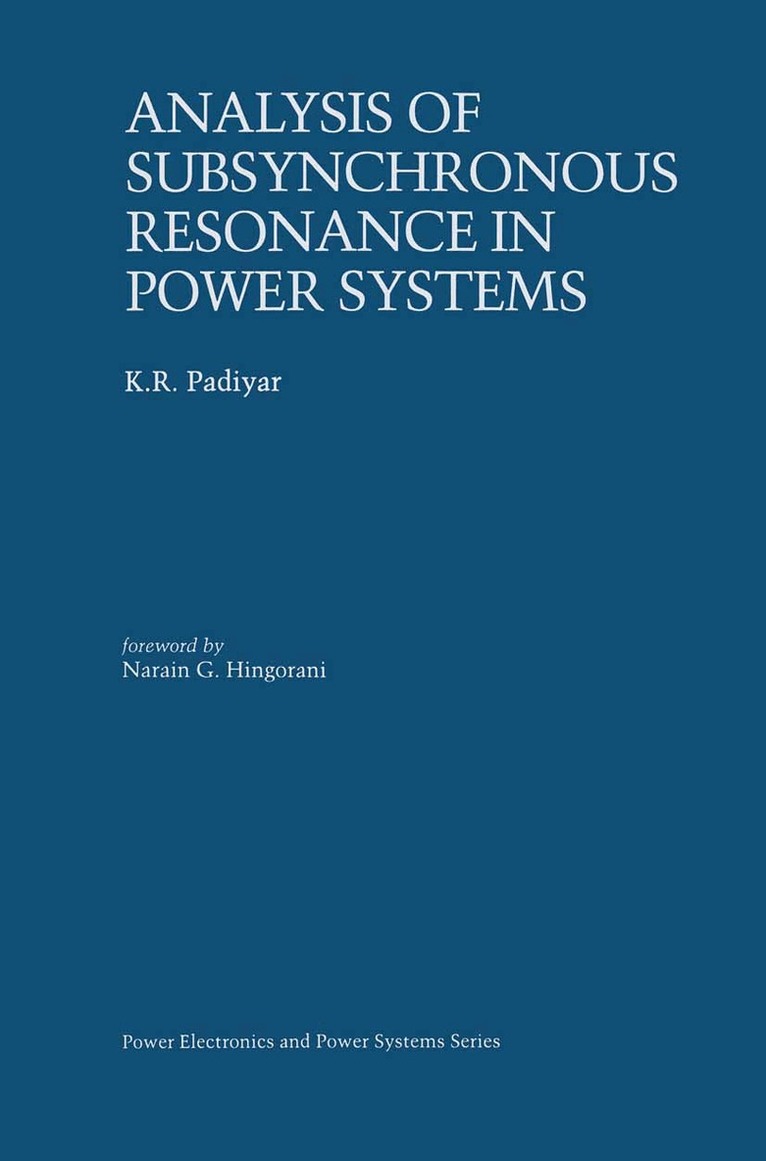
Analysis of Subsynchronous Resonance in Power Systems
Av K.R. Padiyar
Inbunden, 1998
1642 kr
Lägg i varukorg
4. 2 Analysis of induction generator effect: frequency scanning method 83 4. 3 Analysis of torsional interaction(TI) 87 4. 4 State equations and eigenvalue analysis 96 4. 5 An algorithm for computing torsional modes 108 4. 6 Countermeasures for SSR III 4. 7 Torsional oscillations in parallel …
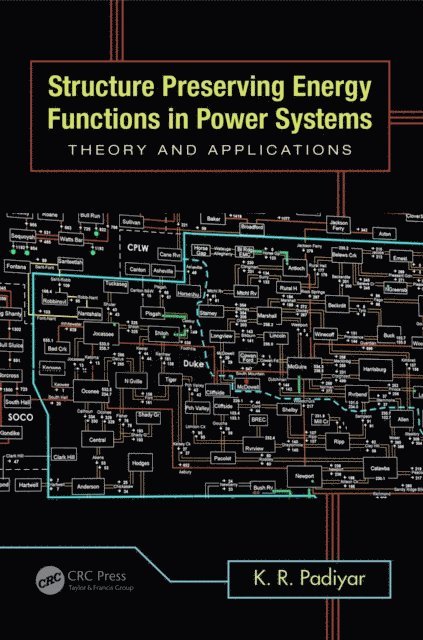
Structure Preserving Energy Functions in Power Systems
Theory and Applications
Av K.R. Padiyar
Häftad, 2017
1339 kr
Lägg i varukorg
A guide for software development of the dynamic security assessment and control of power systems, Structure Preserving Energy Functions in Power Systems: Theory and Applications takes an approach that is more general than previous works on Transient Energy Functions defined using Reduced Network …
Structure Preserving Energy Functions in Power Systems
Theory and Applications
Av K.R. Padiyar
E-bok, 2018
1576 kr
Lägg i varukorg
A guide for software development of the dynamic security assessment and control of power systems, Structure Preserving Energy Functions in Power Systems: Theory and Applications takes an approach that is more general than previous works on Transient Energy Functions defined using Reduced Network …
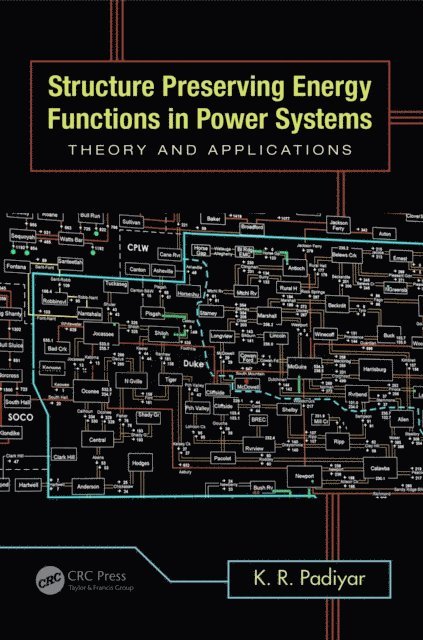
Structure Preserving Energy Functions in Power Systems
Theory and Applications
Av K.R. Padiyar
Inbunden, 2013
3449 kr
Lägg i varukorg
A guide for software development of the dynamic security assessment and control of power systems, Structure Preserving Energy Functions in Power Systems: Theory and Applications takes an approach that is more general than previous works on Transient Energy Functions defined using Reduced Network …
Structure Preserving Energy Functions in Power Systems
Theory and Applications
Av K.R. Padiyar
E-bok, 2018
1542 kr
Lägg i varukorg
A guide for software development of the dynamic security assessment and control of power systems, Structure Preserving Energy Functions in Power Systems: Theory and Applications takes an approach that is more general than previous works on Transient Energy Functions defined using Reduced Network …
Analysis of Subsynchronous Resonance in Power Systems
Av K.R. Padiyar
Häftad, 2012
1642 kr
Lägg i varukorg
4. 2 Analysis of induction generator effect: frequency scanning method 83 4. 3 Analysis of torsional interaction(TI) 87 4. 4 State equations and eigenvalue analysis 96 4. 5 An algorithm for computing torsional modes 108 4. 6 Countermeasures for SSR III 4. 7 Torsional oscillations in parallel …
Analysis of Subsynchronous Resonance in Power Systems
Av K.R. Padiyar
E-bok, 2012
2111 kr
Lägg i varukorg
4. 2 Analysis of induction generator effect: frequency scanning method 83 4. 3 Analysis of torsional interaction(TI) 87 4. 4 State equations and eigenvalue analysis 96 4. 5 An algorithm for computing torsional modes 108 4. 6 Countermeasures for SSR III 4. 7 Torsional oscillations in parallel …