Krishna R. Dronamraju – Författare
Visar alla böcker från författaren Krishna R. Dronamraju. Handla med fri frakt och snabb leverans.
15 produkter
15 produkter
1 094 kr
Skickas inom 10-15 vardagar
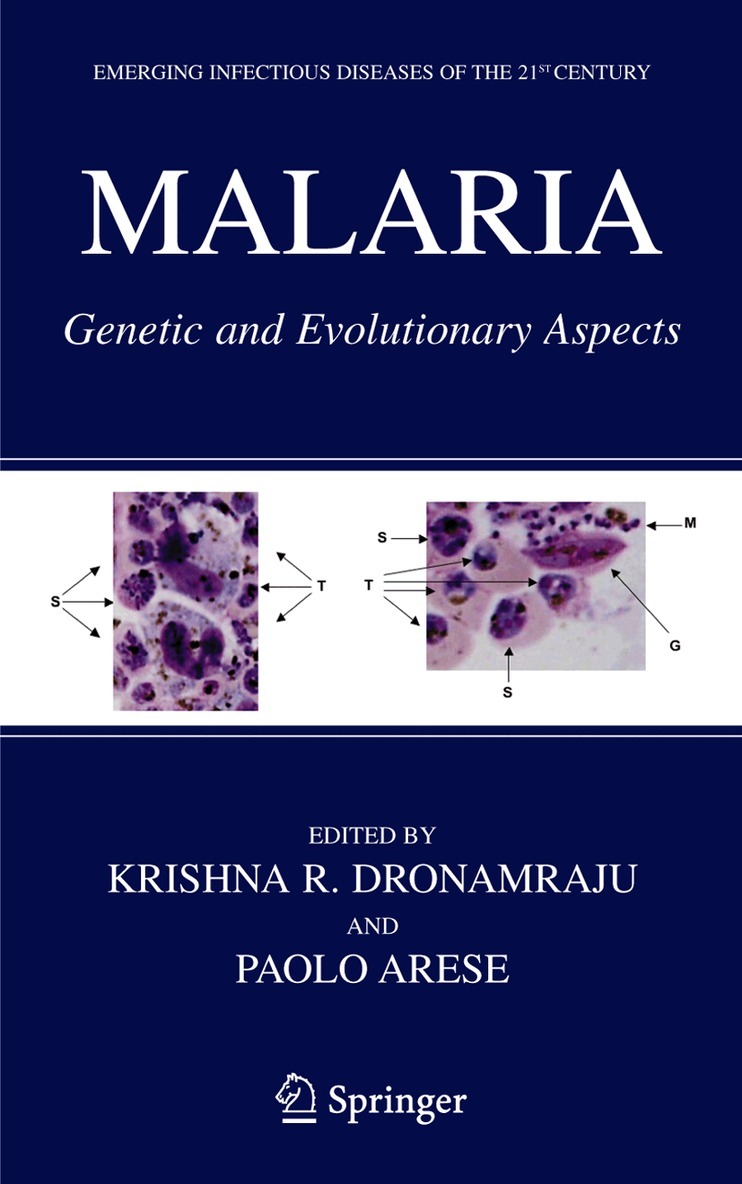
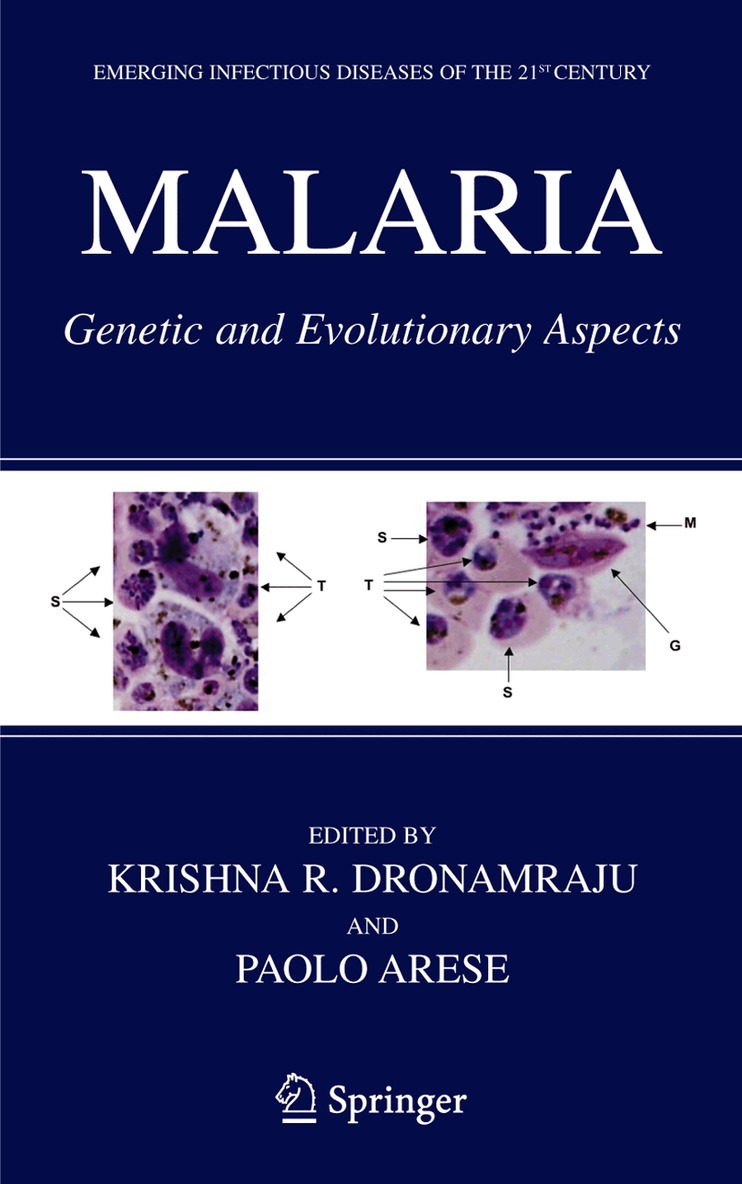
This book was originally conceived at a conference at the University of Turin in Italy. The conference was organized to examine the so-called “Malaria Hypothesis”, that is to say, the higher fitness of t- lassemia heterozygotes in a malarial environment, and to pay tribute to the proponent of that hypothesis, J.B.S. Haldane. Contributors to this book examine certain genetic and evolutionary aspects of malaria which is a major killer of human populations, especially in Africa and Asia. There were attempts to discredit Haldane’s contribution from two directions: (a) it has been suggested that the “Malaria Hypothesis” was known long before Haldane and that there was nothing original about his idea (Lederberg 1999), and that (b) the hypothesis of heterozygote su- riority was first suggested by the Italian biologist Giuseppe Montalenti who communicated his idea to Haldane (Allison 2004). Surely, both c- not be right. In fact, the evidence presented in this book clearly indicates that both are wrong. Haldane’s malaria hypothesis has stimulated a great deal of research on the genetic, evolutionary and epidemiological aspects of malaria d- ing the last 50 years. It has opened up a whole new chapter in the study of infectious diseases. It deserves serious consideration. For helpful discussions we thank Lucio Luzzatto, Alberto Piazza, Guido Modiano and David Roberts.
523 kr
Skickas inom 7-10 vardagar
This book, originally published in 2004, is concerned with the links between human evolution and infectious disease. It has long been recognised that an important factor in human evolution has been the struggle against infectious disease and, more recently, it was revealed that complex genetic polymorphisms are the direct result of that struggle. As molecular biological techniques become more sophisticated, a number of breakthroughs in the area of host-pathogen evolution led to an increased interest in this field. From the historical beginnings of J. B. S. Haldane's original hypothesis to more recent research, this book strives to evaluate infectious diseases from an evolutionary perspective. It provides a survey of information regarding host-pathogen evolution related to major infectious diseases and parasitic infections, including malaria, influenza and leishmaniasis. Written by leading authorities in the field, and edited by a former pupil of Haldane, Infectious Disease and Host-Pathogen Evolution will be valuable for those working in related areas of microbiology, parasitology, immunology and infectious disease medicine, as well as genetics, evolutionary biology and epidemiology.
1 634 kr
Skickas inom 7-10 vardagar
This book, originally published in 2004, is concerned with the links between human evolution and infectious disease. It has long been recognised that an important factor in human evolution has been the struggle against infectious disease and, more recently, it was revealed that complex genetic polymorphisms are the direct result of that struggle. As molecular biological techniques become more sophisticated, a number of breakthroughs in the area of host-pathogen evolution led to an increased interest in this field. From the historical beginnings of J. B. S. Haldane's original hypothesis to more recent research, this book strives to evaluate infectious diseases from an evolutionary perspective. It provides a survey of information regarding host-pathogen evolution related to major infectious diseases and parasitic infections, including malaria, influenza and leishmaniasis. Written by leading authorities in the field, and edited by a former pupil of Haldane, Infectious Disease and Host-Pathogen Evolution will be valuable for those working in related areas of microbiology, parasitology, immunology and infectious disease medicine, as well as genetics, evolutionary biology and epidemiology.
1 319 kr
Skickas inom 10-15 vardagar
First published in 1998, this was the first book to present a comprehensive summary of both the global as well as institutional issues which are involved in biotechnology sharing. It covers the controversial subject of intellectual property rights (IPR) and the patenting of new discoveries in genetic knowledge in both agriculture and the human genome. One controversial issue is the creation of public and private DNA sequencing data bases. Of special interest is the sharing of biotechnology between the developed (rich) and developing (poor) nations. A related topic which requires immediate attention is the exploitation of biodiversity in the developing countries and the resulting extinction of rare species. Sharing or transferring biotechnology and its applications between institutions or different countries raises numerous ethical and moral dilemmas. A comprehensive summary of these issues is presented in this book.
456 kr
Skickas inom 10-15 vardagar
First published in 1998, this was the first book to present a comprehensive summary of both the global as well as institutional issues which are involved in biotechnology sharing. It covers the controversial subject of intellectual property rights (IPR) and the patenting of new discoveries in genetic knowledge in both agriculture and the human genome. One controversial issue is the creation of public and private DNA sequencing data bases. Of special interest is the sharing of biotechnology between the developed (rich) and developing (poor) nations. A related topic which requires immediate attention is the exploitation of biodiversity in the developing countries and the resulting extinction of rare species. Sharing or transferring biotechnology and its applications between institutions or different countries raises numerous ethical and moral dilemmas. A comprehensive summary of these issues is presented in this book.
2 724 kr
Skickas inom 10-15 vardagar
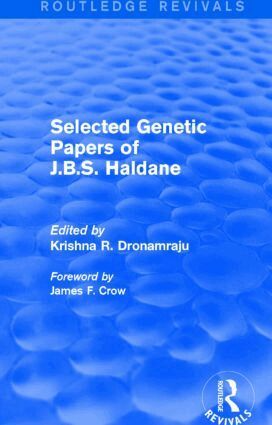
First published in 1990, this is a compilation of several important papers that have contributed to the foundation of population genetics, evolutionary biology and human genetics. The collection includes Haldane’s first paper in genetics, which was published in 1915, reporting the first case of linkage in a mammal, and - fifty years later, in 1965 - his last paper in genetics on selection for a single pair of allelomorphs with complete replacement. Haldane's Rule, the only idea named after him, was published in 1922 and is still valid today. Other papers, which include many Haldane firsts, such as the first estimation of a human mutation rate, first human gene map, first papers in population genetics, first estimate of the probability of fixation of a new mutation, and first measurement of mutation impact on a population, leading to the "genetic load" concept, are included. The volume also includes a paper presenting an ancient logical system for interpreting scientific results.
754 kr
Skickas inom 10-15 vardagar
First published in 1990, this is a compilation of several important papers that have contributed to the foundation of population genetics, evolutionary biology and human genetics. The collection includes Haldane’s first paper in genetics, which was published in 1915, reporting the first case of linkage in a mammal, and - fifty years later, in 1965 - his last paper in genetics on selection for a single pair of allelomorphs with complete replacement. Haldane's Rule, the only idea named after him, was published in 1922 and is still valid today. Other papers, which include many Haldane firsts, such as the first estimation of a human mutation rate, first human gene map, first papers in population genetics, first estimate of the probability of fixation of a new mutation, and first measurement of mutation impact on a population, leading to the "genetic load" concept, are included. The volume also includes a paper presenting an ancient logical system for interpreting scientific results.
1 047 kr
Skickas inom 10-15 vardagar
This book is an edited collection of papers by leading experts on the population genetics and evolutionary biology of malaria, a disease which results in three million deaths each year in the world. "Malaria Hypothesis" refers to the hypothesis, which was proposed by J.B.S. Haldane at the 8th International Congress of Genetics in Stockholm in 1948, that the identical geographic distribution of both falciparum malaria and thalassemia in the mediterranean region suggests that the heterozygous individuals for thalassemia (or microcythemia as it was called then) might have greater resistance to malarial infection. Haldane, later in the same year, expanded his theory to infectious disease in general at another international conference, at Pallanza in Italy. Haldane's hypothesis was subsequently confirmed in the African populations by A.C. Allison and later by others during the last fifty years, although at first for sickle cell anemia and later for thalassemia with varying degrees of success. The malaria hypothesis still remains today a unique example of that kind of balanced polymorphism, not only in genetics but in all of biology.It opened up new insights into our perspective of the genetics and population dynamics of disease prevalence, particularly infectious disease.
1 637 kr
Skickas inom 10-15 vardagar
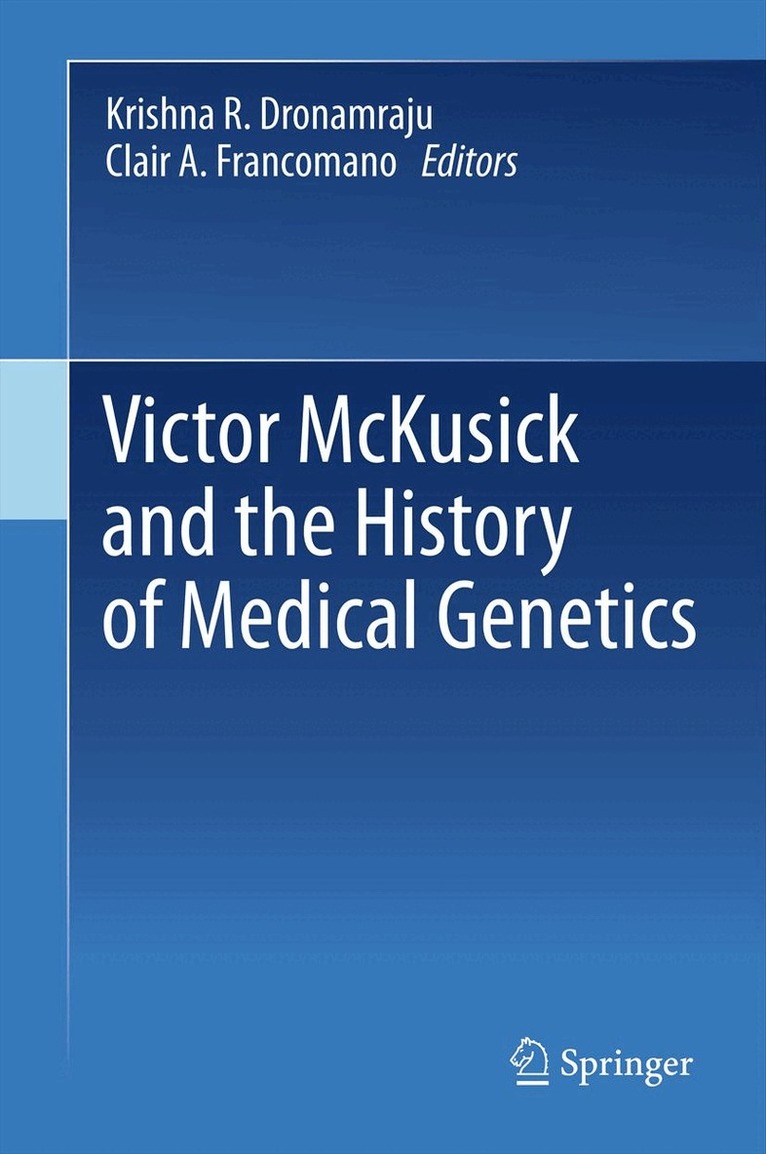
This book is being planned as a tribute to Dr. Victor A. McKusick (1921-2008), who is well known as the “father of medical genetics”. He was long associated with the Johns Hopkins University School of Medicine, first as a student in the 1940s, and later as a faculty member, becoming the Chairman of the Department of Medicine at Johns Hopkins. He was a co-founder of GENOMICS and founder and lifelong editor of Mendelian Inheritance in Man, a massive compendium of human syndromes and genetic variants. Dr. McKusick made distinguished contributions to all branches of medical genetics. He was a member of the U.S. National Academy of Sciences and many other academies in the world. He was awarded the National Medal of Science in 2002. He received many other honors including several honorary doctorates. The proposed book will reflect all the fields touched upon by Dr. McKusick’s contributions. It will be a valuable source of the latest progress in medical genetics. The contributors are internationally distinguished in their chosen specialties. Besides professional distinction, they are being selected because of their past association with Dr. McKusick, as former students or colleagues who extended his research in some fashion.The proposed book will reflect all the fields touched upon by Dr. McKusick’s contributions. It will be a valuable source of the latest progress in medical genetics. The contributors are internationally distinguished in their chosen specialties. Besides professional distinction, they are being selected because of their past association with Dr. McKusick, as former students or colleagues who extended his research in some fashion.
1 637 kr
Skickas inom 10-15 vardagar
This book is being planned as a tribute to Dr. Victor A. McKusick (1921-2008), who is well known as the “father of medical genetics”. He was long associated with the Johns Hopkins University School of Medicine, first as a student in the 1940s, and later as a faculty member, becoming the Chairman of the Department of Medicine at Johns Hopkins. He was a co-founder of GENOMICS and founder and lifelong editor of Mendelian Inheritance in Man, a massive compendium of human syndromes and genetic variants. Dr. McKusick made distinguished contributions to all branches of medical genetics. He was a member of the U.S. National Academy of Sciences and many other academies in the world. He was awarded the National Medal of Science in 2002. He received many other honors including several honorary doctorates. The proposed book will reflect all the fields touched upon by Dr. McKusick’s contributions. It will be a valuable source of the latest progress in medical genetics. The contributors are internationally distinguished in their chosen specialties. Besides professional distinction, they are being selected because of their past association with Dr. McKusick, as former students or colleagues who extended his research in some fashion.The proposed book will reflect all the fields touched upon by Dr. McKusick’s contributions. It will be a valuable source of the latest progress in medical genetics. The contributors are internationally distinguished in their chosen specialties. Besides professional distinction, they are being selected because of their past association with Dr. McKusick, as former students or colleagues who extended his research in some fashion.
History And Development Of Human Genetics, The: Progress In Different Countries
Inbunden, Engelska, 1992
1 914 kr
Tillfälligt slut
An international panel of speakers trace the progress of human genetics from its beginning to the present day, in various communities in different countries. Both fundamental advances and national developments are reviewed by scientists and historians from the USA, UK, France, Hungary, Japan, India, Russia, etc. Topics include: the development of the research and teaching of human genetics; of the technologies for screening, diagnosis, prediction, prevention and treatment of hereditary diseases; the distribution of these diseases in different communities and different countries; the pioneers and prominent figures in the field and their achievements.
History And Development Of Human Genetics, The: Progress In Different Countries
Häftad, Engelska, 1992
938 kr
Tillfälligt slut
An international panel of speakers trace the progress of human genetics from its beginning to the present day, in various communities in different countries. Both fundamental advances and national developments are reviewed by scientists and historians from the USA, UK, France, Hungary, Japan, India, Russia, etc. Topics include: the development of the research and teaching of human genetics; of the technologies for screening, diagnosis, prediction, prevention and treatment of hereditary diseases; the distribution of these diseases in different communities and different countries; the pioneers and prominent figures in the field and their achievements.
1 461 kr
Tillfälligt slut
With a foreword by S ZuckermanThe First Julian Huxley Memorial Lecture by J NeedhamSir Julian Huxley was especially noted for his versatility — great biologist, first Director-General of UNESCO, Director of the London Zoo, bird watcher, skilled popular writer of science and a tireless champion of wildlife conservation. This book is a biographical account of Huxley as revealed through his own correspondence and the correspondence of his great contemporaries. An introductory biographical summary is followed by his and others' letters and a collection of some of his writings. A complete bibliography of Huxley is included. The book would be of great interest to all biologists, students of the United Nations, historians of science and nature conservationists.
858 kr
Tillfälligt slut
The biological wealth of our planet is represented by the biodiversity that surrounds us. Our future wellbeing depends on the care and conservation that we practice to protect and enhance that biodiversity, which resides mostly in developing countries. Yet, the holders of traditional knowledge remain poor, while those exploiting it commercially become prosperous. As we utilize recombinant DNA technology to achieve food security and other goals, serious apprehension has arisen in the public mind with regard to the impact of genetically modified crops on our environment and health. Similarly, the long-term impact of gene therapy is not known either. These dilemmas and their ethical implications are examined in this book in the context of intellectual property rights and international cooperation.
1 939 kr
Tillfälligt slut
The commercialization of biotechnology has resulted in an intensive search for new biological resources for the purposes of increasing food productivity, medicinal applications, energy production, and various other applications. Although biotechnology has produced many benefits for humanity, its applications have also resulted in some undesirable consequences such as diminished species biodiversity as well as diminished agrobiodiversity, environmental contamination, and the exploitation of intellectual property rights and patents in appropriating the biodiversity of developing countries.This book discusses the role of biological, ecological, environmental, ethical, and economic issues in the interaction between biotechnology and biodiversity, using different contexts. No other book has discussed all of these issues in a comprehensive manner. Of special interest is their impact when biotechnology is shared between developed and developing countries, and the lack of recognition of the rights of indigenous populations and traditional farmers in developing countries by large multinational corporations.