Kristie R. Blevins – författare
Visar alla böcker från författaren Kristie R. Blevins. Handla med fri frakt och snabb leverans.
5 produkter
5 produkter
Inbunden, Engelska, 2008
1 537 kr
Skickas inom 10-15 vardagar
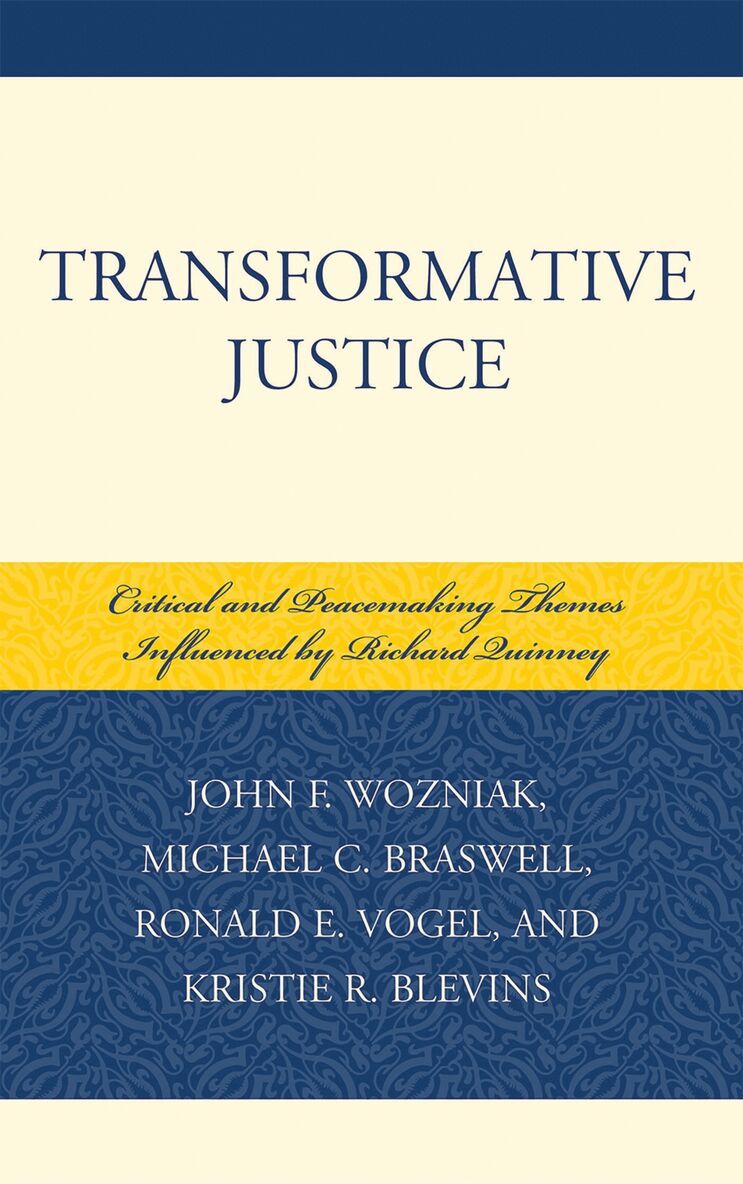
The criminological contributions of Richard Quinney have spanned four decades and have spawned and energized both critical and peacemaking intellectual and activist movements in the field of Criminology. Quinney has been consistently recognized as one of a small handful of seminal thinkers in the discipline. The introduction illustrates how each chapter: has drawn inspiration from the crime-related writings of this influential criminologist; contains core assumptions of critical and peacemaking criminology; has application for the development of transformative justice as an alternative approach to the study of crime.Part 1 features chapters generally falling within the parameters of critical criminology. Here, critical analyses are directed toward: linkages of capitalism and political economy to crime; state/corporate crime; feminist concerns about moral conscience; views of crime and justice among convict criminologists; prison as an industrial complex. Part 2 exhibits chapters oriented toward the development of peacemaking criminology. As such, peacemaking criminology is explored in regard to: an emergent theoretical model; a synthesis of Quinney's peacemaking-oriented writings; women's crime and mothers in prisons; teaching and learning about justice through a non-violent perspective; advocating justice reforms on the internet; its future directions in terms of theory and application.
Inbunden, Engelska, 2017
2 664 kr
Skickas inom 10-15 vardagar
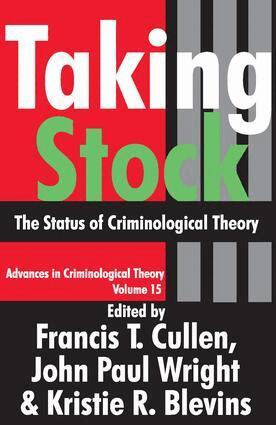
Criminology is in a period of much theoretical ferment. Older theories have been revitalized, and newer theories have been set forth. The very richness of our thinking about crime, however, leads to questions about the relative merits of these competing paradigms. Accordingly, in this volume advocates of prominent theories are asked to "take stock" of their perspectives. Their challenge is to assess the empirical status of their theory and to map out future directions for theoretical development.The volume begins with an assessment of three perspectives that have long been at the core of criminology: social learning theory, control theory, and strain theory. Drawing on these traditions, two major contemporary macro-level theories of crime have emerged and are here reviewed: institutional-anomie theory and collective efficacy theory. Critical criminology has yielded diverse contributions discussed in essays on feminist theories, radical criminology, peacemaking criminology, and the effects of racial segregation. The volume includes chapters examining Moffitt's insights on life-course persistent/adolescent-limited anti-social behavior and Sampson and Laub's life-course theory of crime. In addition, David Farrington provides a comprehensive assessment of the adequacy of the leading developmental and life-course theories of crime.Finally, Taking Stock presents essays that review the status of perspectives that have direct implications for the use of criminological knowledge to control crime. Taken together, these chapters provide a comprehensive update of the field's leading theories of crime. The volume will be of interest to criminological scholars and will be ideal for classroom use in courses reviewing contemporary theories of criminal behavior.
E-bok
Engelska, 2017841 kr
Läs direkt efter köp
Criminology is in a period of much theoretical ferment. Older theories have been revitalized, and newer theories have been set forth. Th e very richness of our thinking about crime, however, leads to questions about the relative merits of these competin paradigms. Accordingly, in this volume advocates of prominent theories are asked to "take stock" of their perspectives. Th eir challenge is to assess the empirical status of their theory and to map out future directions for theoretical development.
E-bok
PDF, Engelska, 2017841 kr
Läs direkt efter köp
Criminology is in a period of much theoretical ferment. Older theories have been revitalized, and newer theories have been set forth. Th e very richness of our thinking about crime, however, leads to questions about the relative merits of these competin paradigms. Accordingly, in this volume advocates of prominent theories are asked to "take stock" of their perspectives. Th eir challenge is to assess the empirical status of their theory and to map out future directions for theoretical development.
Häftad, Engelska, 2009
742 kr
Skickas inom 10-15 vardagar
Criminology is in a period of much theoretical ferment. Older theories have been revitalized, and newer theories have been set forth. The very richness of our thinking about crime, however, leads to questions about the relative merits of these competing paradigms. Accordingly, in this volume advocates of prominent theories are asked to "take stock" of their perspectives. Their challenge is to assess the empirical status of their theory and to map out future directions for theoretical development.The volume begins with an assessment of three perspectives that have long been at the core of criminology: social learning theory, control theory, and strain theory. Drawing on these traditions, two major contemporary macro-level theories of crime have emerged and are here reviewed: institutional-anomie theory and collective efficacy theory. Critical criminology has yielded diverse contributions discussed in essays on feminist theories, radical criminology, peacemaking criminology, and the effects of racial segregation. The volume includes chapters examining Moffitt's insights on life-course persistent/adolescent-limited anti-social behavior and Sampson and Laub's life-course theory of crime. In addition, David Farrington provides a comprehensive assessment of the adequacy of the leading developmental and life-course theories of crime.Finally, Taking Stock presents essays that review the status of perspectives that have direct implications for the use of criminological knowledge to control crime. Taken together, these chapters provide a comprehensive update of the field's leading theories of crime. The volume will be of interest to criminological scholars and will be ideal for classroom use in courses reviewing contemporary theories of criminal behavior.