Kristine Jorgensen – författare
409 kr
Läs direkt efter köp
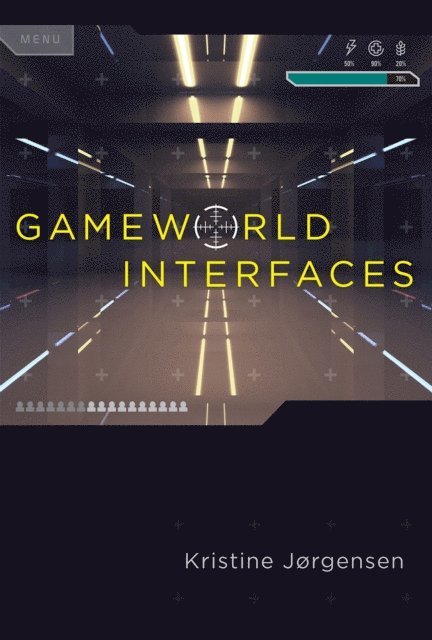
An investigation into computer game interfaces, both naturalistic and symbolic, and the distinction between gameworlds and other kinds of fictional worlds.
Computer games usually take one of two approaches to presenting game information to players. A game might offer information naturalistically, as part of the game''s imaginary universe; or it might augment the world of the game with overlays, symbols, and menus. In this book, Kristine Jørgensen investigates both kinds of gameworld interfaces. She shows that although the naturalistic approach may appear more integral to the imaginary world of the game, both the invisible and visible interfaces effectively present information that players need in order to interact with the game and its rules. The symbolic, less naturalistic approach would seem to conflict with the idea of a coherent, autonomous fictional universe; but, Jørgensen argues, gameworlds are not governed by the pursuit of fictional coherence but by the logics of game mechanics. This is characteristic of gameworlds and distinguishes them from other traditional fictional worlds.
Jørgensen investigates gameworld interfaces from the perspectives of both game designers and players. She draws on interviews with the design teams of Harmonix Music (producer of Rock Band and other music games) and Turbine Inc. (producer of such massively multiplayer online games as Lord of the Rings Online), many hours of gameplay, and extensive interviews and observations of players. The player studies focus on four games representing different genres: Crysis, Command & Conquer 3: Tiberian Wars, The Sims 2, and Diablo 2. Finally, she presents a theory of game user interfaces and considers the implications of this theory for game design.
461 kr
Läs direkt efter köp
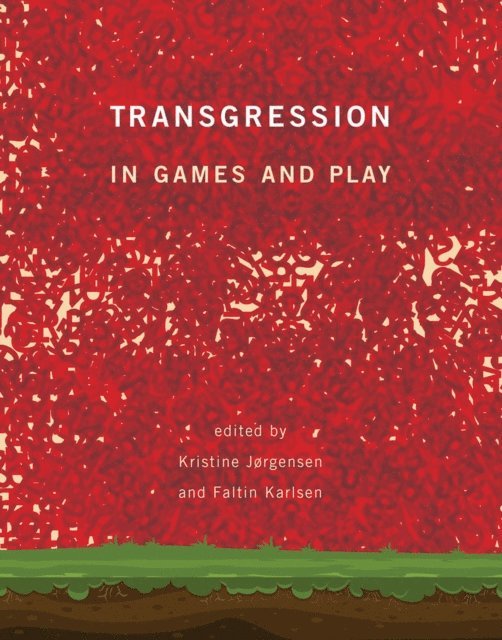
Contributors from a range of disciplines explore boundary-crossing in videogames, examining both transgressive game content and transgressive player actions.
Video gameplay can include transgressive play practices in which players act in ways meant to annoy, punish, or harass other players. Videogames themselves can include transgressive or upsetting content, including excessive violence. Such boundary-crossing in videogames belies the general idea that play and games are fun and non-serious, with little consequence outside the world of the game. In this book, contributors from a range of disciplines explore transgression in video games, examining both game content and player actions. The contributors consider the concept of transgression in games and play, drawing on discourses in sociology, philosophy, media studies, and game studies; offer case studies of transgressive play, considering, among other things, how gameplay practices can be at once playful and violations of social etiquette; investigate players'' emotional responses to game content and play practices; examine the aesthetics of transgression, focusing on the ways that game design can be used for transgressive purposes; and discuss transgressive gameplay in a societal context. By emphasizing actual player experience, the book offers a contextual understanding of content and practices usually framed as simply problematic.
ContributorsFraser Allison, Kristian A. Bjørkelo, Kelly Boudreau, Marcus Carter, Mia Consalvo, Rhys Jones, Kristine Jørgensen, Faltin Karlsen, Tomasz Z. Majkowski, Alan Meades, Torill Elvira Mortensen, Víctor Navarro-Remesal, Holger Pötzsch, John R. Sageng, Tanja Sihvonen, Jaakko Stenros, Ragnhild Tronstad, Hanna Wirman
752 kr
Läs direkt efter köp
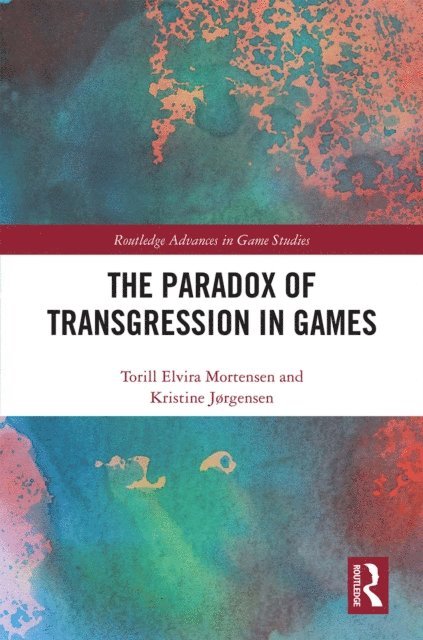
The Paradox of Transgression in Games looks at transgressive games as an aesthetic experience, tackling how players respond to game content that shocks, disturbs, and distresses, and how contemporary video games can evoke intense emotional reactions.
The book delves into the commercial success of many controversial videogames: although such games may appear shocking for the observing bystander, playing them is experienced as deeply rewarding for the player. Drawing on qualitative player studies and approaches from media aesthetics theory, the book challenges the perception of games as innocent entertainment, and examines the range of emotional, moral, and intellectual experiences of players. As they explore what players consider transgressive, the authors ask whether there is something about the gameplay situation that works to mitigate the sense of transgression, stressing gameplay as an aesthetic experience.
Anchoring the aesthetic game experience both in play studies as well as in aesthetic theory, this book will be an essential resource for scholars and students of game studies, aesthetics, media studies, philosophy of art, and emotions.
752 kr
Läs direkt efter köp
The Paradox of Transgression in Games looks at transgressive games as an aesthetic experience, tackling how players respond to game content that shocks, disturbs, and distresses, and how contemporary video games can evoke intense emotional reactions.
The book delves into the commercial success of many controversial videogames: although such games may appear shocking for the observing bystander, playing them is experienced as deeply rewarding for the player. Drawing on qualitative player studies and approaches from media aesthetics theory, the book challenges the perception of games as innocent entertainment, and examines the range of emotional, moral, and intellectual experiences of players. As they explore what players consider transgressive, the authors ask whether there is something about the gameplay situation that works to mitigate the sense of transgression, stressing gameplay as an aesthetic experience.
Anchoring the aesthetic game experience both in play studies as well as in aesthetic theory, this book will be an essential resource for scholars and students of game studies, aesthetics, media studies, philosophy of art, and emotions.