Kristofer Schipper – författare
Visar alla böcker från författaren Kristofer Schipper. Handla med fri frakt och snabb leverans.
2 produkter
2 produkter
Häftad, Engelska, 1994
291 kr
Skickas inom 5-8 vardagar
The ancient system of thought known as Taoism remains today the least well known of the world's great religions and one of the most inaccessible aspects of Chinese culture. This is in large part because Western thought clings to the notion of the separation of matter and spirit, body and soul. Taoism refuses this dualism and considers the body's perfection as essential as the soul's redemption is to Christianity. Kristofer Schipper's elegant and lucid introduction to the traditions of Taoism and the masters who transmit them will reward all those interested in China and in religions. The result of over twenty-five years of research, including eight years of fieldwork in China, Schipper's book retraces, step by step, the way that leads from Chinese shamanism and traditional village life to the physical Tending Life techniques, which in turn lead to the mysticism of Lao Tzu and Chuang Tzu. Schipper shows the fundamental unity underlying all aspects of Taoism as Taoism considers itself to be. The social body - the community, the village, the land - corresponds in all aspects to the physical body in Taoism. In both of them the survival of humanity is decided here and now.'My destiny is within me, not in Heaven!'
E-bok
PDF, Engelska, 20193 816 kr
Läs direkt efter köp
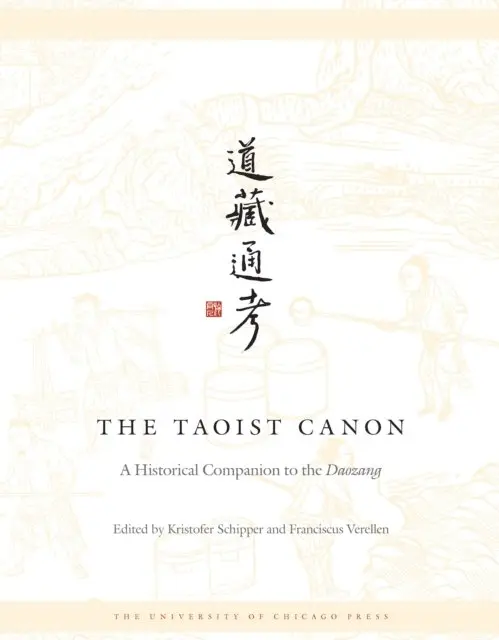
Taoism remains the only major religion whose canonical texts have not been systematically arranged and made available for study. This long-awaited work, a milestone in Chinese studies, catalogs and describes all existing texts within the Taoist canon. The result will not only make the entire range of existing Taoist texts accessible to scholars of religion, it will open up a crucial resource in the study of the history of China. The vast literature of the Taoist canon, or Daozang, survives in a Ming Dynasty edition of some fifteen hundred different texts. Compiled under imperial auspices and completed in 1445—with a supplement added in 1607—many of the books in the Daozang concern the history, organization, and liturgy of China''s indigenous religion. A large number of works deal with medicine, alchemy, and divination. If scholars have long neglected this unique storehouse of China''s religious traditions, it is largely because it was so difficult to find one''s way within it. Not only was the rationale of its medieval classification system inoperable for the many new texts that later entered the Daozang, but the system itself was no longer understood by the Ming editors; hence the haphazard arrangement of the canon as it has come down to us. This new work sets out the contents of the Daozang chronologically, allowing the reader to follow the long evolution of Taoist literature. Lavishly illustrated, the first volume ranges from antiquity through the Middle Ages, while the second spans the modern period. Within this frame, texts are grouped by theme and subject. Each one is the subject of a historical abstract that identifies the text''s contents, date of origin, and author. Throughout the first two volumes, introductions outline the evolution of Taoism and its spiritual heritage. A third volume offering biographical sketches of frequently mentioned Taoists, multiple indexes, and an extensive bibliography provides critical tools for navigating this guide to one of the fundamental aspects of Chinese culture.