Kristoffer Schollin – författare
Visar alla böcker från författaren Kristoffer Schollin. Handla med fri frakt och snabb leverans.
2 produkter
2 produkter
497 kr
Skickas
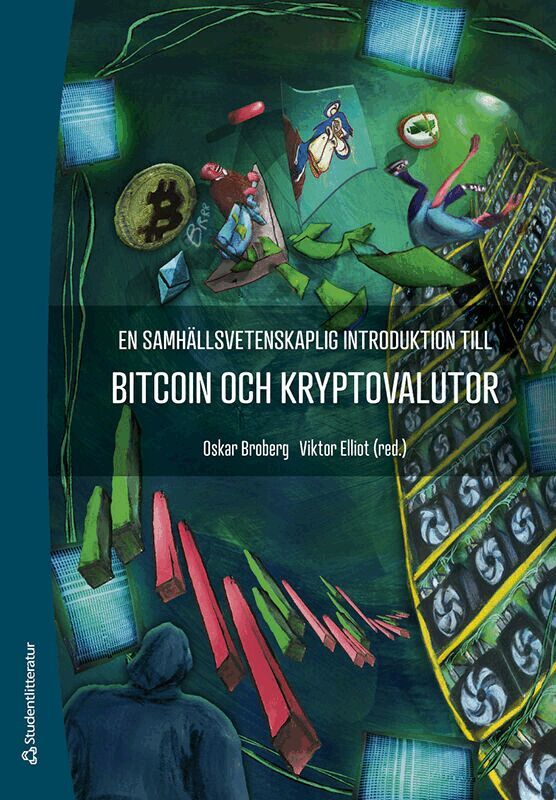
En samhällsvetenskaplig introduktion till bitcoin och kryptovalutor är ett samarbete mellan forskare och lärare från en rad olika akademiska discipliner. Boken är som titeln indikerar avsedd att ge en bred ingång till kryptovalutor och dess roll i samtiden med syfte att ge en nyanserad bild av detta samhällsfenomen, för att balansera den bitvis polariserade debatten om bitcoin och andra kryptovalutor. Kryptovalutor berör många av 2000-talets stora samhällsutmaningar och bokens innehåll kan därför bäst beskrivas som en kryptovalutabaserad skildring av samtidens utmaningar inom finans, juridik, etik och politik samt global energianvändning och digitalisering. Du som läsare behöver inga tidigare kunskaper om kryptovalutor, men om du vid något tillfälle har intresserat dig för kryptovärldens mysterier kan boken förhoppningsvis erbjuda nya perspektiv. Boken riktar sig till studenter och lärare på svenska högskolor, men även till andra med ett intresse för hur ekonomi och teknik formar samhällsutvecklingen.
723 kr
Skickas
DRM DIGITAL RIGHTS MANAGEMENT is a wide term that covers many forms of technological schemes for controlling access, use and distribution of creative works from the blunt and static restrictions on copy-protected Compact Discs to the sophisticated and fluid usagerules in online music- and movie-stores such as iTunes. DRM technologies have been created and designed in response to a social development where global, digital networks are putting serious pressure on traditional distribution channels. From the early days of peer-to-peer networks to the current diversity of online communities centered on digital file sharing, the landscape has transformed rapidly. Using a critical, constructivist and functionalist approach to law, this book analyzes DRM as legal phenomena in the middle of this transforming landscape. Hence DRM is examined from a range of perspectives as a tool of normative communication and regulation as well as ideological systematization of rights and positions of control. While some forms of DRM have little more objective than to halt or slow the transformation of media businesses, in other forms it is used in serious attempts to eke out new niches and control positions that resonate within a new digital landscape. In the end, this book essays to place DRM in the evolutionary development of Copyright and weighs its potential merits and flaws in crafting a new copyright a potential that has yet to be realized.