Krzysztof Matyjaszewski – författare
Visar alla böcker från författaren Krzysztof Matyjaszewski. Handla med fri frakt och snabb leverans.
17 produkter
17 produkter
Inbunden, Engelska, 2002
4 203 kr
Skickas inom 5-8 vardagar
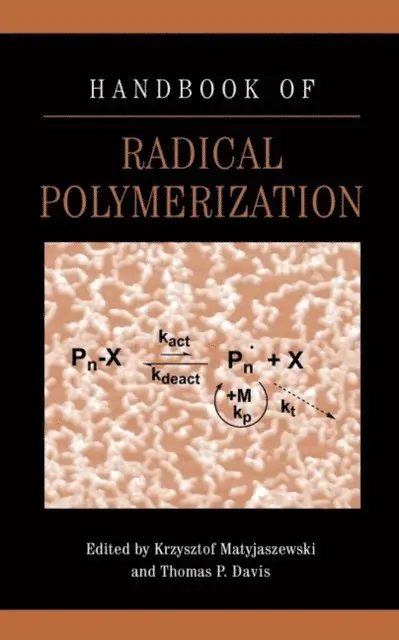
Mechanism, synthesis, characterization, and applications of free radical polymerization(Co)polymers prepared via free radical mechanism, together with polyolefins, comprise the largest portion of the commodity plastics industry and are also used for preparation of many specialty materials. Handbook of Radical Polymerization provides a concise source of information on mechanisms, synthetic techniques, and characterization methods and addresses future trends for polymers made by free radical intermediates.A one-stop, at-your-fingertips source of information for students, researchers, technologists, and industrial managers, the Handbook functions as a single reference of the conventional and controlled/living radical polymerization methods. Two expert editors collect and present historical background of the technique, basic information regarding various free radical polymerization systems, and state-of-the-art experimental techniques and industrial applications. Chapters written by internationally acclaimed experts in their respective fields include: Theory of Radical ReactionsThe Kinetics of Free Radical PolymerizationIndustrial Applications and ProcessesNitroxide Mediated Living Radical PolymerizationAtom Transfer Radical PolymerizationControl of Free Radical Polymerization by Chain Transfer MethodsMacromolecular Engineering by Controlled Radical PolymerizationGuaranteed to have a long shelf life, the Handbook of Radical Polymerization promises to be an indispensable resource for chemists, chemical engineers, material scientists, and graduate students in the field, as well as a valuable addition to industrial, academic, and government libraries.
E-bok
PDF, Engelska, 20034 841 kr
Läs direkt efter köp
* Provides a concise source of information on synthetic techniques, purification, and characterization methods for free-radical polymers. * Presents information on future trends in the synthesis of free-radical polymers.
E-bok
PDF, Engelska, 1996909 kr
Läs direkt efter köp
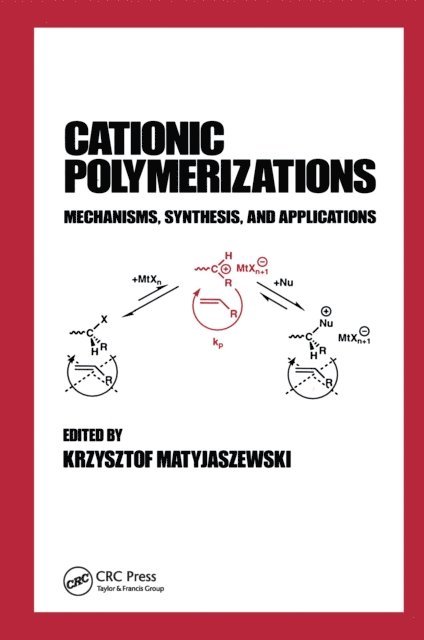
This unified presentation of cationic polymerization discusses initiation, propagation, transfer, and termination in cationic polymerizations of alkenes and heterocycles. It also elucidates the mechanisms of the reactions involved in all carbocationic and ring-opening polymerizations. It is written by internationally acclaimed experts in their resp
Inbunden, Engelska, 1996
1 774 kr
Skickas inom 10-15 vardagar
This unified presentation of cationic polymerization discusses initiation, propagation, transfer, and termination in cationic polymerizations of alkenes and heterocycles. It also elucidates the mechanisms of the reactions involved in all carbocationic and ring-opening polymerizations. It is written by internationally acclaimed experts in their respective fields.
Del 1100 - ACS Symposium Series
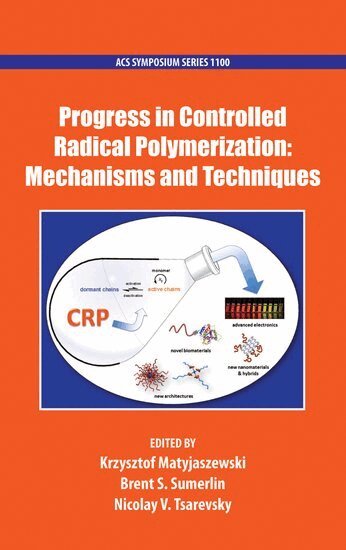
Progress in Controlled Radical Polymerization: Mechanisms and Techniques
Inbunden, Engelska, 2012
2 818 kr
Skickas inom 5-8 vardagar
This book is the first volume in a two-volume compilation on controlled/living radical polymerization. It combines all important aspects of controlled radical polymerization: from synthetic procedures, to rational selection of reaction components, to understanding of the reaction mechanisms, to materials and applications.This book is focused on recent progress in the rapidly developing field of controlled/living radical polymerization. It is a sequel to ACS Symposium Series 685, 768, 854, 944, 1023, and 1024. Volume 1100 deals with the mechanistic aspects of controlled radical polymerization and describes the recent advances in the most important techniques, whereas Volume 1101 contains chapters on new materials prepared by controlled radical polymerization as well as applications of thesematerials.
Inbunden, Engelska, 2009
1 421 kr
Skickas inom 5-8 vardagar
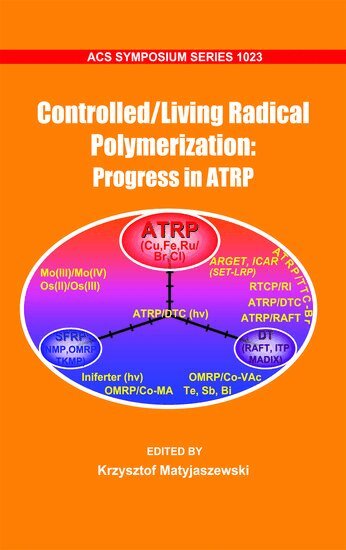
This book is focused on recent progress in the dynamically developing field of controlled/living radical polymerization. It is a sequel to ACS Symposium Series 685, 768, 854, and 944. Volume 1023 contains 26 chapters on mechanistic, synthetic and materials aspects of ATRP. Volume 1024 contains 24 chapters on other controlled/living radical polymerization techniques.
Inbunden, Engelska, 2009
1 421 kr
Skickas inom 5-8 vardagar
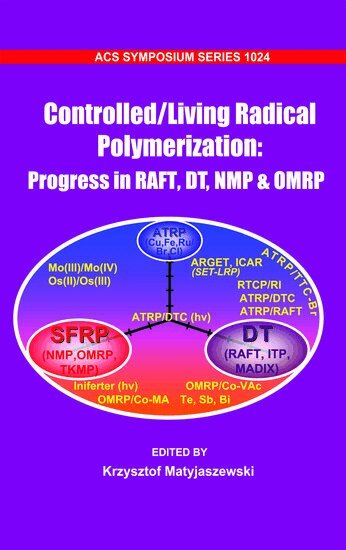
This book is focused on recent progress in the dynamically developing field of controlled/ living radical polymerization. It is a sequel to ACS Symposium Series 685, 768, 854, and 944. Volume 1023 contains 26 chapters on mechanistic, synthetic and materials aspects of ATRP. Volume 1024 contains 24 chapters on other controlled/living radical polymerization techniques.
E-bok
Engelska, 1996942 kr
Läs direkt efter köp
This unified presentation of cationic polymerization discusses initiation, propagation, transfer, and termination in cationic polymerizations of alkenes and heterocycles. It also elucidates the mechanisms of the reactions involved in all carbocationic and ring-opening polymerizations. It is written by internationally acclaimed experts in their resp
Inbunden, Engelska, 2022
12 288 kr
Skickas inom 11-20 vardagar
Macromolecular Engineering Complete and Thorough Resource on Macromolecular Engineering for Researchers and Industry Professionals This book covers the entire field of macromolecular engineering, from design and preparation of well-defined macromolecules, to precise characterization, all the way to optimization for specific functions and applications. It provides background information, comparative advantages and limitations, the most recent advances of numerous synthetic approaches, characterization techniques, and potential applications. The second edition has been completely updated and edited by a world-class team of editors led by K. Matyjaszewski. Sample topics covered within the work include: Synthetic tools to precisely control various aspects of macromolecular structure including chain composition, microstructure, functionality, and topologyModern characterization techniques at the molecular and macroscopic level for various properties of well-defined (co)polymers in solution, bulk and at surfacesThe correlation of molecular structure with macroscopic properties additionally affected by processingSelf-healing polymers, renewable resources, photopolymerization, click chemistry, organocatalysis, hierarchical self-assembly, nanocarbon, and ionic liquidsPolymer chemists and engineers, materials scientists, and professionals in the plastics and pharmaceutical industries will be able to use Macromolecular Engineering as a completely comprehensive reference work to understand macromolecular engineering and its many practical applications.
E-bok
PDF, Engelska, 20092 436 kr
Läs direkt efter köp
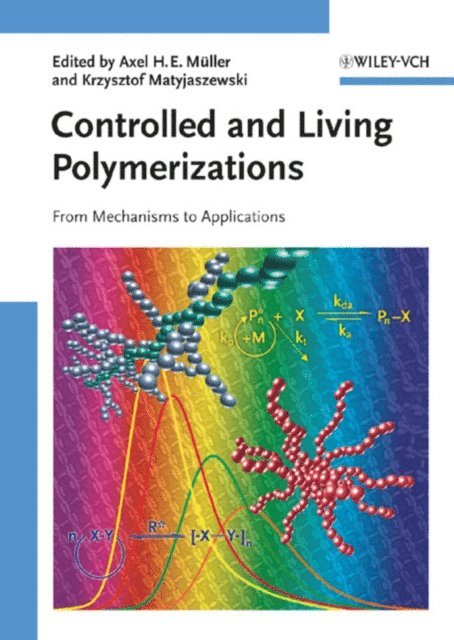
Written by a highly prestigious and knowledgeable team of top scientists in the field, this book provides an overview of the current status of controlled/living polymerization, combining the synthetic, mechanistic and application-oriented aspects. From the contents: * Anionic Vinyl Polymerization * Carbocationic Polymerization * Radical Polymerization * Coordinative Polymerization of Olefins * Ring-Opening Polymerization of Heterocycles * Ring-Opening Metathesis Polymerization * Macromolecular Architectures * Complex Functional Macromolecules * Synthesis of Block and Graft Copolymers * Bulk and Solution Structures of Block Copolymers * Industrial Applications While some of the material is based on chapters taken from the four-volume work "Macromolecular Engineering", it is completely updated and rewritten to reflect the focus of this monograph. Must-have knowledge for polymer and organic chemists, plastics technologists, materials scientists and chemical engineers.
E-bok
PDF, Engelska, 20193 085 kr
Läs direkt efter köp
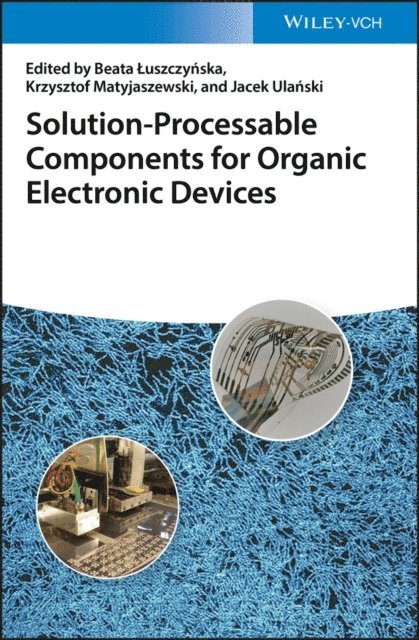
Provides first-hand insights into advanced fabrication techniques for solution processable organic electronics materials and devices The field of printable organic electronics has emerged as a technology which plays a major role in materials science research and development. Printable organic electronics soon compete with, and for specific applications can even outpace, conventional semiconductor devices in terms of performance, cost, and versatility. Printing techniques allow for large-scale fabrication of organic electronic components and functional devices for use as wearable electronics, health-care sensors, Internet of Things, monitoring of environment pollution and many others, yet-to-be-conceived applications. The first part of Solution-Processable Components for Organic Electronic Devices covers the synthesis of: soluble conjugated polymers; solution-processable nanoparticles of inorganic semiconductors; high-k nanoparticles by means of controlled radical polymerization; advanced blending techniques yielding novel materials with extraordinary properties. The book also discusses photogeneration of charge carriers in nanostructured bulk heterojunctions and charge carrier transport in multicomponent materials such as composites and nanocomposites as well as photovoltaic devices modelling. The second part of the book is devoted to organic electronic devices, such as field effect transistors, light emitting diodes, photovoltaics, photodiodes and electronic memory devices which can be produced by solution-based methods, including printing and roll-to-roll manufacturing. The book provides in-depth knowledge for experienced researchers and for those entering the field. It comprises 12 chapters focused on: ? novel organic electronics components synthesis and solution-based processing techniques ? advanced analysis of mechanisms governing charge carrier generation and transport in organic semiconductors and devices ? fabrication techniques and characterization methods of organic electronic devices Providing coverage of the state of the art of organic electronics, Solution-Processable Components for Organic Electronic Devices is an excellent book for materials scientists, applied physicists, engineering scientists, and those working in the electronics industry.
E-bok
Engelska, 20193 085 kr
Läs direkt efter köp
Provides first-hand insights into advanced fabrication techniques for solution processable organic electronics materials and devices The field of printable organic electronics has emerged as a technology which plays a major role in materials science research and development. Printable organic electronics soon compete with, and for specific applications can even outpace, conventional semiconductor devices in terms of performance, cost, and versatility. Printing techniques allow for large-scale fabrication of organic electronic components and functional devices for use as wearable electronics, health-care sensors, Internet of Things, monitoring of environment pollution and many others, yet-to-be-conceived applications. The first part of Solution-Processable Components for Organic Electronic Devices covers the synthesis of: soluble conjugated polymers; solution-processable nanoparticles of inorganic semiconductors; high-k nanoparticles by means of controlled radical polymerization; advanced blending techniques yielding novel materials with extraordinary properties. The book also discusses photogeneration of charge carriers in nanostructured bulk heterojunctions and charge carrier transport in multicomponent materials such as composites and nanocomposites as well as photovoltaic devices modelling. The second part of the book is devoted to organic electronic devices, such as field effect transistors, light emitting diodes, photovoltaics, photodiodes and electronic memory devices which can be produced by solution-based methods, including printing and roll-to-roll manufacturing. The book provides in-depth knowledge for experienced researchers and for those entering the field. It comprises 12 chapters focused on: ? novel organic electronics components synthesis and solution-based processing techniques ? advanced analysis of mechanisms governing charge carrier generation and transport in organic semiconductors and devices ? fabrication techniques and characterization methods of organic electronic devices Providing coverage of the state of the art of organic electronics, Solution-Processable Components for Organic Electronic Devices is an excellent book for materials scientists, applied physicists, engineering scientists, and those working in the electronics industry.
Del 159 - Advances in Polymer Science
Statistical, Gradient, Block and Graft Copolymers by Controlled/Living Radical Polymerizations
Inbunden, Engelska, 2002
2 161 kr
Skickas inom 10-15 vardagar
The design and the realisation of well defined polymer architectures has become an important goal in macromolecular science. The prerequisite for achieving this goal is the availability of controlled polymerisation reactions. Living anionic polymerisation was the first reaction fulfilling these requirements. Cationic polymerisation only came into play when it was realised that it was possible to create an equilibrium between active and dormant species with the fraction of the dormant species being far superior to that of active ones. A corresponding principle applies to controlled radical polymerisation per formed in quite a number of modes such as nitroxide mediated polymerisation (NMP), atom transfer radical polymerisation (ATRP), reversible addition frag mentation chain transfer (RAFT) or catalytic chain transfer (CCT) reactions. All of these variants of controlled radical polymerisation lead to well defined archi tectures with the particular advantage that a much larger number of monomers are suitable and the reaction conditions are much less demanding than those of living ionic polymerisation reactions. Although in controlled radical polymerisation, termination reactions cannot be excluded completely, they are limited in their extent and consequently the mol ecular weight is controlled, the polydispersity index is small and functionalities can be attached to the macromolecules. These features are indicative of the real isation of well defined polymer architectures such as block copolymers, star shaped and comb shaped copolymers.
E-bok
PDF, Engelska, 20072 840 kr
Läs direkt efter köp
The design and the realisation of well defined polymer architectures has become an important goal in macromolecular science. The prerequisite for achieving this goal is the availability of controlled polymerisation reactions. Living anionic polymerisation was the first reaction fulfilling these requirements. Cationic polymerisation only came into play when it was realised that it was possible to create an equilibrium between active and dormant species with the fraction of the dormant species being far superior to that of active ones. A corresponding principle applies to controlled radical polymerisation per formed in quite a number of modes such as nitroxide mediated polymerisation (NMP), atom transfer radical polymerisation (ATRP), reversible addition frag mentation chain transfer (RAFT) or catalytic chain transfer (CCT) reactions. All of these variants of controlled radical polymerisation lead to well defined archi tectures with the particular advantage that a much larger number of monomers are suitable and the reaction conditions are much less demanding than those of living ionic polymerisation reactions. Although in controlled radical polymerisation, termination reactions cannot be excluded completely, they are limited in their extent and consequently the mol ecular weight is controlled, the polydispersity index is small and functionalities can be attached to the macromolecules. These features are indicative of the real isation of well defined polymer architectures such as block copolymers, star shaped and comb shaped copolymers.
Del 159 - Advances in Polymer Science
Statistical, Gradient, Block and Graft Copolymers by Controlled/Living Radical Polymerizations
Häftad, Engelska, 2012
2 161 kr
Skickas inom 10-15 vardagar
The design and the realisation of well defined polymer architectures has become an important goal in macromolecular science. The prerequisite for achieving this goal is the availability of controlled polymerisation reactions. Living anionic polymerisation was the first reaction fulfilling these requirements. Cationic polymerisation only came into play when it was realised that it was possible to create an equilibrium between active and dormant species with the fraction of the dormant species being far superior to that of active ones. A corresponding principle applies to controlled radical polymerisation per formed in quite a number of modes such as nitroxide mediated polymerisation (NMP), atom transfer radical polymerisation (ATRP), reversible addition frag mentation chain transfer (RAFT) or catalytic chain transfer (CCT) reactions. All of these variants of controlled radical polymerisation lead to well defined archi tectures with the particular advantage that a much larger number of monomers are suitable and the reaction conditions are much less demanding than those of living ionic polymerisation reactions. Although in controlled radical polymerisation, termination reactions cannot be excluded completely, they are limited in their extent and consequently the mol ecular weight is controlled, the polydispersity index is small and functionalities can be attached to the macromolecules. These features are indicative of the real isation of well defined polymer architectures such as block copolymers, star shaped and comb shaped copolymers.
Häftad, Engelska, 2013
1 623 kr
Skickas inom 10-15 vardagar
Del 37 - Advances in Polymer Science
Cationic Ring-Opening Polymerization of Heterocyclic Monomers
I. Mechanisms
Häftad, Engelska, 2013
546 kr
Skickas inom 10-15 vardagar