Kuldeep Pandey – författare
Visar alla böcker från författaren Kuldeep Pandey. Handla med fri frakt och snabb leverans.
2 produkter
2 produkter
Inbunden, Engelska, 2025
2 149 kr
Skickas inom 5-8 vardagar
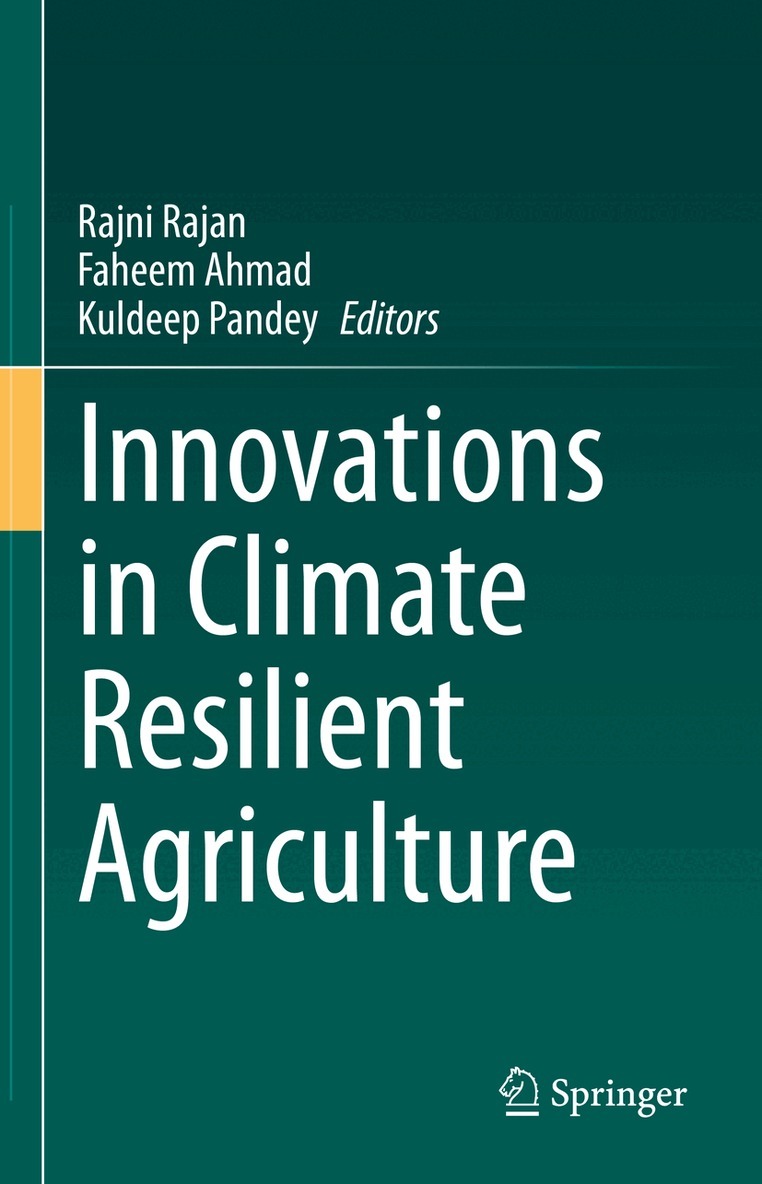
This book discusses how modern technology interacts with agriculture, soil, and plants for the production of robust crops, and emphasises aspects of climate change susceptibility, adaptation, and amelioration for agricultural sustainability. Examples of such technologies that could have a significant impact on all facets of sustainably increasing agricultural productivity include genome editing, gene mapping, nanotechnology, hydroponics, IoT, artificial intelligence, and UAVs. The book also presents the importance of computer modelling using artificial intelligence, robotics, and other cutting-edge methods in the development of climate-smart crops for long-term food security improvement in vulnerable agricultural systems impacted by climate change. The primary audience for the book is professional scientists, as well as advanced undergraduates and graduate students. It is also intended for the agricultural productivity sector, including nanotechnologists, plant biotechnologists, horticulturists, physiologists and agronomists, breeders, entomologists, plant pathologists, food policy analysts, and agricultural data scientists.
E-bok
Engelska, 20252 741 kr
Läs direkt efter köp
This book discusses how modern technology interacts with agriculture, soil, and plants for the production of robust crops, and emphasises aspects of climate change susceptibility, adaptation, and amelioration for agricultural sustainability. Examples of such technologies that could have a significant impact on all facets of sustainably increasing agricultural productivity include genome editing, gene mapping, nanotechnology, hydroponics, IoT, artificial intelligence, and UAVs. The book also presents the importance of computer modelling using artificial intelligence, robotics, and other cutting-edge methods in the development of climate-smart crops for long-term food security improvement in vulnerable agricultural systems impacted by climate change. The primary audience for the book is professional scientists, as well as advanced undergraduates and graduate students. It is also intended for the agricultural productivity sector, including nanotechnologists, plant biotechnologists, horticulturists, physiologists and agronomists, breeders, entomologists, plant pathologists, food policy analysts, and agricultural data scientists.