Kuniya Nasukawa – författare
2 850 kr
Skickas inom 10-15 vardagar
18 658 kr
Kommande
662 kr
Läs direkt efter köp
632 kr
Skickas inom 10-15 vardagar
662 kr
Läs direkt efter köp
2 091 kr
Läs direkt efter köp
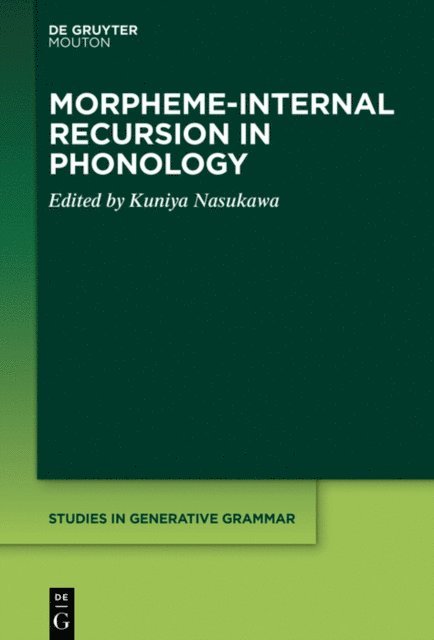
Generative phonology aims to formalise two distinct aspects of phonological processes: the functional and the representational. Since functions operate on representations, it is clear that the functional aspect is influenced by the form of representations, i.e. different types of representation require different types of rules, principles or constraints. This volume examines the representational issue in phonology and considers what kind of representation is most appropriate for recent models of generative phonology. In particular, it provides the first platform for debate on the place of morpheme-internal structure and on the formal status of phonology in the language faculty, and attempts to identify phonological recursive structure as a means of capturing frequently observed processes.
2 091 kr
Läs direkt efter köp
Generative phonology aims to formalise two distinct aspects of phonological processes: the functional and the representational. Since functions operate on representations, it is clear that the functional aspect is influenced by the form of representations, i.e. different types of representation require different types of rules, principles or constraints. This volume examines the representational issue in phonology and considers what kind of representation is most appropriate for recent models of generative phonology. In particular, it provides the first platform for debate on the place of morpheme-internal structure and on the formal status of phonology in the language faculty, and attempts to identify phonological recursive structure as a means of capturing frequently observed processes.
Morpheme-internal Recursion in Phonology
2 465 kr
Skickas inom 5-8 vardagar
380 kr
Skickas inom 5-8 vardagar
1 748 kr
Läs direkt efter köp
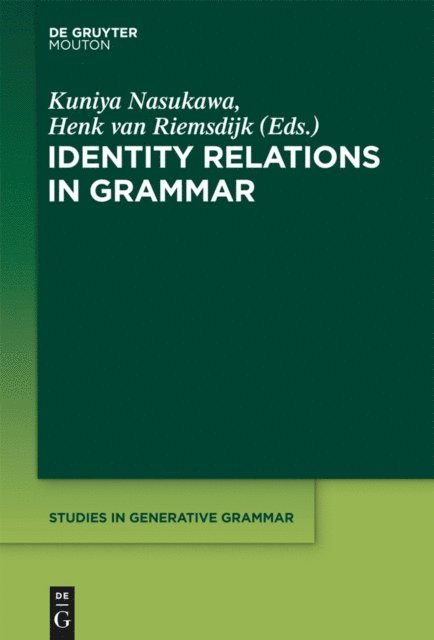
Few concepts are as ubiquitous in the physical world of humans as that of identity. Laws of nature crucially involve relations of identity and non-identity, the act of identifying is central to most cognitive processes, and the structure of human language is determined in many different ways by considerations of identity and its opposite. The purpose of this book is to bring together research from a broad scale of domains of grammar that have a bearing on the role that identity plays in the structure of grammatical representations and principles.
Beyond a great many analytical puzzles, the creation and avoidance of identity in grammar raise a lot of fundamental and hard questions. These include:
Why is identity sometimes tolerated or even necessary, while in other contexts it must be avoided? What are the properties of complex elements that contribute to configurations of identity (XX)? What structural notions of closeness or distance determine whether an offending XX-relation exists or, inversely, whether two more or less distant elements satisfy some requirement of identity? Is it possible to generalize over the specific principles that govern (non-)identity in the various components of grammar, or are such comparisons merely metaphorical? Indeed, can we define the notion of identity in a formal way that will allow us to decide which of the manifold phenomena that we can think of are genuine instances of some identity (avoidance) effect? If identity avoidance is a manifestation in grammar of some much more encompassing principle, some law of nature, then how is it possible that what does and what does not count as identical in the grammars of different languages seems to be subject to considerable variation?1 729 kr
Skickas inom 5-8 vardagar
1 748 kr
Läs direkt efter köp
Few concepts are as ubiquitous in the physical world of humans as that of identity. Laws of nature crucially involve relations of identity and non-identity, the act of identifying is central to most cognitive processes, and the structure of human language is determined in many different ways by considerations of identity and its opposite. The purpose of this book is to bring together research from a broad scale of domains of grammar that have a bearing on the role that identity plays in the structure of grammatical representations and principles.
Beyond a great many analytical puzzles, the creation and avoidance of identity in grammar raise a lot of fundamental and hard questions. These include:
Why is identity sometimes tolerated or even necessary, while in other contexts it must be avoided? What are the properties of complex elements that contribute to configurations of identity (XX)? What structural notions of closeness or distance determine whether an offending XX-relation exists or, inversely, whether two more or less distant elements satisfy some requirement of identity? Is it possible to generalize over the specific principles that govern (non-)identity in the various components of grammar, or are such comparisons merely metaphorical? Indeed, can we define the notion of identity in a formal way that will allow us to decide which of the manifold phenomena that we can think of are genuine instances of some identity (avoidance) effect? If identity avoidance is a manifestation in grammar of some much more encompassing principle, some law of nature, then how is it possible that what does and what does not count as identical in the grammars of different languages seems to be subject to considerable variation?1 870 kr
Skickas inom 5-8 vardagar
2 240 kr
Skickas inom 5-8 vardagar
2 263 kr
Läs direkt efter köp
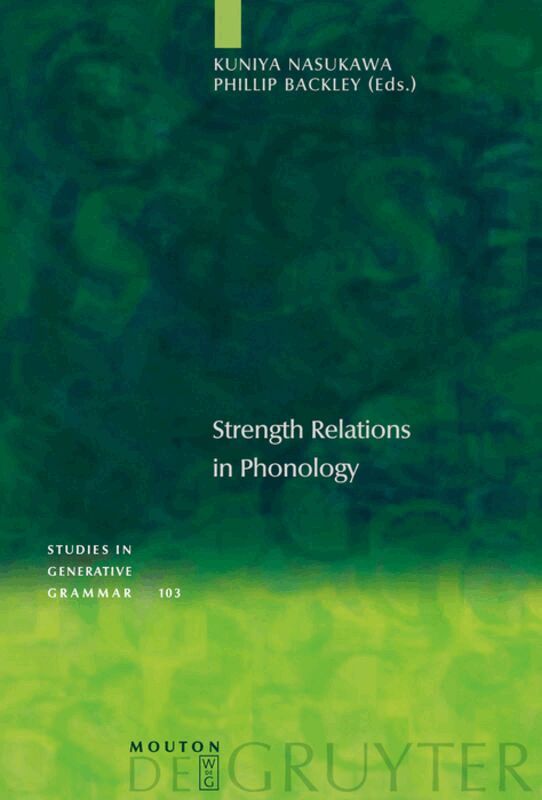
This collection of papers focuses on the general theme of phonological strength, bringing together current work being undertaken in a variety of leading theoretical frameworks. Its aim is to show how referring directly to strength relations can facilitate explanation in different parts of the phonological grammar.
The papers introduce illuminating data from a wide range of languages including English, Dutch, German, Greek, Japanese, Bambara, Yuhup, Nivkh, Sesotho and other Bantu systems, demonstrating how strength differences are central to the analysis of phonological patterning not only in well-documented cases of segmental asymmetry but also in other areas of description including language acquisition, pitch accent patterns and tonal phenomena. All of the contributors agree on the need for a phonological (as opposed to a phonetic) approach to the question of strength differences, and show how a strength-based analysis may proceed in various theoretical models including Dependency Phonology, Government Phonology, Strict CV Phonology and Optimality Theory.
Many of the papers develop a structural account of their data, in which strength relations are understood to reflect asymmetric licensing relations holding between units in representations. The volume provides a snapshot of current thinking on the question of strength in phonology. The range of language data and theoretical contexts it explores give a clear indication that phonological strength acts as a common thread to unite a range of apparently unrelated patterns and processes.
1 721 kr
Läs direkt efter köp
This book makes an important contribution to the expanding body of work in generative phonology which aims to reduce the number of traditionally recognized melodic categories in order to achieve a greater degree of restrictiveness. By analyzing data from a large number of different languages, Nasukawa establishes a clear affinity between nasality and voicing, and demonstrates the advantages of treating these two properties as different phonetic manifestations of a single nasal-voice category. The choice of whether to interpret this category as voicing or nasality is determined by the active or inactive status of a complement tier; when active, this complement tier enhances the acoustic image of its head category and is interpreted as voicing. This study deepens our understanding of the typological relation between nasality and voicing, and sheds new light on a number of related agreement phenomena such as nasal harmony, postnasal voicing assimilation, voiced-obstruent voicing assimilation and spontaneous prenasalisation.