Kurt Godel – författare
Visar alla böcker från författaren Kurt Godel. Handla med fri frakt och snabb leverans.
9 produkter
On Formally Undecidable Propositions of "Principia Mathematica" and Related Systems
Av Kurt Godel
Häftad, 2003
103 kr
Kommande
First English translation of revolutionary paper (1931) that established that even in elementary parts of arithmetic, there are propositions which cannot be proved or disproved within the system. It is thus uncertain that the basic axioms of arithmetic will not give rise to contradictions. …
Kurt Godel: Collected Works: Volume IV
Av Kurt Godel, Wilfried Sieg m. fl.
E-bok, 2014
962 kr
Lägg i varukorg
Kurt Gödel (1906 - 1978) was the most outstanding logician of the twentieth century, famous for his hallmark works on the completeness of logic, the incompleteness of number theory, and the consistency of the axiom of choice and the continuum hypothesis. He is also noted for his work on …
Kurt Godel: Collected Works: Volume V
Av Kurt Godel, Wilfried Sieg m. fl.
E-bok, 2014
1174 kr
Lägg i varukorg
Kurt Gödel (1906 - 1978) was the most outstanding logician of the twentieth century, famous for his hallmark works on the completeness of logic, the incompleteness of number theory, and the consistency of the axiom of choice and the continuum hypothesis. He is also noted for his work on …
Consistency of the Continuum Hypothesis
Av Kurt Godel
E-bok, 2016
685 kr
Lägg i varukorg
Kurt Gödel, mathematician and logician, was one of the most influential thinkers of the twentieth century. Gödel fled Nazi Germany, fearing for his Jewish wife and fed up with Nazi interference in the affairs of the mathematics institute at the University of Göttingen. In 1933 he settled at the …
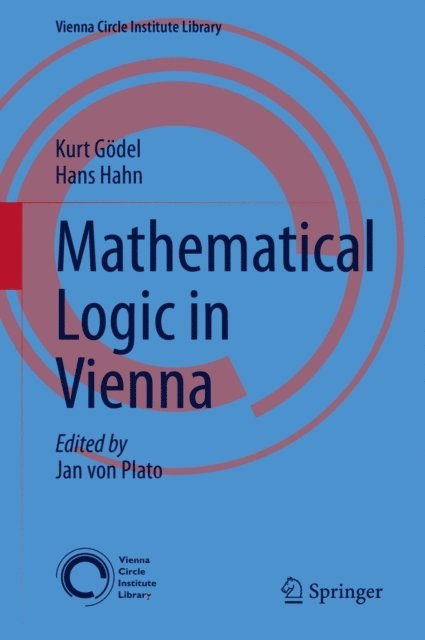
Mathematical Logic in Vienna
Av Hans Hahn, Kurt Godel m. fl.
E-bok, 2024
1728 kr
Lägg i varukorg
This book is a record of a seminar on mathematical logic Kurt Gödel and Hans Hahn held in Vienna in 1931-32. The seminar proceedings, given in English translation, are a unique witness of the state of research in logic and foundations of mathematics right after Gödel had published his celebrated …
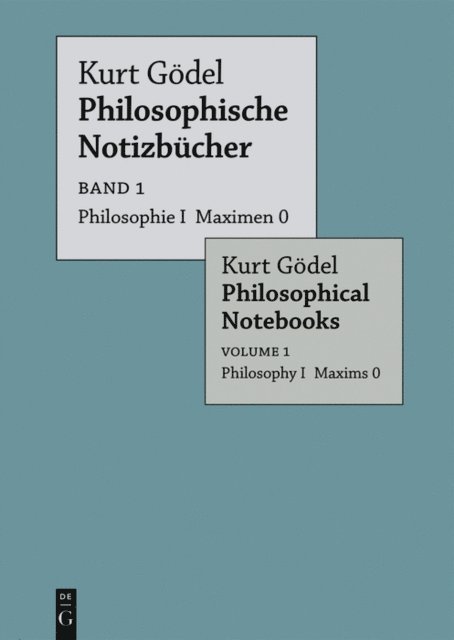
Philosophie I Maximen 0 / Philosophy I Maxims 0
Av Kurt Godel, Eva-Maria Engelen
E-bok, 2019
1298 kr
Lägg i varukorg
Der Mathematiker Kurt Gödel hat über einen Zeitraum von 22 Jahren (1934-1955) philosophische Bemerkungen, die so genannten Maximen Philosophie (Max Phil), niedergeschrieben. Sie sind in 15 Notizbüchern in der Kurzschrift Gabelsberger überliefert. Das erste Notizheft enthält allgemeine …
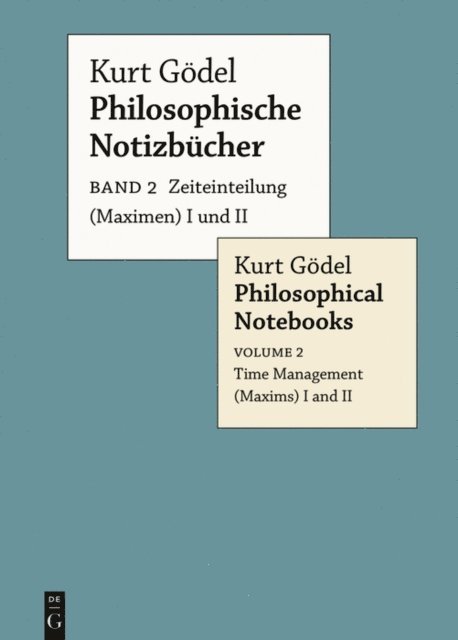
Zeiteinteilung (Maximen) I und II / Time Management (Maxims) I and II
Av Kurt Godel, Eva-Maria Engelen
E-bok, 2020
1905 kr
Lägg i varukorg
Der Mathematiker Kurt Gödel hat über einen Zeitraum von 22 Jahren (1934–1955) philosophische Bemerkungen, die so genannten Maximen Philosophie (Max Phil), niedergeschrieben. Sie sind in 15 Notizbüchern in der Kurzschrift Gabelsberger überliefert. Das erste Heft enthält allgemeine philosophische …
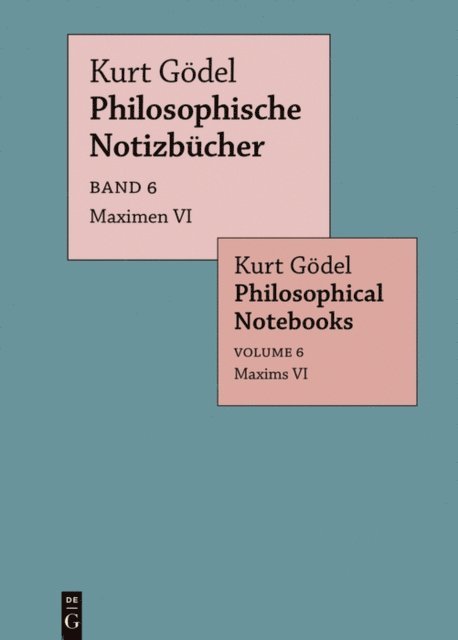
Maximen VI / Maxims VI
Av Kurt Godel, Eva-Maria Engelen
E-bok, 2024
1466 kr
Lägg i varukorg
Der Mathematiker Kurt Gödel hat über einen Zeitraum von 22 Jahren (1934-1955) philosophische Bemerkungen, die so genannten Maximen Philosophie (Max Phil), niedergeschrieben. Sie sind in 15 Notizbüchern in der Kurzschrift Gabelsberger überliefert. Das erste Heft enthält allgemeine philosophische …
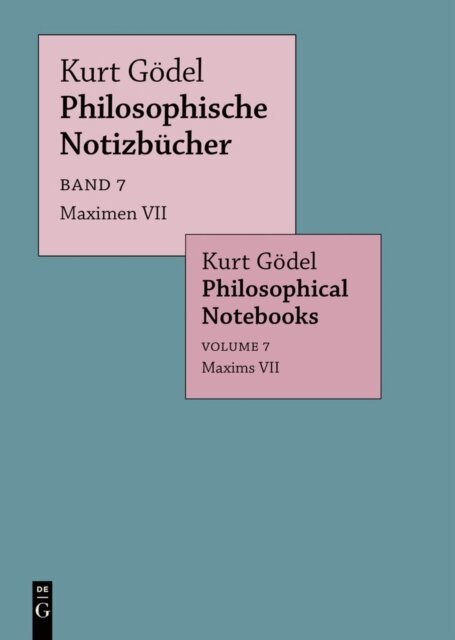
Maximen VII / Maxims VII
Av Kurt Godel, Eva-Maria Engelen
E-bok, 2025
1562 kr
Lägg i varukorg
Der Mathematiker Kurt Godel hat uber einen Zeitraum von 22 Jahren (1934-1955) philosophische Bemerkungen, die so genannten Maximen Philosophie (Max Phil), niedergeschrieben. Sie sind in 15 Notizbuchern in der Kurzschrift Gabelsberger uberliefert. Erstmals wird nun an der Kurt-Godel-Forschungsstelle …