Kurt Pawlik - Böcker
Visar alla böcker från författaren Kurt Pawlik. Handla med fri frakt och snabb leverans.
3 produkter
3 produkter
780 kr
Skickas inom 10-15 vardagar
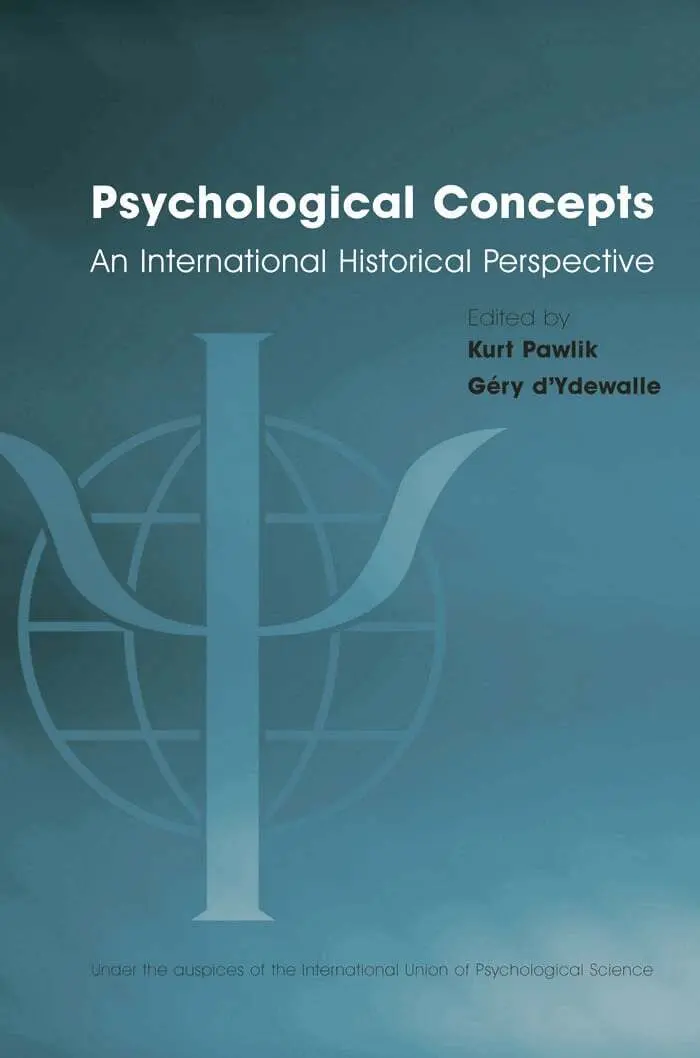
Among the scientific advances over the last one hundred years, those in psychological science rank among the most prolific and revealing. The analyses of human intelligence and cognition, of human consciousness and self-awareness, of human memory and learning, and of human personality structure have opened up new avenues towards a deeper understanding of the human nature, the human mind, and its evolution. These new insights, whilst meeting high standards of research methodology, have also given rise to a conceptual grid which connects hitherto divergent lines of research in the human and behavioral sciences, leading up to present-day neuroscience.The Editors, both past presidents of the International Union of Psychological Science (IUPsyS), bring together a distinguished panel of international experts in the attempt to unravel, in a comparative cross-cultural and historical approach, changing contents and functions of psychological key concepts (such as intelligence, cognition, mind and the self). Their findings help to guide psychological theorizing, psychological experimentation and field research, and in so doing they apply behavioral science insights to the improvement of human affairs. Prepared under the aegis of the International Union of Psychological Science, the book exemplifies a concept-driven international history of psychological science.With its team of distinguished researchers from four continents, Psychological Concepts: An International Historical Perspective outlines the history of psychology in a truly innovative way.
2 027 kr
Skickas inom 7-10 vardagar
Among the scientific advances over the last one hundred years, those in psychological science rank among the most prolific and revealing. The analyses of human intelligence and cognition, of human consciousness and self-awareness, of human memory and learning, and of human personality structure have opened up new avenues towards a deeper understanding of the human nature, the human mind, and its evolution. These new insights, whilst meeting high standards of research methodology, have also given rise to a conceptual grid which connects hitherto divergent lines of research in the human and behavioral sciences, leading up to present-day neuroscience.The Editors, both past presidents of the International Union of Psychological Science (IUPsyS), bring together a distinguished panel of international experts in the attempt to unravel, in a comparative cross-cultural and historical approach, changing contents and functions of psychological key concepts (such as intelligence, cognition, mind and the self). Their findings help to guide psychological theorizing, psychological experimentation and field research, and in so doing they apply behavioral science insights to the improvement of human affairs. Prepared under the aegis of the International Union of Psychological Science, the book exemplifies a concept-driven international history of psychological science.With its team of distinguished researchers from four continents, Psychological Concepts: An International Historical Perspective outlines the history of psychology in a truly innovative way.
Del 8 - Abhandlungen der Akademie der Wissenschaften in Hamburg
Rationale Entscheidungen unter Unsicherheit
Inbunden, Tyska, 2018
566 kr
Skickas inom 7-10 vardagar
Menschen treffen täglich eine Vielzahl von Entscheidungen, entweder für sich selbst oder für andere. Auf welcher Basis entscheiden wir eigentlich? Was sind die Grundlagen für Entscheidungen, wenn die Datenlage unsicher ist, weil eine völlig neue Situation erwartet wird oder schon eingetreten ist? Dies ist in der Medizin regelmäßig der Fall und besonders in Zeiten, in denen neue Infektionserreger bekannt werden und Epidemien oder Pandemien auslösen können, aber auch in besonderen Situationen wie beispielsweise drohenden Großschadensereignissen, Gefahrenlagen bei Massenansammlungen oder bei drohenden Wirtschaftskrisen mit viralem Charakter. In diesem Buch befassen sich international hochrangige Wissenschaftler aus Medizin, Biologie, Wirtschaftswissenschaften, Mathematik, Philosophie und Psychologie sowie renommierte Entscheidungspraktiker in der öffentlichen Verwaltung mit der Frage, wie wir Unsicherheiten erkennen, bewerten und rational damit umgehen. Was tun, wenn es kein "richtig" oder "falsch" gibt? Können wir Risikokompetenz lernen? Können lernende Maschinen dabei unterstützen? Welchen Beitrag kann die Wissenschaft zur Beratung der politischen Entscheidungsträger leisten? Wie ist die konkrete Entscheidungspraxis bei Polizei und Feuerwehr in einer Großstadt wie Hamburg? Andrea Ammon, Direktorin, European Centre for Disease Prevention and Control, Solna Gerd Gigerenzer, Direktor, Max-Planck-Institut für Bildungsforschung, Berlin Till Grüne-Yanoff, Royal Institute of Technology, Stockholm Andreas Lange, Fachbereich Volkswirtschaftslehre, Universität Hamburg Klaus Maurer, Oberbranddirektor i.R. der Berufsfeuerwehr, Hamburg Ralf Meyer, Polizeipräsident, Hamburg Thomas Mettenleiter, Präsident des Friedrich-Löffler-Instituts, Riems Arne Traulsen, Max-Planck-Institut für Evolutionsbiologie, Plön Jedem Statement folgt ein fachnaher Kommentar mit Diskussion.