Kurtis Schaeffer – författare
Visar alla böcker från författaren Kurtis Schaeffer. Handla med fri frakt och snabb leverans.
5 produkter
5 produkter
Inbunden, Engelska, 2013
3 164 kr
Skickas inom 3-6 vardagar
Covering the social, cultural, and political development of Tibet from the seventh century to the modern period, this resource reproduces essential, hard-to-find essays from the past fifty years of Tibetan studies, along with several new contributions. Beginning with Tibet's emergence as a regional power and concluding with its profound contemporary transformations, the collection is both a general and specific history, connecting the actions of individuals, communities, and institutions to broader historical trends shaping Asia and the world. With contributions from American, French, German, Italian, Chinese, Japanese, and Tibetan scholars, the anthology reflects the international character of Tibetan studies and its multiple, interdisciplinary perspectives. By far the most concise scholarly anthology on Tibetan civilization in any Western language, this reader draws a clear portrait of Tibet's history, its relation to its neighbors, and its role in world affairs.
Häftad, Engelska, 2013
434 kr
Skickas inom 5-8 vardagar
Covering the social, cultural, and political development of Tibet from the seventh century to the modern period, this resource reproduces essential, hard-to-find essays from the past fifty years of Tibetan studies, along with several new contributions. Beginning with Tibet's emergence as a regional power and concluding with its profound contemporary transformations, the collection is both a general and specific history, connecting the actions of individuals, communities, and institutions to broader historical trends shaping Asia and the world. With contributions from American, French, German, Italian, Chinese, Japanese, and Tibetan scholars, the anthology reflects the international character of Tibetan studies and its multiple, interdisciplinary perspectives. By far the most concise scholarly anthology on Tibetan civilization in any Western language, this reader draws a clear portrait of Tibet's history, its relation to its neighbors, and its role in world affairs.
Inbunden, Engelska, 2009
1 118 kr
Skickas inom 5-8 vardagar
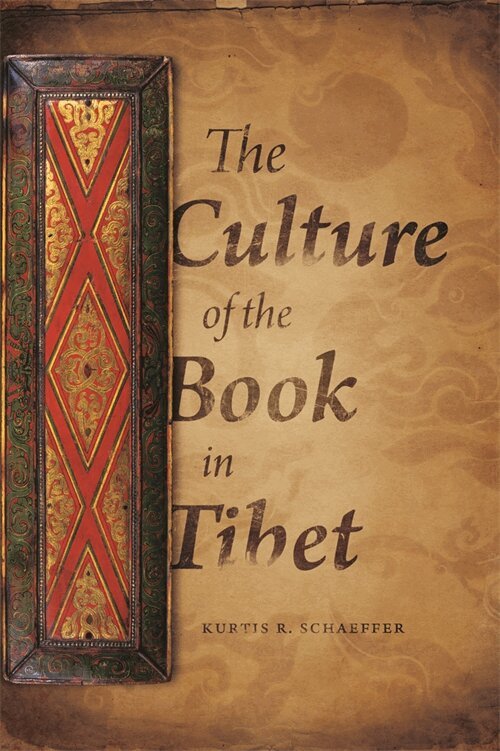
The history of the book in Tibet involves more than literary trends and trade routes. Functioning as material, intellectual, and symbolic object, the book has been an instrumental tool in the construction of Tibetan power and authority, and its history opens a crucial window onto the cultural, intellectual, and economic life of an immensely influential Buddhist society. Spanning the fourteenth to the eighteenth centuries, Kurtis R. Schaeffer envisions the scholars and hermits, madmen and ministers, kings and queens who produced Tibet's massive canons. He describes how Tibetan scholars edited and printed works of religion, literature, art, and science and what this indicates about the interrelation of material and cultural practices. The Tibetan book is at once the embodiment of the Buddha's voice, a principal means of education, a source of tradition and authority, an economic product, a finely crafted aesthetic object, a medium of Buddhist written culture, and a symbol of the religion itself. Books stood at the center of debates on the role of libraries in religious institutions, the relative merits of oral and written teachings, and the economy of religion in Tibet.A meticulous study that draws on more than 150 understudied Tibetan sources, The Culture of the Book in Tibet is the first volume to trace this singular history. Through a single object, Schaeffer accesses a greater understanding of the Tibetan plateau.
Häftad, Engelska, 2014
576 kr
Skickas inom 3-6 vardagar
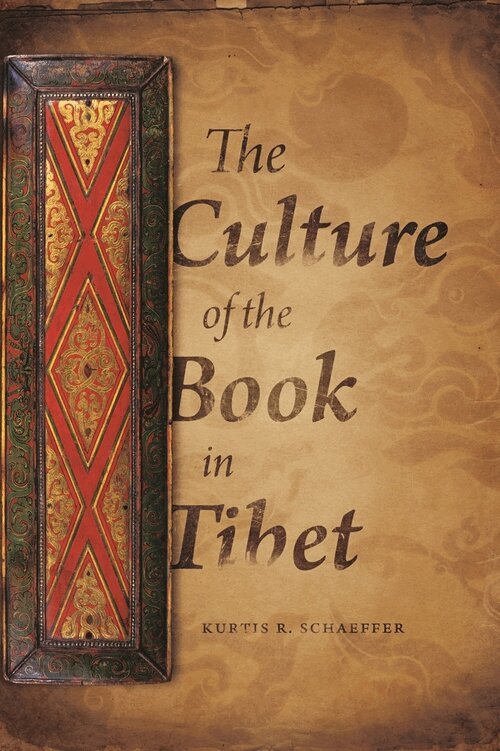
The history of the book in Tibet involves more than literary trends and trade routes. Functioning as material, intellectual, and symbolic object, the book has been an instrumental tool in the construction of Tibetan power and authority, and its history opens a crucial window onto the cultural, intellectual, and economic life of an immensely influential Buddhist society. Spanning the fourteenth to the eighteenth centuries, Kurtis R. Schaeffer envisions the scholars and hermits, madmen and ministers, kings and queens who produced Tibet's massive canons. He describes how Tibetan scholars edited and printed works of religion, literature, art, and science and what this indicates about the interrelation of material and cultural practices. The Tibetan book is at once the embodiment of the Buddha's voice, a principal means of education, a source of tradition and authority, an economic product, a finely crafted aesthetic object, a medium of Buddhist written culture, and a symbol of the religion itself. Books stood at the center of debates on the role of libraries in religious institutions, the relative merits of oral and written teachings, and the economy of religion in Tibet.A meticulous study that draws on more than 150 understudied Tibetan sources, The Culture of the Book in Tibet is the first volume to trace this singular history. Through a single object, Schaeffer accesses a greater understanding of the Tibetan plateau.
E-bok
Engelska, 2023458 kr
Läs direkt efter köp
The thirty-four essays in this volume follow the particular interests of Leonard van der Kuijp, whose groundbreaking research in Tibetan intellectual and cultural history imbued his students with an abiding sense of curiosity and discovery.As part of Leonard van der Kuijp’s research in Tibetan history, as he patiently and expertly revealed treasures of the Tibetan intellectual tradition in fourteenth-century Tsang, or seventeenth-century Lhasa, or eighteenth-century Amdo, he developed an international community of colleagues and students. The thirty-four essays in this volume follow the particular interests of the honoree and express the comprehensive research that his international cohort have engaged in alongside his generous tutelage over the course of forty years. He imbued his students with the abiding sense of curiosity and discovery that can be experienced through every one of his writings, and that can be found as well in these new essays in intellectual, cultural, and institutional history by Christopher Beckwith, the late Hubert Decleer, Franz-Karl Ehrhard, Jörg Heimbel and David Jackson, Isabelle Henrion-Dourcy, Nathan Hill, Matthew Kapstein, Kurtis Schaeffer, Michael Witzel, Allison Aitken, Yael Bentor, Pieter Verhagen, Todd Lewis, William McGrath, Peter Schwieger, Gray Tuttle, and others.