Kyle Harper - Böcker
Visar alla böcker från författaren Kyle Harper. Handla med fri frakt och snabb leverans.
12 produkter
12 produkter
1 770 kr
Skickas inom 7-10 vardagar
Capitalizing on the rich historical record of late antiquity, and employing sophisticated methodologies from social and economic history, this book reinterprets the end of Roman slavery. Kyle Harper challenges traditional interpretations of a transition from antiquity to the Middle Ages, arguing instead that a deep divide runs through 'late antiquity', separating the Roman slave system from its early medieval successors. In the process, he covers the economic, social and institutional dimensions of ancient slavery and presents the most comprehensive analytical treatment of a pre-modern slave system now available. By scouring the late antique record, he has uncovered a wealth of new material, providing fresh insights into the ancient slave system, including slavery's role in agriculture and textile production, its relation to sexual exploitation, and the dynamics of social honor. By demonstrating the vitality of slavery into the later Roman empire, the author shows that Christianity triumphed amidst a genuine slave society.
426 kr
Tillfälligt slut
Del 20 - Revealing Antiquity
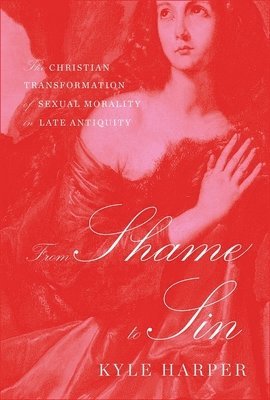
From Shame to Sin
The Christian Transformation of Sexual Morality in Late Antiquity
Häftad, Engelska, 2016
188 kr
Skickas inom 7-10 vardagar
When Rome was at its height, an emperor’s male beloved, victim of an untimely death, would be worshipped around the empire as a god. In this same society, the routine sexual exploitation of poor and enslaved women was abetted by public institutions. Four centuries later, a Roman emperor commanded the mutilation of men caught in same-sex affairs, even as he affirmed the moral dignity of women without any civic claim to honor. The gradual transformation of the Roman world from polytheistic to Christian marks one of the most sweeping ideological changes of premodern history. At the center of it all was sex. Exploring sources in literature, philosophy, and art, Kyle Harper examines the rise of Christianity as a turning point in the history of sexuality and helps us see how the roots of modern sexuality are grounded in an ancient religious revolution.While Roman sexual culture was frankly and freely erotic, it was not completely unmoored from constraint. Offending against sexual morality was cause for shame, experienced through social condemnation. The rise of Christianity fundamentally changed the ethics of sexual behavior. In matters of morality, divine judgment transcended that of mere mortals, and shame—a social concept—gave way to the theological notion of sin. This transformed understanding led to Christianity’s explicit prohibitions of homosexuality, extramarital love, and prostitution. Most profound, however, was the emergence of the idea of free will in Christian dogma, which made all human action, including sexual behavior, accountable to the spiritual, not the physical, world.
372 kr
Skickas inom 7-10 vardagar
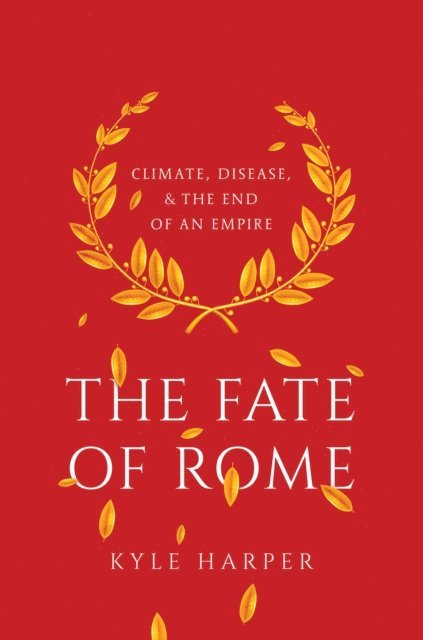
A sweeping new history of how climate change and disease helped bring down the Roman Empire Here is the monumental retelling of one of the most consequential chapters of human history: the fall of the Roman Empire. The Fate of Rome is the first book to examine the catastrophic role that climate change and infectious diseases played in the collapse of Rome's power--a story of nature's triumph over human ambition. Interweaving a grand historical narrative with cutting-edge climate science and genetic discoveries, Kyle Harper traces how the fate of Rome was decided not just by emperors, soldiers, and barbarians but also by volcanic eruptions, solar cycles, climate instability, and devastating viruses and bacteria. He takes readers from Rome's pinnacle in the second century, when the empire seemed an invincible superpower, to its unraveling by the seventh century, when Rome was politically fragmented and materially depleted. Harper describes how the Romans were resilient in the face of enormous environmental stress, until the besieged empire could no longer withstand the combined challenges of a "little ice age" and recurrent outbreaks of bubonic plague.A poignant reflection on humanity's intimate relationship with the environment, The Fate of Rome provides a sweeping account of how one of history's greatest civilizations encountered, endured, yet ultimately succumbed to the cumulative burden of nature's violence. The example of Rome is a timely reminder that climate change and germ evolution have shaped the world we inhabit--in ways that are surprising and profound.
161 kr
Skickas inom 7-10 vardagar
How devastating viruses, pandemics, and other natural catastrophes swept through the far-flung Roman Empire and helped to bring down one of the mightiest civilizations of the ancient worldHere is the monumental retelling of one of the most consequential chapters of human history: the fall of the Roman Empire. The Fate of Rome is the first book to examine the catastrophic role that climate change and infectious diseases played in the collapse of Rome's power—a story of nature's triumph over human ambition. Interweaving a grand historical narrative with cutting-edge climate science and genetic discoveries, Kyle Harper traces how the fate of Rome was decided not just by emperors, soldiers, and barbarians but also by volcanic eruptions, solar cycles, climate instability, and devastating viruses and bacteria. The Fate of Rome is a sweeping account of how one of history's greatest civilizations encountered and endured, yet ultimately succumbed to, the cumulative burden of nature's violence.
393 kr
Skickas inom 7-10 vardagar
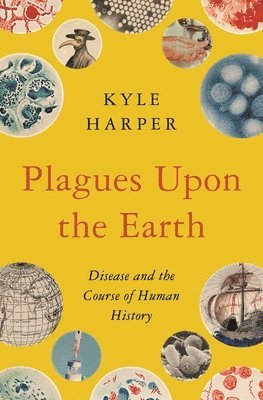
A sweeping germ’s-eye view of history from human origins to global pandemicsPlagues Upon the Earth is a monumental history of humans and their germs. Weaving together a grand narrative of global history with insights from cutting-edge genetics, Kyle Harper explains why humanity’s uniquely dangerous disease pool is rooted deep in our evolutionary past, and why its growth is accelerated by technological progress. He shows that the story of disease is entangled with the history of slavery, colonialism, and capitalism, and reveals the enduring effects of historical plagues in patterns of wealth, health, power, and inequality. He also tells the story of humanity’s escape from infectious disease—a triumph that makes life as we know it possible, yet destabilizes the environment and fosters new diseases.Panoramic in scope, Plagues Upon the Earth traces the role of disease in the transition to farming, the spread of cities, the advance of transportation, and the stupendous increase in human population. Harper offers a new interpretation of humanity’s path to control over infectious disease—one where rising evolutionary threats constantly push back against human progress, and where the devastating effects of modernization contribute to the great divergence between societies. The book reminds us that human health is globally interdependent—and inseparable from the well-being of the planet itself.Putting the COVID-19 pandemic in perspective, Plagues Upon the Earth tells the story of how we got here as a species, and it may help us decide where we want to go.
234 kr
Skickas inom 7-10 vardagar
A sweeping germ’s-eye view of history from human origins to global pandemicsPlagues Upon the Earth is a monumental history of humans and their germs. Weaving together a grand narrative of global history with insights from cutting-edge genetics, Kyle Harper explains why humanity’s uniquely dangerous disease pool is rooted deep in our evolutionary past, and why its growth is accelerated by technological progress. He shows that the story of disease is entangled with the history of slavery, colonialism, and capitalism, and reveals the enduring effects of historical plagues in patterns of wealth, health, power, and inequality. He also tells the story of humanity’s escape from infectious disease—a triumph that makes life as we know it possible, yet destabilizes the environment and fosters new diseases.Panoramic in scope, Plagues Upon the Earth traces the role of disease in the transition to farming, the spread of cities, the advance of transportation, and the stupendous increase in human population. Harper offers a new interpretation of humanity’s path to control over infectious disease—one where rising evolutionary threats constantly push back against human progress, and where the devastating effects of modernization contribute to the great divergence between societies. The book reminds us that human health is globally interdependent—and inseparable from the well-being of the planet itself.Putting the COVID-19 pandemic in perspective, Plagues Upon the Earth tells the story of how we got here as a species, and it may help us decide where we want to go.
Last Animal
Human History and the Fate of Life on Earth from the Ice Age to the Sixth Extinction
Inbunden, Engelska, 2026
432 kr
Kommande
From the acclaimed author of The Fate of Rome and Plagues upon the Earth, a monumental history of the world that lays bare the devastating human toll on animal lifeHumans are a force of nature like no other animal on the planet. For thousands of years, we have radically altered the destiny of other species. Today, we do so at such an accelerating rate that it is widely proposed that we live on the brink of a Sixth Extinction, comparable to the most destructive moments in the fossil record. The Last Animal provides the first historical account of humanity’s impact on animal biodiversity, taking readers from the megafaunal extinctions of the Ice Age to the planetwide perils of the present.In a masterful blend of global history with the latest discoveries in ecology, evolution, and Earth system science, Kyle Harper casts the Sixth Extinction in a new light. He meticulously documents the long history of human-driven biodiversity loss, insisting that both species extinctions and ecosystem simplification are essential to measuring humanity’s impact, which is more profound than recognized. The Last Animal reenvisions the human story by highlighting a wondrous range of extinct creatures and the webs of life they inhabited. Set against a backdrop of migrations and empires, wars and revolutions, and the inexorable march of technological progress, Harper’s epic narrative demonstrates how our ability to manipulate nature is a fundamental yet increasingly dangerous element of our success.Putting the grand sweep of world history into geological perspective, Harper argues that the long view is essential to confronting the urgent challenges we face. A startling account of how much biodiversity has already been lost, The Last Animal is also a poignant call to protect what remains.
496 kr
Skickas inom 7-10 vardagar
Capitalizing on the rich historical record of late antiquity, and employing sophisticated methodologies from social and economic history, this book reinterprets the end of Roman slavery. Kyle Harper challenges traditional interpretations of a transition from antiquity to the Middle Ages, arguing instead that a deep divide runs through 'late antiquity', separating the Roman slave system from its early medieval successors. In the process, he covers the economic, social and institutional dimensions of ancient slavery and presents the most comprehensive analytical treatment of a pre-modern slave system now available. By scouring the late antique record, he has uncovered a wealth of new material, providing fresh insights into the ancient slave system, including slavery's role in agriculture and textile production, its relation to sexual exploitation, and the dynamics of social honor. By demonstrating the vitality of slavery into the later Roman empire, the author shows that Christianity triumphed amidst a genuine slave society.
375 kr
Skickas inom 3-6 vardagar
257 kr
Skickas inom 3-6 vardagar
353 kr
Skickas inom 5-8 vardagar
»'Roms öde' är att betrakta som ett mästarprov» /Allan Klynne i SvD »Harper gör en omtumlande omtolkning som borde oroa vår samtid» /Andrew Moravcsik i Foreign Affairs »Vackert och underhållande skrivet. Det är här är historieskrivning som påminner om dystopiskt science fiction av bästa slag.» /Tom Holland i BBC History »Harper erbjuder en ny infallsvinkel på Roms fall, som ser bortom krig och social oro. Istället studerar han människans relation till miljön. Det är en mästerlig insats som skickligt för samman natur- och samhällsvetenskap med den humanistiska vetenskapen.» /Kirkus Orsakerna till det romerska imperiets undergång har varit ett omdebatterat ämne i hundratals år. Historiker har ofta pekat på en kombination av militära och politiska omständigheter, såsom invaderande barbarfolk och ineffektiv administration. Kyle Harper anlägger emellertid ett annorlunda – och i vid mening miljöhistoriskt – perspektiv på processen. Det imperium vi möter i hans medryckande och pedagogiska framställning svävade inte fritt ovanför klimatet och biologin, utan påverkades obönhörligt av förändringar i olika naturliga system. Imperiets territoriella och ekonomiska expansion beredde till exempel inte bara väg för underliga gudomar och exotiska kryddor, utan också för mikrober och sjukdomar. Diarréer och inälvsparasiter var ofrånkomliga inslag i en föga hygienisk romersk vardag. Det var ingen slump att romarna var kortlivade och kortvuxna. År 165 drabbades de av historiens första dokumenterade pandemi, ”den antoniniska pesten”, förmodligen smittkoppor, och några hundra år senare, under imperiets utdragna fall, utbröt den ännu mer förödande ”justinianska pesten”, en böldpestpandemi. Under de här århundradena blev dessutom klimatet kallare och ostadigare, med försämrade skördar som följd. Den ”senantika lilla istiden” var i faggorna. Frågan om samhällelig motståndskraft – resiliens – var således lika relevant i romarriket som den är idag. Harpers bok, baserad på ny forskning inom en rad områden, ter sig i det perspektivet nästan obehagligt aktuell. Kyle Harper är Professor of Classics and Letters vid University of Oklahoma. Hans forskning är inriktad på sociala och ekonomiska förhållanden i det romerska imperiet och under tidig medeltid. Harper har publicerat böcker om slaveriet under ”det långa 300-talet” och om tidigkristen sexualmoral.