L. Anselin – författare
Visar alla böcker från författaren L. Anselin. Handla med fri frakt och snabb leverans.
6 produkter
6 produkter
E-bok
PDF, Engelska, 2013756 kr
Läs direkt efter köp
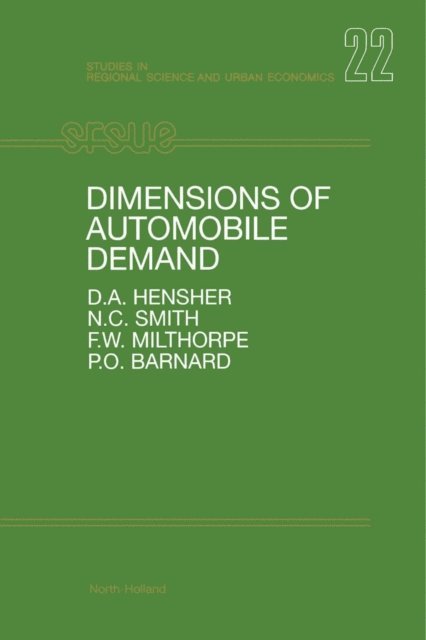
This unique book is the first attempt to fully integrate automobile ownership (by fleet size and vehicle type) and vehicle use in an intertemporal setting which recognises the durable nature of automobiles using extensive longitudinal panel data on each household (over 5 years). The book presents: the theoretical and econometric development of a joint discrete-continuous choice longitudinal model system of household and automobile ownership and use, bringing together 9 years of research;the application of the model system for the period 1981-1985 in Australia;the forecasting of the model system up to 2020; particular emphasis on the development and application of a longitudinal data base which is unique to the topic - to capture the dynamic (intertemporal) impacts of technological change, life-style change, fuel prices etc.The book not only extends the reader''s knowledge of the dimensions of automobile demand but it also adds important new ideas on handling dynamics of choice, as well as new empirical evidence on elasticities of demand for vehicles and vehicle kilometres. Energy and transport planning specialists will find the book essential reading.
E-bok
PDF, Engelska, 2013783 kr
Läs direkt efter köp
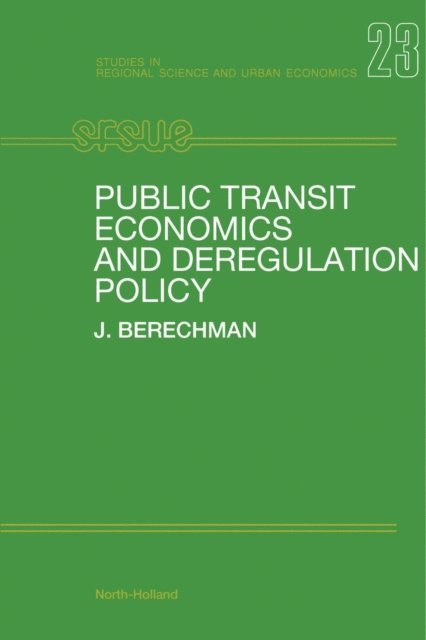
Drawing on transit experience from various countries and markets, this book examines the economic environment of transit operations, the cost and production properties of transit service supply and the policies and prospects of transit regulatory reform. The principal objectives of the book are: first to conduct theoretical and empirical analyses of the major factors which jointly determine the economic structure and conditions of the transit sector; and second to explore and suggest policies which could resolve the sector''s present crisis and make it economically viable. The first objective is explored in Part One where major structural demand factors and regulatory and subsidy conditions are identified and examined. Analytical and empirical measurement of technical production characteristics of transit services supply is carried out in Part Two. Part Three focuses on transit regulatory reform policy issues.The book is aimed primarily at an audience of transportation professionals, including economists and planners as well as public policy analysts. It requires, in general, a sound background in economics, mainly microeconomics. Thus graduate students in economics, geography, urban planning and public policy, and advanced undergraduates with good training in economics can best benefit from this book.
E-bok
PDF, Engelska, 2016783 kr
Läs direkt efter köp
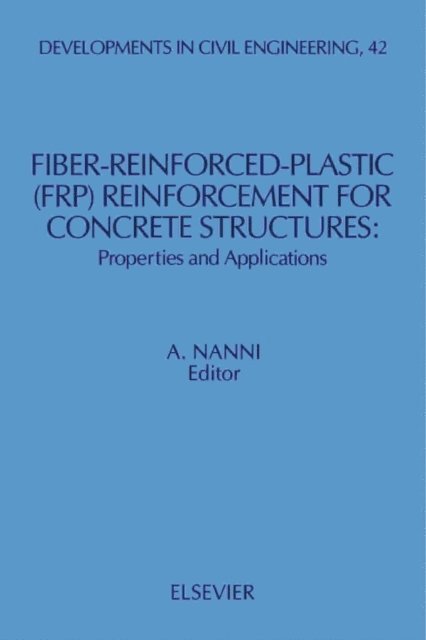
The use of fiber reinforced plastic (FRP) composites for prestressed and non-prestressed concrete reinforcement has developed into a technology with serious and substantial claims for the advancement of construction materials and methods. Research and development is now occurring worldwide. The 20 papers in this volume make a further contribution in advancing knowledge and acceptance of FRP composites for concrete reinforcement. The articles are divided into three parts. Part I introduces FRP reinforcement for concrete structures and describes general material properties and manufacturing methods. Part II covers a three-continent perspective of current R&D, design and code implementations, and technical organizations'' activities. Part III presents an in-depth description of commercially-available products, construction methods, and applications. The work is intended for engineers, researchers, and developers with the objective of presenting them with a world-wide cross-section of initiatives, representative products and significant applications.
Inbunden, Engelska, 1988
4 978 kr
Skickas inom 10-15 vardagar
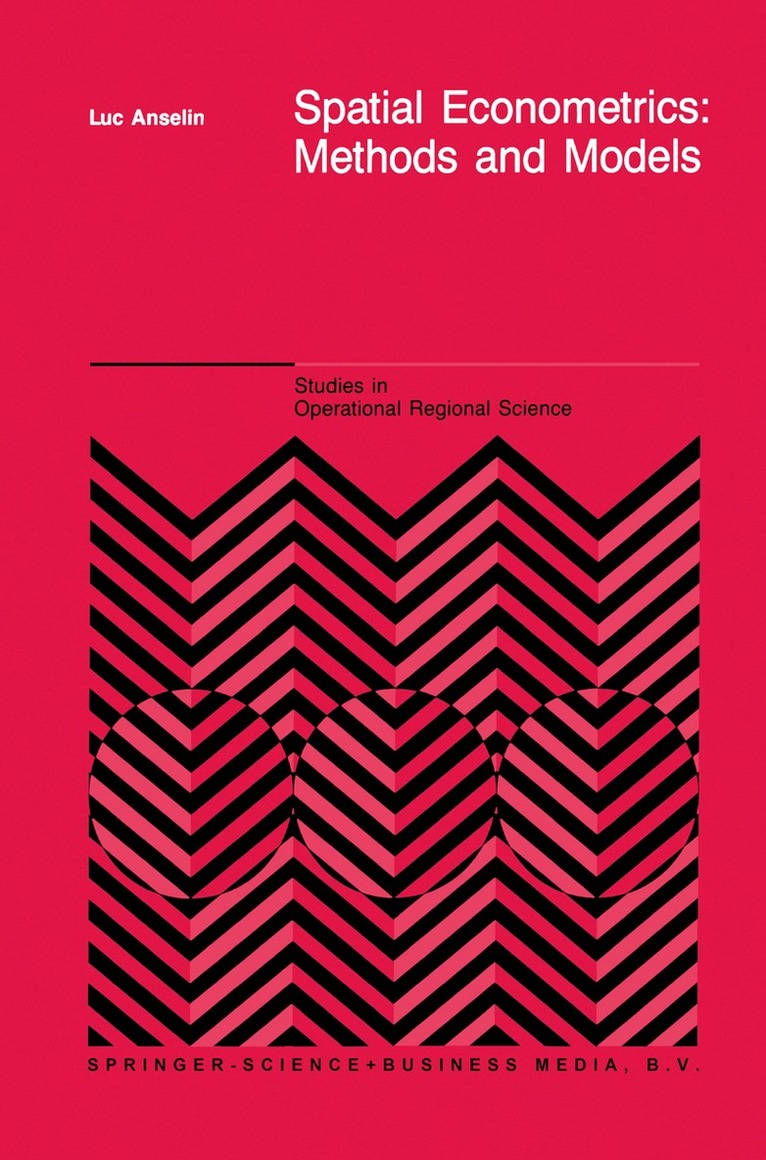
Spatial econometrics deals with spatial dependence and spatial heterogeneity, critical aspects of the data used by regional scientists. These characteristics may cause standard econometric techniques to become inappropriate. In this book, I combine several recent research results to construct a comprehensive approach to the incorporation of spatial effects in econometrics. My primary focus is to demonstrate how these spatial effects can be considered as special cases of general frameworks in standard econometrics, and to outline how they necessitate a separate set of methods and techniques, encompassed within the field of spatial econometrics. My viewpoint differs from that taken in the discussion of spatial autocorrelation in spatial statistics - e.g., most recently by Cliff and Ord (1981) and Upton and Fingleton (1985) - in that I am mostly concerned with the relevance of spatial effects on model specification, estimation and other inference, in what I caIl a model-driven approach, as opposed to a data-driven approach in spatial statistics. I attempt to combine a rigorous econometric perspective with a comprehensive treatment of methodological issues in spatial analysis.
Häftad, Engelska, 2010
4 833 kr
Skickas inom 10-15 vardagar
Spatial econometrics deals with spatial dependence and spatial heterogeneity, critical aspects of the data used by regional scientists. These characteristics may cause standard econometric techniques to become inappropriate. In this book, I combine several recent research results to construct a comprehensive approach to the incorporation of spatial effects in econometrics. My primary focus is to demonstrate how these spatial effects can be considered as special cases of general frameworks in standard econometrics, and to outline how they necessitate a separate set of methods and techniques, encompassed within the field of spatial econometrics. My viewpoint differs from that taken in the discussion of spatial autocorrelation in spatial statistics - e.g., most recently by Cliff and Ord (1981) and Upton and Fingleton (1985) - in that I am mostly concerned with the relevance of spatial effects on model specification, estimation and other inference, in what I caIl a model-driven approach, as opposed to a data-driven approach in spatial statistics. I attempt to combine a rigorous econometric perspective with a comprehensive treatment of methodological issues in spatial analysis.
E-bok
PDF, Engelska, 20136 242 kr
Läs direkt efter köp
Spatial econometrics deals with spatial dependence and spatial heterogeneity, critical aspects of the data used by regional scientists. These characteristics may cause standard econometric techniques to become inappropriate. In this book, I combine several recent research results to construct a comprehensive approach to the incorporation of spatial effects in econometrics. My primary focus is to demonstrate how these spatial effects can be considered as special cases of general frameworks in standard econometrics, and to outline how they necessitate a separate set of methods and techniques, encompassed within the field of spatial econometrics. My viewpoint differs from that taken in the discussion of spatial autocorrelation in spatial statistics - e.g., most recently by Cliff and Ord (1981) and Upton and Fingleton (1985) - in that I am mostly concerned with the relevance of spatial effects on model specification, estimation and other inference, in what I caIl a model-driven approach, as opposed to a data-driven approach in spatial statistics. I attempt to combine a rigorous econometric perspective with a comprehensive treatment of methodological issues in spatial analysis.