L. Láng – författare
Visar alla böcker från författaren L. Láng. Handla med fri frakt och snabb leverans.
5 produkter
5 produkter
Inbunden, Engelska, 2001
3 256 kr
Skickas inom 10-15 vardagar
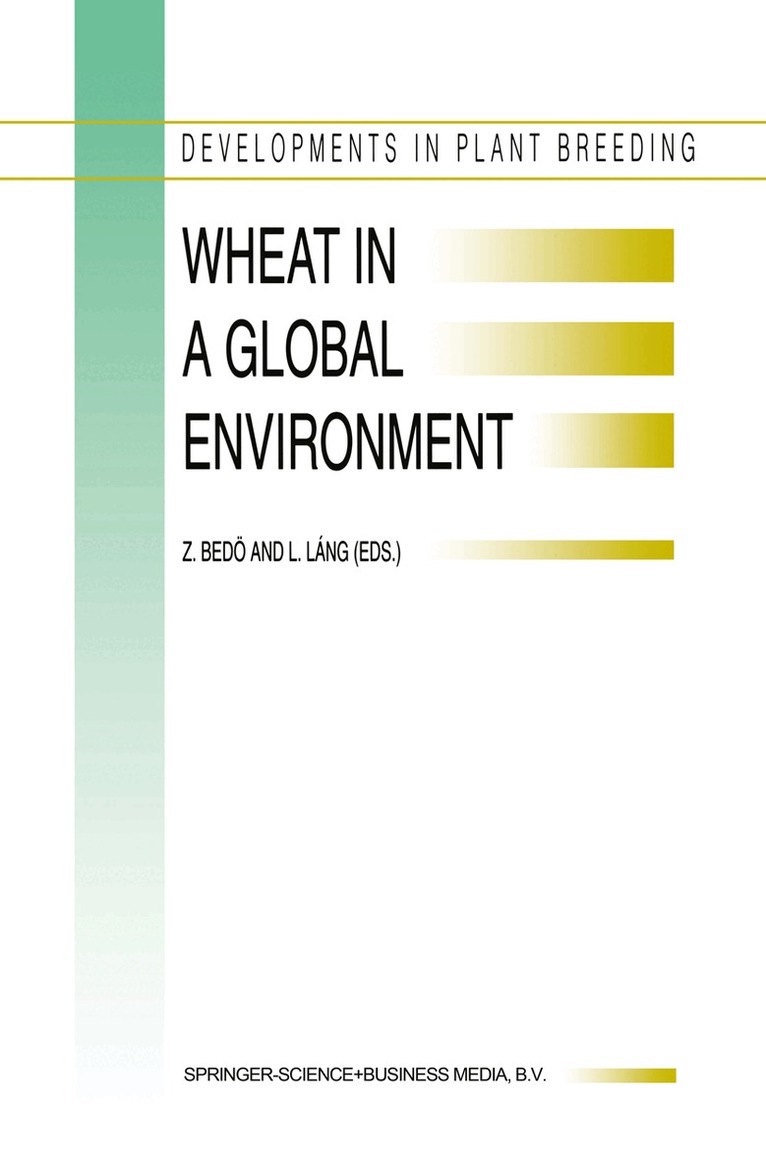
Wheat breeders have achieved significant results over the last fifty years in research on mankind's one of the most important crops. Classical genetic and breeding methods, far broader international cooperation than was experienced in earlier periods, and improvements in agronomic techniques have led to previously unimaginable development in the utilisation of wheat for human consumption. The contribution of wheat researchers is particularly noteworthy since these results have been achieved at a time when the world population has grown extremely dynamically. Despite this demographic explosion, of a proportion never previously experienced, thousands of millions of people have been saved from starvation, thus avoiding unpredictable social consequences and situations irreconcilable with human dignity. Despite these developments in many regions of the world food supplies are still uncertain and the increase in the world's wheat production has not kept pace with the population increase during the last decade. Due to the evils of civilisation and the pollution of the environment there is a constant decline in the per capita area of land suitable for agricultural production. Based on population estimates for 2030, the present wheat yield of around 600 million tonnes will have to be increased to almost 1000 million tonnes if food supplies are to be maintained at the present level.
E-bok
PDF, Engelska, 2013344 kr
Läs direkt efter köp
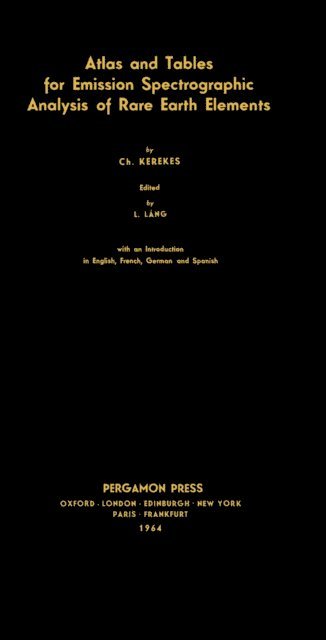
Atlas and Tables for Emission Spectrographic Analysis of Rare Earth Elements focuses on the analysis of rare earths with the Zeiss Q 24 spectrograph or with instruments of similar dispersion. The book first offers information on the division of the spectra of rare earth elements and Sc and Y into three groups. The spectra of Ce, Pr, Nd, Gd, Tb, Dy, Ho, and Er have lines that, however, do not form characteristic line groups. The text underscores that in preparing the Atlas, the spectral pure-grade rare earth oxides sold by the Johnson & Matthey Co. were considered. Through the help of their spectra, the usable analysis lines and the wavelength values of the interfering spectral lines are created. The operating and photographic conditions are tabulated. The book stresses that for each rare earth, the analysis lines are provided in order of decreasing wavelength. The number located in the lower left corner for each analysis line indicates its relative intensity. The fifteen columns contain the interfering lines of other rare earths and of Sc and Y. The interfering lines are created through the use of the double projector of the Optica Milano Co. and the Gatterer Spectrum. The text is a great source of information for readers wanting to analyze rare earths with the Zeiss Q 24 spectrograph or with instruments of similar dispersion.
Häftad, Franska, 2016
148 kr
Skickas inom 5-8 vardagar
Häftad, Engelska, 2010
3 256 kr
Skickas inom 10-15 vardagar
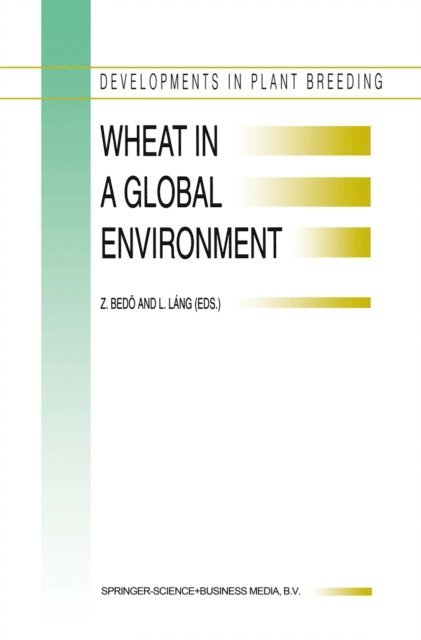
This book comprises the proceedings of the 6th International Wheat Conference. Leading scientists from different parts of the world reviewed the main results of wheat improvement in the 20th century, and discussed the new challenges for the future to increase the stability of the world's wheat production and to keep pace with the population increase. The topics debated cover breeding and genetics, new ways of quality research, breeding for abiotic and biotic resistance, sustainable wheat production, germplasm development and exchange, and the importance of international cooperation. The impact of biotechnology is discussed by outstanding representatives of the private and public research sectors. This book provides an opportunity for wheat scientists interested in global trends in wheat improvement to obtain an insight into this period of change when both classical and new methods can contribute to breeding efforts and sustainable production systems.
E-bok
PDF, Engelska, 20133 809 kr
Läs direkt efter köp
Wheat breeders have achieved significant results over the last fifty years in research on mankind''s one of the most important crops. Classical genetic and breeding methods, far broader international cooperation than was experienced in earlier periods, and improvements in agronomic techniques have led to previously unimaginable development in the utilisation of wheat for human consumption. The contribution of wheat researchers is particularly noteworthy since these results have been achieved at a time when the world population has grown extremely dynamically. Despite this demographic explosion, of a proportion never previously experienced, thousands of millions of people have been saved from starvation, thus avoiding unpredictable social consequences and situations irreconcilable with human dignity. Despite these developments in many regions of the world food supplies are still uncertain and the increase in the world''s wheat production has not kept pace with the population increase during the last decade. Due to the evils of civilisation and the pollution of the environment there is a constant decline in the per capita area of land suitable for agricultural production. Based on population estimates for 2030, the present wheat yield of around 600 million tonnes will have to be increased to almost 1000 million tonnes if food supplies are to be maintained at the present level.