L. Mays – författare
Visar alla böcker från författaren L. Mays. Handla med fri frakt och snabb leverans.
4 produkter
4 produkter
5 303 kr
Skickas inom 10-15 vardagar
Computers are widely used for the analysis, design and operation of water resource projects. This gives accurate results, allowing the analysis of complex systems which may not have been possible otherwise, and the investigation and comparison of several different alternatives in a short time, thereby reducing the project costs, optimizing design, and efficient utilization of resources. This volume compiles an edited version of the lecture notes specially prepared by 14 European and North American researchers. Part I deals with free-surface flows. Governing equations are derived and their solution by the finite-difference, finite-element and boundary-integral methods are discussed. Then, turbulence models, three-dimensional models, dam-break flow models, sediment transport models, and flood routing models are presented. Part II is related to the modelling of steady and transient pressurized flows. Governing equations for both single and two-component flows are derived and numerical methods for their solution are presented. The modelling of water quality in pipe networks, of cooling water systems and slow and rapid transients is then discussed.
1 974 kr
Skickas inom 10-15 vardagar
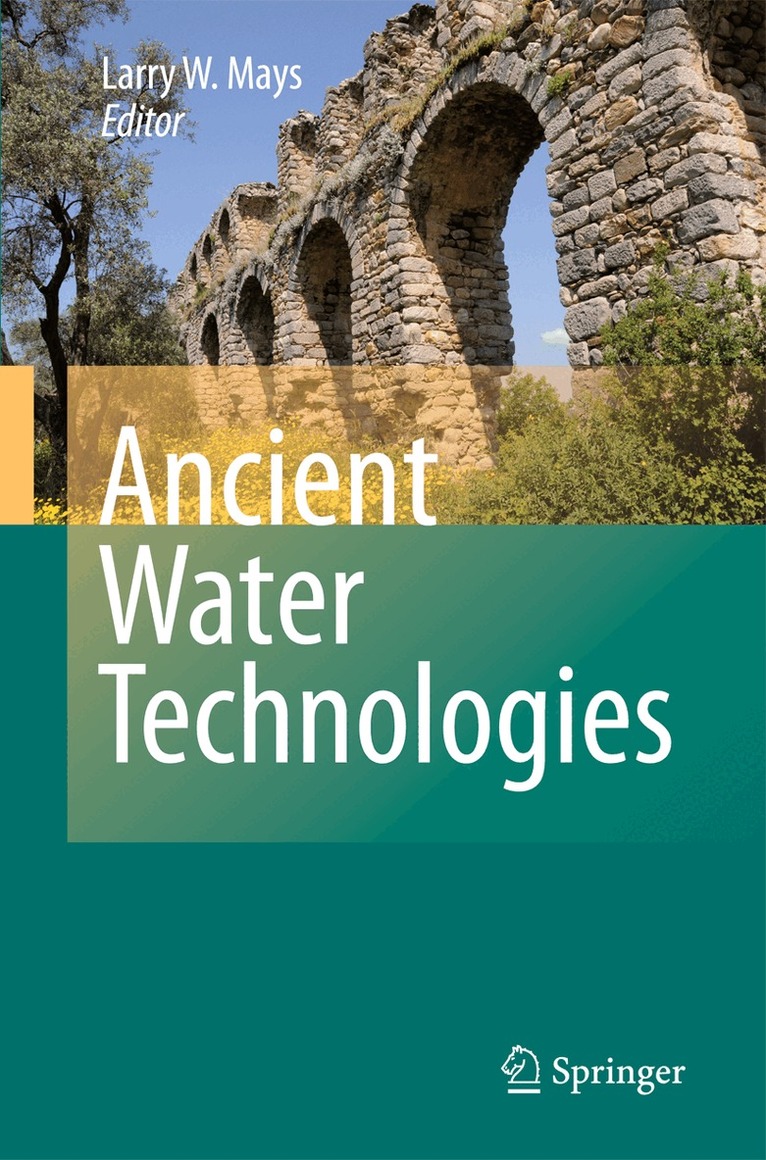
There is no more fundamental resource than water. The basis of all life, water is fast becoming a key issue in today’s world, as well as a source of conflict. This fascinating book, which sets out many of the ingenious methods by which ancient societies gathered, transported and stored water, is a timely publication as overextraction and profligacy threaten the existence of aquifers and watercourses that have supplied our needs for millennia.It provides an overview of the water technologies developed by a number of ancient civilizations, from those of Mesopotamia and the Indus valley to later societies such as the Mycenaeans, Minoans, Persians, and the ancient Egyptians. Of course, no book on ancient water technologies would be complete without discussing the engineering feats of the Romans and Greeks, yet as well as covering these key civilizations, it also examines how ancient American societies from the Hohokams to the Mayans and Incas husbanded their water supplies. This unusually wide-ranging text could offer today’s parched world some solutions to the impending crisis in our water supply."This book provides valuable insights into the water technologies developed in ancient civilizations which are the underpinning of modern achievements in water engineering and management practices. It is the best proof that "the past is the key for the future."Andreas N. Angelakis, Hellenic Water Supply and Sewerage Systems Association, Greece"This book makes a fundamental contribution to what will become the most important challenge of our civilization facing the global crisis: the problem of water. Ancient Water Technologies provides a complete panorama of how ancient societies confronted themselves with the management of water. The role of this volume is to provide, for the first time on this issue, an extensive historical and scientific reconstruction and an indication of how traditional knowledgemay be employed to ensure a sustainable future for all." Pietro Laureano, UNESCO expert for ecosystems at risk, Director of IPOGEA-Institute of Traditional Knowledge, Italy
1 974 kr
Skickas inom 10-15 vardagar
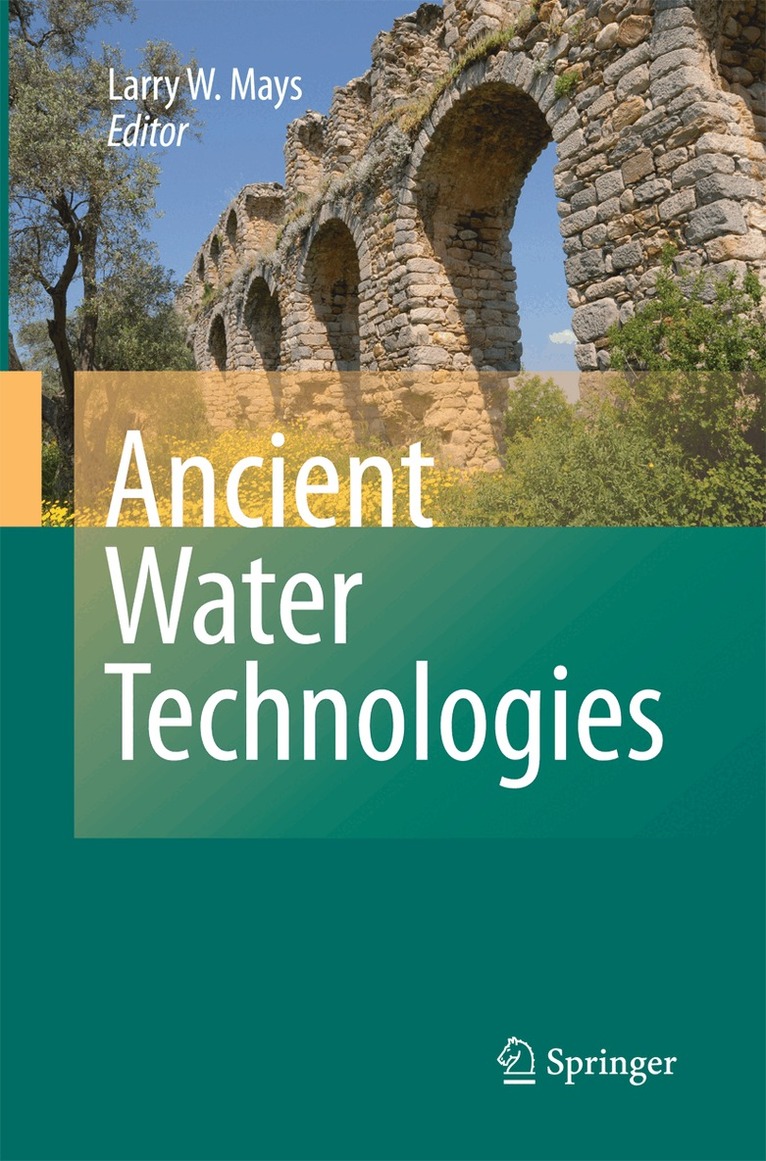
There is no more fundamental resource than water. The basis of all life, water is fast becoming a key issue in today’s world, as well as a source of conflict. This fascinating book, which sets out many of the ingenious methods by which ancient societies gathered, transported and stored water, is a timely publication as overextraction and profligacy threaten the existence of aquifers and watercourses that have supplied our needs for millennia.It provides an overview of the water technologies developed by a number of ancient civilizations, from those of Mesopotamia and the Indus valley to later societies such as the Mycenaeans, Minoans, Persians, and the ancient Egyptians. Of course, no book on ancient water technologies would be complete without discussing the engineering feats of the Romans and Greeks, yet as well as covering these key civilizations, it also examines how ancient American societies from the Hohokams to the Mayans and Incas husbanded their water supplies. This unusually wide-ranging text could offer today’s parched world some solutions to the impending crisis in our water supply."This book provides valuable insights into the water technologies developed in ancient civilizations which are the underpinning of modern achievements in water engineering and management practices. It is the best proof that "the past is the key for the future."Andreas N. Angelakis, Hellenic Water Supply and Sewerage Systems Association, Greece"This book makes a fundamental contribution to what will become the most important challenge of our civilization facing the global crisis: the problem of water. Ancient Water Technologies provides a complete panorama of how ancient societies confronted themselves with the management of water. The role of this volume is to provide, for the first time on this issue, an extensive historical and scientific reconstruction and an indication of how traditional knowledgemay be employed to ensure a sustainable future for all." Pietro Laureano, UNESCO expert for ecosystems at risk, Director of IPOGEA-Institute of Traditional Knowledge, Italy
5 312 kr
Skickas inom 10-15 vardagar
Computers are widely used for the analysis, design, and operation of water resource projects. This gives accurate results, allowing the analysis of complex systems which may not have been possible otherwise, and the investigation and comparison of several different alternatives in a short time, thereby reducing the project costs, optimizing design, and efficient utilization of resources. This volume compiles an edited version of the lecture notes specially prepared by 14 well-known European and North American researchers. Part I deals with free-surface flows. Governing equations are derived and their solution by the finite-difference, finite-element, and boundary-integral methods are discussed. Then, turbulence models, three-dimensional models, dam-break flow models, sediment transport models, and flood routing models are presented. Part II is related to the modeling of steady and transient pressurized flows. Governing equations for both single and two-component flows are derived and numerical methods for their solution are presented. The modeling of water quality in pipe networks, of cooling water systems, and slow and rapid transients is then discussed.