Ladson Hinton – författare
2 044 kr
Skickas inom 10-15 vardagar
513 kr
Skickas inom 10-15 vardagar
584 kr
Läs direkt efter köp
Winner of the Internationl Association for Jungian Studies (IAJS) Book Award for Best Edited Book 2021
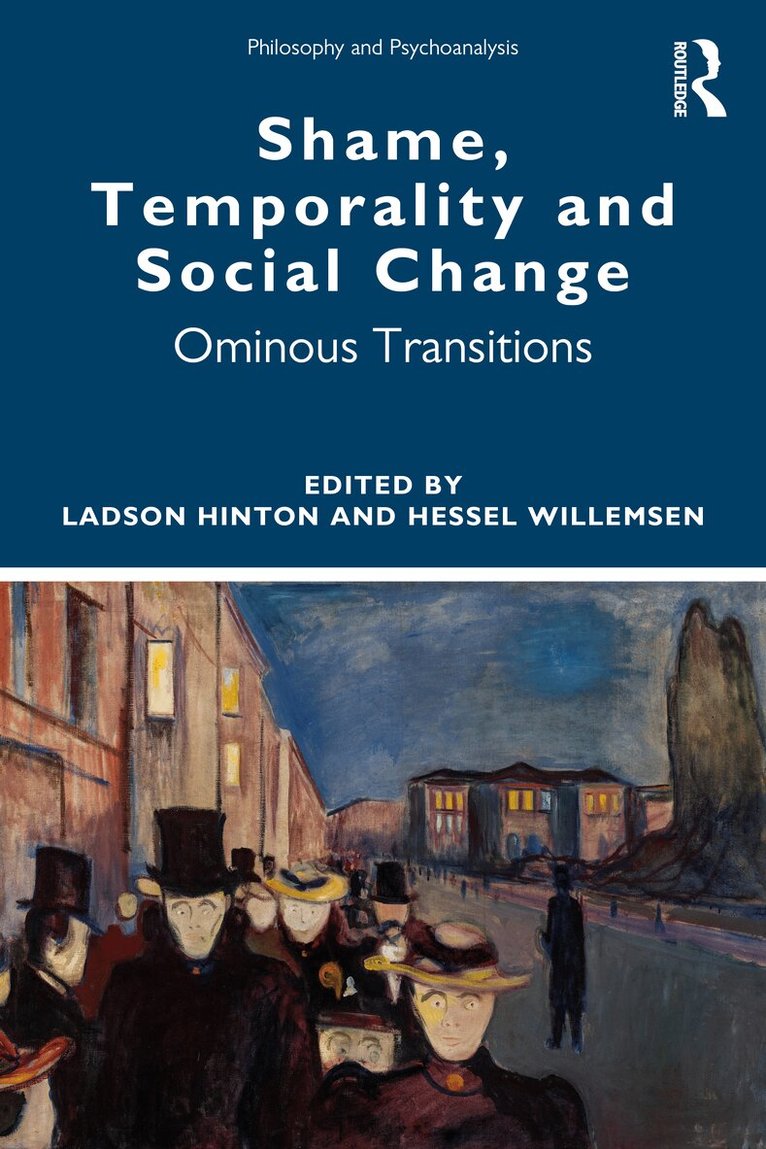
There is a broad consensus that we are in a time of profound transition. There is worldwide political and social turbulence, with an underlying loss of hope and confidence about the future. Technological change and the stresses of late-stage capitalism, along with climate change, undermine social trust and hope for a future worth living. Shameless behavior is rampant, undermining respect for habits and institutions that hold societies together. Shame, Temporality and Social Change offers multi-disciplinary insight into these concerns.
Hinton and Willemsen’s collection covers themes including racism, cultural norms, memory and vulnerability, with examinations of shame at its core. It explores the meaning and significance of shame in a world of social media, autocratic leaders and algorithms and what we can learn from myth as we progress. Increased awareness of the inter-connection of shame and temporality with the ominous transitions of our times provides thought-provoking insights for theory and practice and the ethical decisions of everyday life.
Psychoanalysts, psychotherapists, philosophers, anthropologists and academics and students engaged in cultural studies and critical theory will gain valuable insights from this book’s rich and engaging variety of perspectives on our times.
588 kr
Läs direkt efter köp
Winner of the Internationl Association for Jungian Studies (IAJS) Book Award for Best Edited Book 2021
There is a broad consensus that we are in a time of profound transition. There is worldwide political and social turbulence, with an underlying loss of hope and confidence about the future. Technological change and the stresses of late-stage capitalism, along with climate change, undermine social trust and hope for a future worth living. Shameless behavior is rampant, undermining respect for habits and institutions that hold societies together. Shame, Temporality and Social Change offers multi-disciplinary insight into these concerns.
Hinton and Willemsen’s collection covers themes including racism, cultural norms, memory and vulnerability, with examinations of shame at its core. It explores the meaning and significance of shame in a world of social media, autocratic leaders and algorithms and what we can learn from myth as we progress. Increased awareness of the inter-connection of shame and temporality with the ominous transitions of our times provides thought-provoking insights for theory and practice and the ethical decisions of everyday life.
Psychoanalysts, psychotherapists, philosophers, anthropologists and academics and students engaged in cultural studies and critical theory will gain valuable insights from this book’s rich and engaging variety of perspectives on our times.
2 052 kr
Skickas inom 10-15 vardagar
642 kr
Skickas inom 10-15 vardagar
757 kr
Läs direkt efter köp
Winner of the 2018 American Board and Academy of Psychoanalysis (ABAPsa) prize for best Edited book
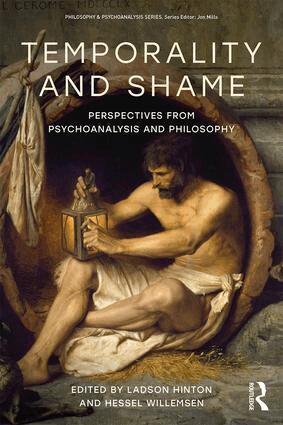
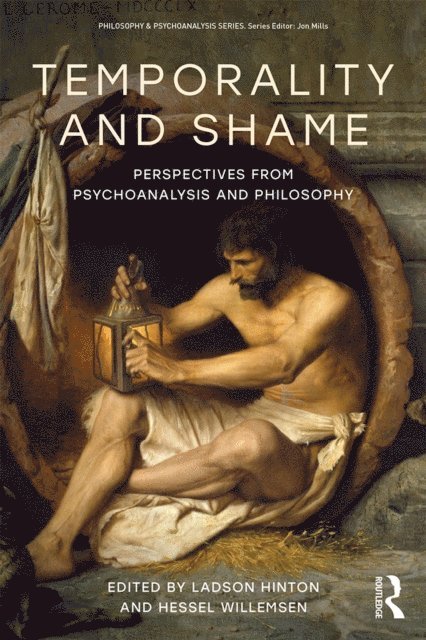
Temporality has always been a central preoccupation of modern philosophy, and shame has been a major theme in contemporary psychoanalysis. To date, however, there has been little examination of the critical connection between these core experiences. Although they deeply implicate each other, no single book has focused upon their profound interrelationship. Temporality and Shame highlights the many dimensions of that reality.
A core point of this book is that shame can be a teacher, and a crucial one, in evaluating our ethical and ontological position in the world. Granting the fact that shame can be toxic and terrible, we must remember that it is also what can orient us in the difficult task of reflection and consciousness. Shame enables us to become more fully present in the world and authentically engage in the flow of temporality and the richness of its syncopated dimensionality. Such a deeply honest ethos, embracing the jarring awareness of shame and the always-shifting temporalities of memory, can open us to a fuller presence in life. This is the basic vision of Temporality and Shame. The respective contributors discuss temporality and shame in relation to clinical and theoretical aspects of psychoanalysis, philosophy, anthropology, and genocide, as well as the question of evil, myth and archetype, history and critical studies, the ‘discipline of interiority’, and literary works.
Temporality and Shame provides valuable insights and a rich and engaging variety of ideas. It will appeal to psychotherapists and psychoanalysts, philosophers and those interested in the basic philosophical grounds of experience, and anthropologists and people engaged in cultural studies and critical theory.
757 kr
Läs direkt efter köp
Winner of the 2018 American Board and Academy of Psychoanalysis (ABAPsa) prize for best Edited book
Temporality has always been a central preoccupation of modern philosophy, and shame has been a major theme in contemporary psychoanalysis. To date, however, there has been little examination of the critical connection between these core experiences. Although they deeply implicate each other, no single book has focused upon their profound interrelationship. Temporality and Shame highlights the many dimensions of that reality.
A core point of this book is that shame can be a teacher, and a crucial one, in evaluating our ethical and ontological position in the world. Granting the fact that shame can be toxic and terrible, we must remember that it is also what can orient us in the difficult task of reflection and consciousness. Shame enables us to become more fully present in the world and authentically engage in the flow of temporality and the richness of its syncopated dimensionality. Such a deeply honest ethos, embracing the jarring awareness of shame and the always-shifting temporalities of memory, can open us to a fuller presence in life. This is the basic vision of Temporality and Shame. The respective contributors discuss temporality and shame in relation to clinical and theoretical aspects of psychoanalysis, philosophy, anthropology, and genocide, as well as the question of evil, myth and archetype, history and critical studies, the ‘discipline of interiority’, and literary works.
Temporality and Shame provides valuable insights and a rich and engaging variety of ideas. It will appeal to psychotherapists and psychoanalysts, philosophers and those interested in the basic philosophical grounds of experience, and anthropologists and people engaged in cultural studies and critical theory.
749 kr
Skickas
935 kr
Läs direkt efter köp
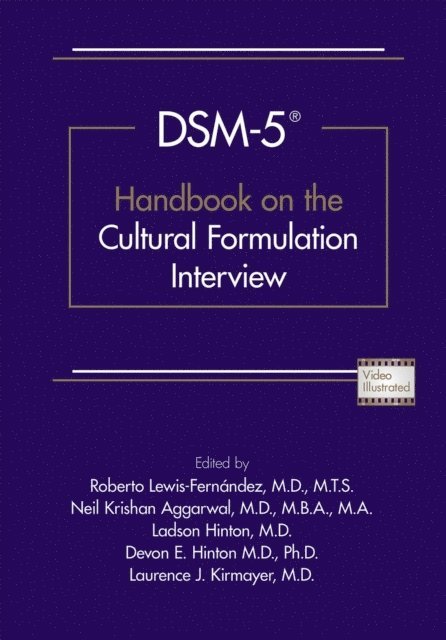
DSM-5® Handbook of the Cultural Formulation Interview provides the background, context, and detailed guidance necessary to train clinicians in the use of the Cultural Formulation Interview (CFI), which was created as part of the 2007-2013 DSM revision process. The purpose of the CFI -- and this unique handbook -- is to make it easier for providers to account for the influence of culture in their clinical work to enhance patient-clinician communication and improve outcomes. Cultural psychiatry as a field has evolved enormously from the days when it was principally concerned with epidemiological and clinical studies of disease prevalence; it now examines a multitude of issues, primary among them the differing patient, family, and practitioner models of illness and treatment experiences within and across cultures. The editors, all of whom have been intimately involved in the evolution of the field, have designed the book and accompanying videos for maximum instructional and clinical utility.
The Handbook boasts many strengths and useful features, including: A detailed description of each of the three CFI components: a core 16-item questionnaire, which can be applied in any clinical setting with any patient by any mental health clinician; an informant version of the core CFI used to obtain information from caregivers; and 12 supplementary modules that expand on these basic assessments. This material facilitates implementation of the CFI by clinicians. Over a dozen clinical vignettes are included to illustrate use of the three components, and the Handbook also includes multiple videos that demonstrate the application of portions of the core CFI, and several supplementary modules. Strategies for incorporating the CFI into clinical training are identified and discussed, furthering the objective of developing culturally-sensitive and astute practitioners. The theoretical bases of the CFI are explored, raising questions for discussion and identifying areas for further research.
The CFI is a valuable tool for all patients, not just those judged to be culturally different. The CFI has been called the single most practically useful contribution of cultural psychiatry and medical anthropology to clinical psychiatry, primary care, and medicine in general. DSM-5® Handbook on the Cultural Formulation Interview is the only book on the market that equips readers with the skills and insight to incorporate the CFI into practice, making it a critically important addition to the clinical literature.