Lanie Millar – författare
Visar alla böcker från författaren Lanie Millar. Handla med fri frakt och snabb leverans.
4 produkter
4 produkter
Häftad, Engelska, 2020
500 kr
Skickas inom 5-8 vardagar
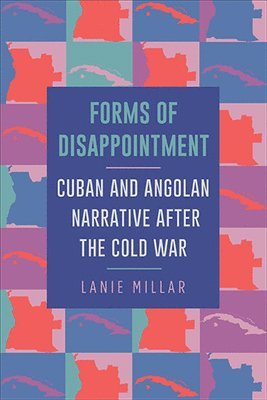
Analyzes parallel developments in post–Cold War literature and film from Cuba and Angola to trace a shared history of revolutionary enthusiasm, disappointment, and solidarity.In Forms of Disappointment, Lanie Millar traces the legacies of anti-imperial solidarity in Cuban and Angolan novels and films after 1989. Cuba's intervention in Angola's post-independence civil war from 1976 to 1991 was its longest and most engaged internationalist project and left a profound mark on the culture of both nations. After the fall of the Berlin Wall, Millar argues, Cuban and Angolan writers and filmmakers responded to this collective history and adapted to new postsocialist realities in analogous ways, developing what she characterizes as works of disappointment. Revamping and riffing on earlier texts and forms of revolutionary enthusiasm, works of disappointment lay bare the aesthetic and political fragmentation of the public sphere while continuing to register the promise of leftist political projects. Pushing past the binaries that tend to dominate histories of the Cold War and its aftermath, Millar gives priority to the perspectives of artists in the Global South, illuminating networks of anticolonial and racial solidarity and showing how their works not only reflect shared feelings of disappointment but also call for ethical gestures of empathy and reconciliation.
Inbunden, Engelska, 2019
1 198 kr
Skickas inom 5-8 vardagar
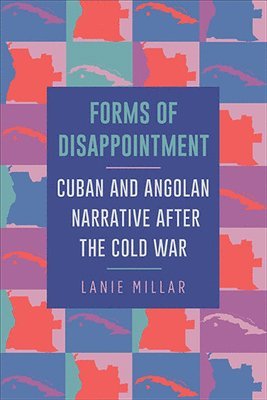
Analyzes parallel developments in post–Cold War literature and film from Cuba and Angola to trace a shared history of revolutionary enthusiasm, disappointment, and solidarity.In Forms of Disappointment, Lanie Millar traces the legacies of anti-imperial solidarity in Cuban and Angolan novels and films after 1989. Cuba's intervention in Angola's post-independence civil war from 1976 to 1991 was its longest and most engaged internationalist project and left a profound mark on the culture of both nations. After the fall of the Berlin Wall, Millar argues, Cuban and Angolan writers and filmmakers responded to this collective history and adapted to new postsocialist realities in analogous ways, developing what she characterizes as works of disappointment. Revamping and riffing on earlier texts and forms of revolutionary enthusiasm, works of disappointment lay bare the aesthetic and political fragmentation of the public sphere while continuing to register the promise of leftist political projects. Pushing past the binaries that tend to dominate histories of the Cold War and its aftermath, Millar gives priority to the perspectives of artists in the Global South, illuminating networks of anticolonial and racial solidarity and showing how their works not only reflect shared feelings of disappointment but also call for ethical gestures of empathy and reconciliation.
Inbunden, Engelska, 2024
675 kr
Skickas inom 5-8 vardagar
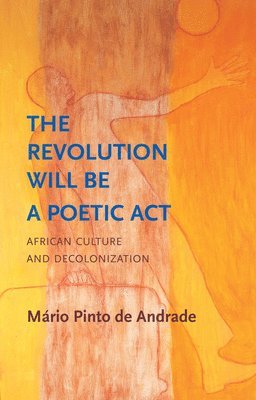
Foreword by Lanie MillarThis book is a collection of essays and speeches by Mário Pinto de Andrade, the Angolan literary critic, cultural theorist and political activist and one of Africa’s most important 20th century intellectuals. His writings think through the task of intellectual emancipation of colonized people, which he saw as predicated on the necessary project of political decolonization. As anti-colonial movements got underway, Andrade wrote extensively about the urgent necessity for Africans to turn away from European cultural and political models, arguing that communities emerging from colonization should focus on voices from within the designated communities, on self-representation, and on horizontal relationships among Black, African, and decolonizing peoples. Andrade played a key role in theorizing the international reach of the revolutionary 20th century poetry and literature, Black cultural vindication, and African liberation. In his ethical commitment to moving away from focusing solely on the relationship between the colonial occupier and the colonized, he instead promoted ideas and actions that would construct mutual understanding among decolonizing communities. Andrade’s work offers models to rethink race and nation as analytic categories and is particularly relevant not only to scholars of African decolonization movements but to anyone engaged in contemporary conversations about race, belonging, and political community.
Häftad, Engelska, 2024
227 kr
Skickas inom 5-8 vardagar
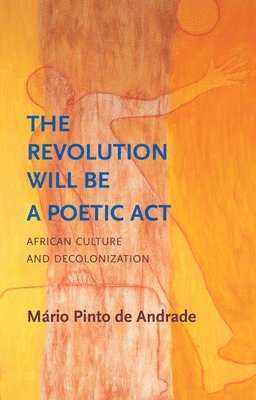
Foreword by Lanie MillarThis book is a collection of essays and speeches by Mário Pinto de Andrade, the Angolan literary critic, cultural theorist and political activist and one of Africa’s most important 20th century intellectuals. His writings think through the task of intellectual emancipation of colonized people, which he saw as predicated on the necessary project of political decolonization. As anti-colonial movements got underway, Andrade wrote extensively about the urgent necessity for Africans to turn away from European cultural and political models, arguing that communities emerging from colonization should focus on voices from within the designated communities, on self-representation, and on horizontal relationships among Black, African, and decolonizing peoples. Andrade played a key role in theorizing the international reach of the revolutionary 20th century poetry and literature, Black cultural vindication, and African liberation. In his ethical commitment to moving away from focusing solely on the relationship between the colonial occupier and the colonized, he instead promoted ideas and actions that would construct mutual understanding among decolonizing communities. Andrade’s work offers models to rethink race and nation as analytic categories and is particularly relevant not only to scholars of African decolonization movements but to anyone engaged in contemporary conversations about race, belonging, and political community.