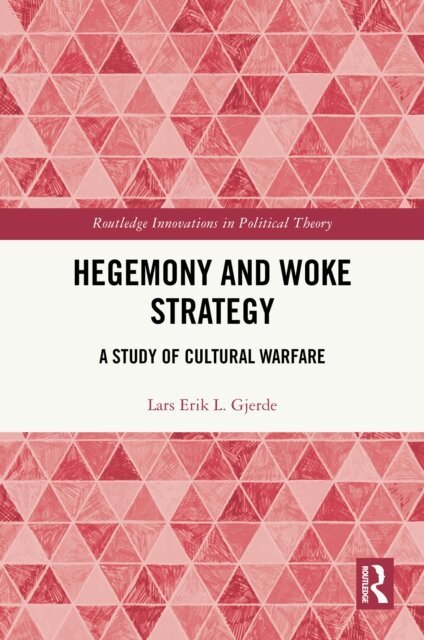
Hegemony and Woke Strategy explores how wokeism functions as a distinct ideological force within the contemporary culture war, challenging liberal and socialist traditions through strategic uses of identity politics.Grounded in Gramscian theory and informed by post-structuralist and Marxist scholarship, Lars Erik L. Gjerde analyses how cultural struggle operates as a bid for hegemony. He moves beyond defining wokeism to examine its tactics, such as cancellations, language politics and woke capitalism, and how they shape political discourse and social norms. With an international scope and a focus on the Western context, Gjerde combines theoretical analysis with real-world examples from pop culture, campus politics and policy debates to show how wokeism re-articulates and subverts earlier ideological frameworks.This book is intended for scholars and advanced students in political theory, cultural studies and sociology. It will also appeal to researchers interested in ideology, identity politics and the intersection of culture and power in shaping contemporary political dynamics.

This book offers a theoretical synthesis between the Foucauldian theory of power and the Weberian theory of the state. The book centres on the politics of COVID-19 in Norway and Sweden. It analyses the different tactics, strategies and rationalizations of these states to develop the theoretical framework, while using the theoretical framework to better advance our understandings of the politics of COVID-19 and how state power worked in subtle and overt, direct and indirect, ways, during this crisis. It argues that a marriage between Foucauldian and Weberian theories of the state and power engenders a holistic understanding of how power works at the microlevel and macrolevel. This invites scholars to interrogate the diverse sources of power caged within the modern state, and how these can be enacted through and over society, thereby manifesting as various mechanisms of power.