Lars Håkanson – författare
Visar alla böcker från författaren Lars Håkanson. Handla med fri frakt och snabb leverans.
8 produkter
8 produkter
Inbunden, Engelska, 2000
1 080 kr
Skickas inom 10-15 vardagar
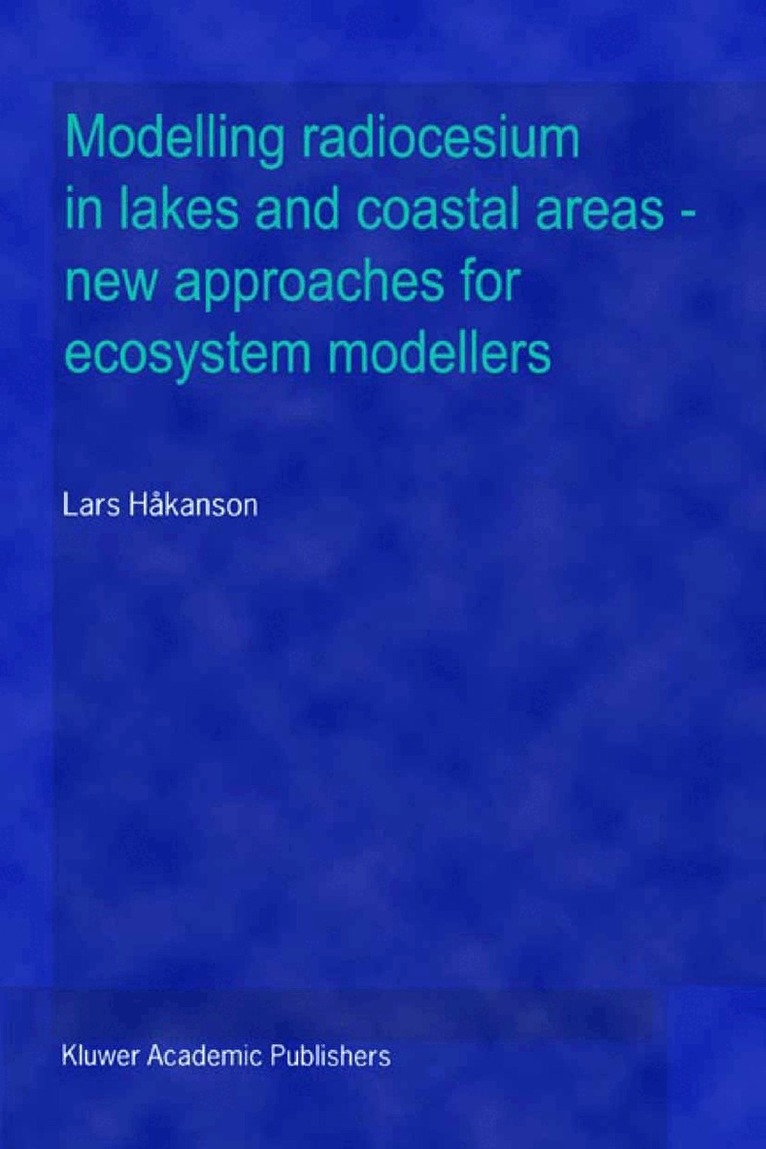
This text describes practically useful models driven by readily available driving variables and with a general structure that applies to most types of pollutants in aquatic systems. The major reason for development of this model is the Chernobyl accident. Large quantities of radiocesium were released in April/May 1986 as a pulse. To follow the pulse of radiocesium through ecosystem pathways has meant that important fluxes and mechanisms, such as ecosystem structures, have been revealed. It is important to stress that many of these new structures and equations are valid not just for radiocesium, but for most types of contaminants, metals, nutrients and organics. This means that the models, methods (of building and testing models) and equations described in this book for lakes and coastal areas should be of interest also to other ecosystem modellers.
Eutrophication in the Baltic Sea
Present Situation, Nutrient Transport Processes, Remedial Strategies
Inbunden, Engelska, 2008
1 605 kr
Skickas inom 10-15 vardagar
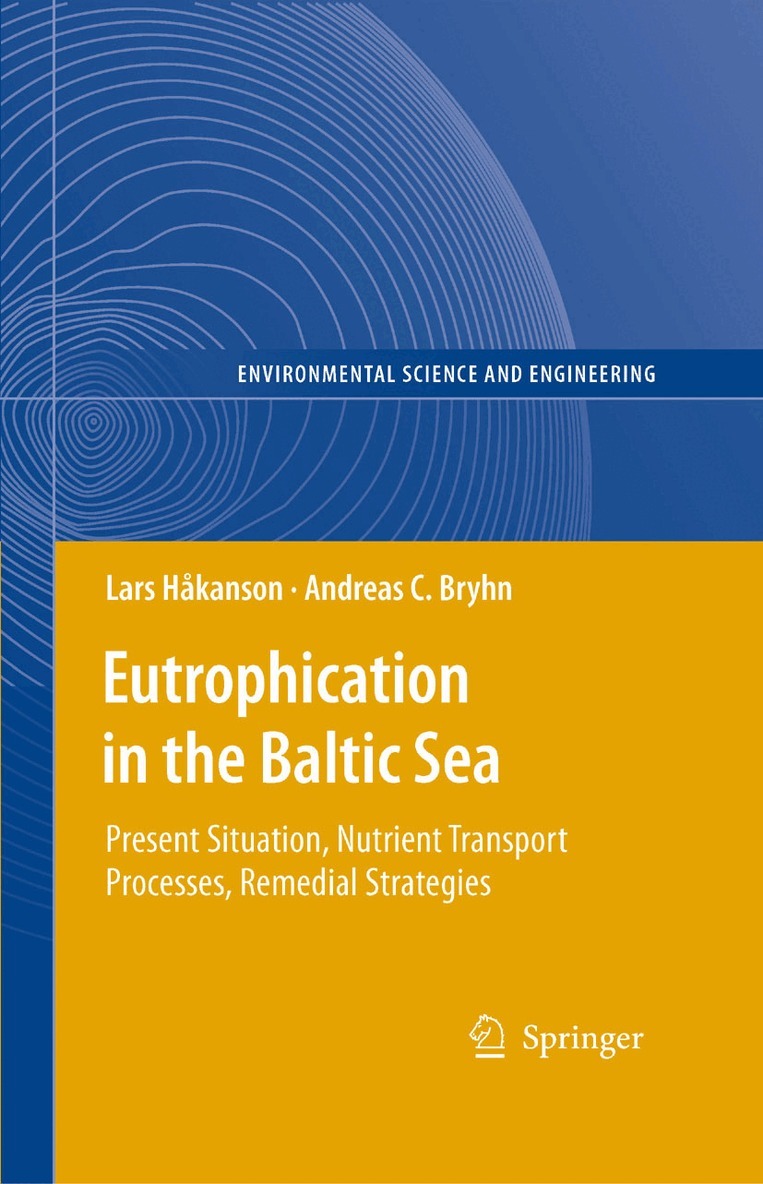
For many years the reduction of eutrophication in the Baltic Sea has been a hot issue for mass-media, science, political parties and environmental action groups with manifold implications related to fisheries (will the Baltic cod survive?), sustainable coastal development (have billions of Euros been wasted on nitrogen reductions?), ecotoxicology (can we safely eat Baltic fish?). This book takes a holistic process-based ecosystem perspective on the eutrophication in the Baltic Sea, with a focus on the factors regulating how the system would respond to changes in nutrient loading. This includes a very special process for the Baltic Sea: land uplift. After being depressed by the glacial ice, the land is now slowly rising adding vast amounts of previously deposited nutrients and clay particles to the system. 110,000 to 140,000 tons of phosphorus per year are added to the system from land uplift, in comparison to the 30,000 tons of phosphorus per year from rivers.
Inbunden, Engelska, 2008
1 605 kr
Skickas inom 10-15 vardagar
The aim of this book is to discuss practically useful (operational) bioindicators for sustainable coastal management, criteria for coastal area sensitivity to eutrophication and an approach set a "biological value" of coastal areas. These bioindicators should meet defined criteria for practical usefulness, e.g., they should be simple to understand and apply to managers and scientists with different educational backgrounds. Central aspects for this book concern effect-load-sensitivity analyses. One and the same nutrient loading may cause different effects in coastal areas of different sensitivity. Remedial measures should be carried out in a cost-effective manner and this book discusses methods and criteria for this. Remedial strategies should generally focus on phosphorus rather than nitrogen because the effects of nitrogen reductions can rarely be predicted well and nitrogen reductions may favour the bloom of harmful cyanobacteria. Three case-studies exemplify the practical use of the bioindicators and concepts discussed in the book. The first concerns how local emissions of nutrients affect the receiving waters when all important nutrient fluxes are accounted for. The second concerns how to find reference values for "good" ecological status to set targets for remedial actions. The third gives a reconstruction of eutrophication. If the development during the last 100 years can be understood, key prerequisites to turn the development would be at hand.This book should attract considerable interest from researchers in marine ecology, consultants and administrators interested in management and studies of coastal systems.
Eutrophication in the Baltic Sea
Present Situation, Nutrient Transport Processes, Remedial Strategies
Häftad, Engelska, 2010
1 605 kr
Skickas inom 10-15 vardagar
For many years the reduction of eutrophication in the Baltic Sea has been a hot issue for mass-media, science, political parties and environmental action groups with manifold implications related to fisheries (will the Baltic cod survive?), sustainable coastal development (have billions of Euros been wasted on nitrogen reductions?), ecotoxicology (can we safely eat Baltic fish?). This book takes a holistic process-based ecosystem perspective on the eutrophication in the Baltic Sea, with a focus on the factors regulating how the system would respond to changes in nutrient loading. This includes a very special process for the Baltic Sea: land uplift. After being depressed by the glacial ice, the land is now slowly rising adding vast amounts of previously deposited nutrients and clay particles to the system. 110,000 to 140,000 tons of phosphorus per year are added to the system from land uplift, in comparison to the 30,000 tons of phosphorus per year from rivers.
Häftad, Engelska, 2010
1 603 kr
Skickas inom 10-15 vardagar
The aim of this book is to discuss practically useful (operational) bioindicators for sustainable coastal management, criteria for coastal area sensitivity to eutrophication and an approach set a "biological value" of coastal areas. These bioindicators should meet defined criteria for practical usefulness, e.g., they should be simple to understand and apply to managers and scientists with different educational backgrounds. Central aspects for this book concern effect-load-sensitivity analyses. One and the same nutrient loading may cause different effects in coastal areas of different sensitivity. Remedial measures should be carried out in a cost-effective manner and this book discusses methods and criteria for this. Remedial strategies should generally focus on phosphorus rather than nitrogen because the effects of nitrogen reductions can rarely be predicted well and nitrogen reductions may favour the bloom of harmful cyanobacteria. Three case-studies exemplify the practical use of the bioindicators and concepts discussed in the book. The first concerns how local emissions of nutrients affect the receiving waters when all important nutrient fluxes are accounted for. The second concerns how to find reference values for "good" ecological status to set targets for remedial actions. The third gives a reconstruction of eutrophication. If the development during the last 100 years can be understood, key prerequisites to turn the development would be at hand.This book should attract considerable interest from researchers in marine ecology, consultants and administrators interested in management and studies of coastal systems.
Inbunden, Engelska, 2010
1 603 kr
Skickas inom 10-15 vardagar
The strategy advocated in this book would create more than 7000 new jobs, the total value of the fish production would be about 1600 million euro per year plus 1000 million euro per year related to the willingness-to-pay to combat the present conditions in the Baltic Sea.
Häftad, Engelska, 2012
1 603 kr
Skickas inom 10-15 vardagar
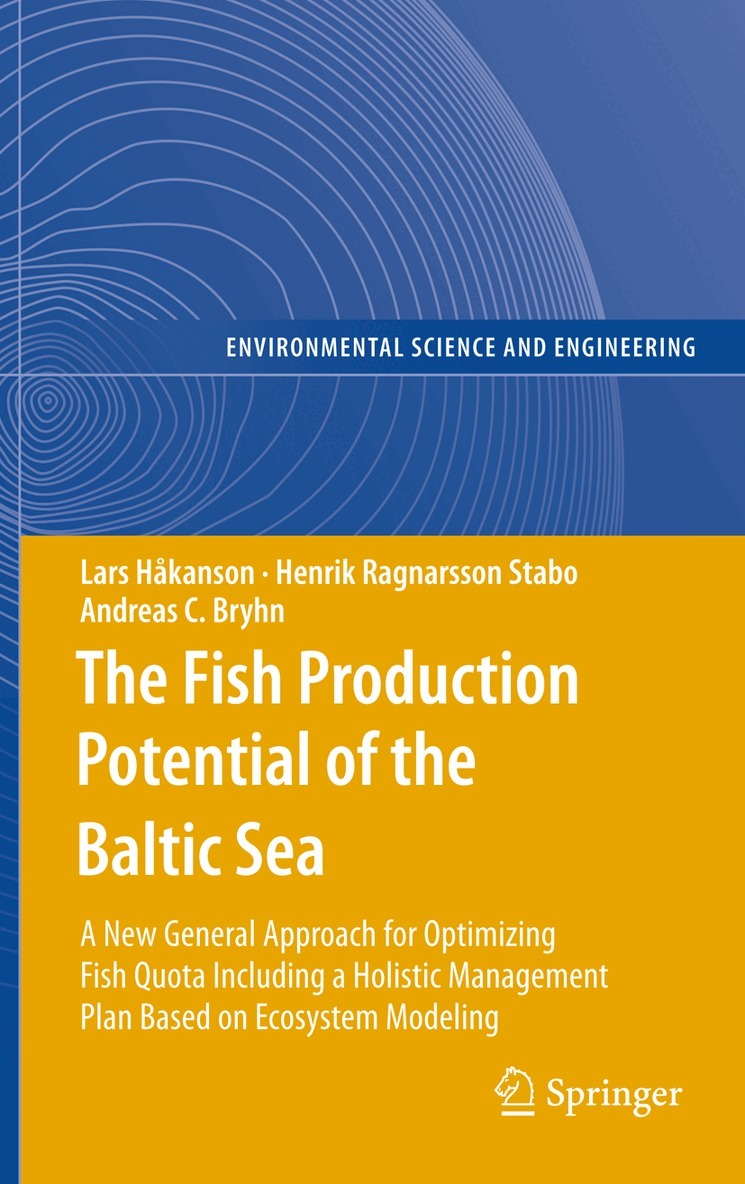
It presents a new approach to set fish quota based on holistic ecosystem modeling (the CoastWeb-model) and also a plan to optimize a sustainable management of the Baltic Sea including a cost-benefit analysis. This plan accounts for the production of prey and predatory fish under different environmental conditions, professional fishing, recreational fishing and fish cage farm production plus an analysis of associated economic values. Several scenarios and remedial strategies for Baltic Sea management are discussed and an "optimal" strategy motivated and presented, which challenges the HELCOM strategy that was accepted by the Baltic States in November 2007. The strategy advocated in this book would create more than 7000 new jobs, the total value of the fish production would be about 1600 million euro per year plus 1000 million euro per year related to the willingness-to-pay to combat the present conditions in the Baltic Sea. Our strategy would cost about 370 million euro whereas the HELCOM strategy would cost about 3100 million euro per year. The "optimal" strategy is based on a defined goal - that the water clarity in the Gulf of Finland should return to what it was 100 years ago.
Häftad, Engelska, 2013
1 071 kr
Skickas inom 10-15 vardagar
During the last 10 years, there has been a `revolution' in ecosystem modelling. The generality and predictive power of our models have increased in a way that was inconceivable 10 years ago. This book describes a new generation of practically useful models that predict as well as one can measure - if one measures well. And yet, they are driven by readily available driving variables and have a general structure that applies to most types of pollutants in aquatic systems. The major reason for this development is, in fact, the Chernobyl accident. Large quantities of radiocesium were released in April/May 1986 as a pulse. To follow the pulse of radiocesium through ecosystem pathways has meant that important fluxes and mechanisms, i.e., ecosystem structures, have been revealed. It is important to stress that many of these new structures and equations are valid not just for radiocesium, but for most types of contaminants, e.g. for metals, nutrients and organics. This means that the models, methods (of building and testing models) and equations described in this book for lakes and coastal areas should be of great interest also to other ecosystem modellers. This book will be of considerable interest to: students in radioecology, geosciences and biology; environmental engineers; consultants; administrators and scientists interested in the spread, biouptake and ecosystem effects of chemical pollutants in aquatic ecosystems.