Lars Landner – författare
Visar alla böcker från författaren Lars Landner. Handla med fri frakt och snabb leverans.
7 produkter
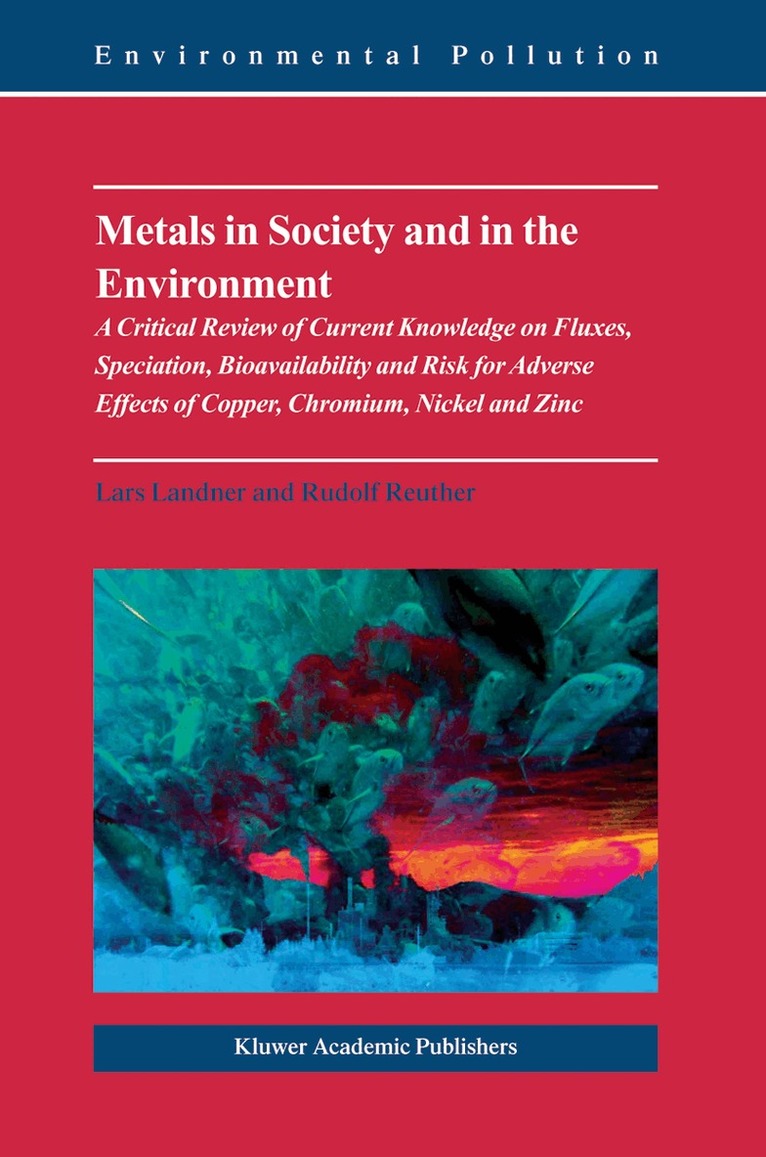
Metals in Society and in the Environment
A Critical Review of Current Knowledge on Fluxes, Speciation, Bioavailability and Risk for Adverse Effects of Copper, Chromium, Nickel and Zinc
Av Lars Landner, Rudolf Reuther
Inbunden, 2004
1643 kr
Lägg i varukorg
In 2002, the Swedish Metal Information Task Force (MITF) engaged the Environmental Research Group (MFG) to update previous monographs on copper, zinc and major alloying metals (such as chromium, nickel and molybdenum) in society and in the environment. This book presents new results on metal fluxes …
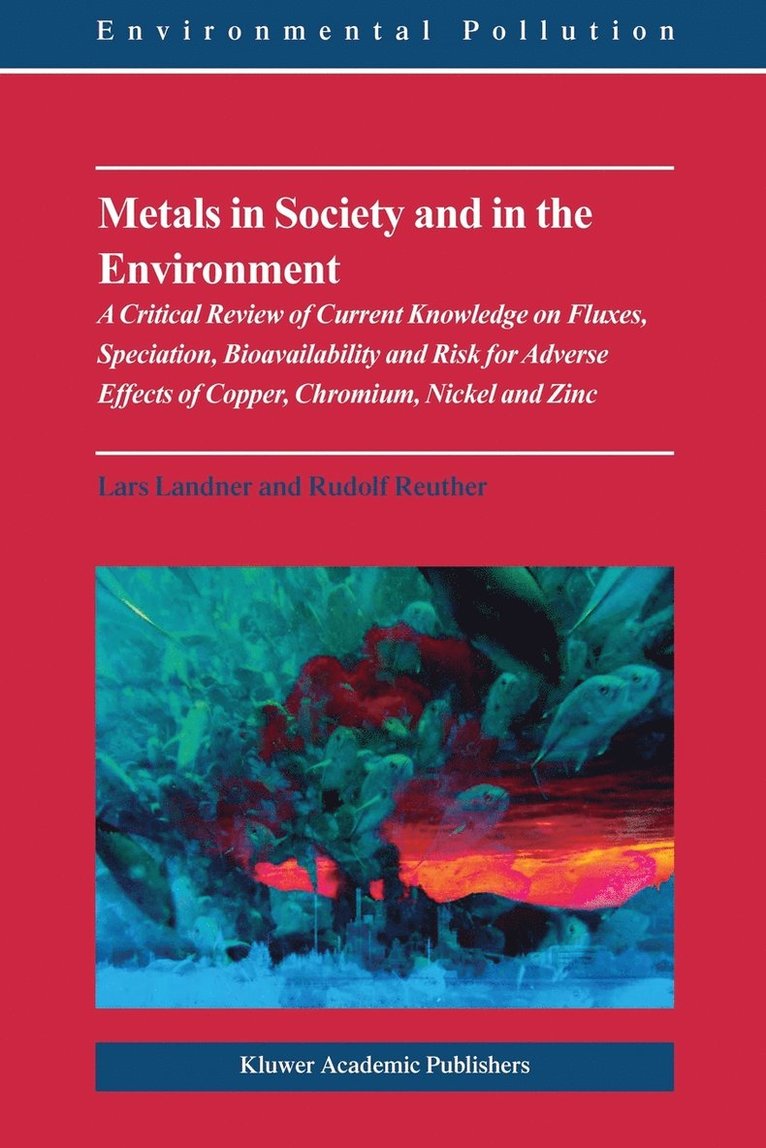
Metals in Society and in the Environment
A Critical Review of Current Knowledge on Fluxes, Speciation, Bioavailability and Risk for Adverse Effects of Copper, Chromium, Nickel and Zinc
Av Lars Landner, Rudolf Reuther
Häftad, 2004
1643 kr
Lägg i varukorg
Metals in Society and in the Environment
A Critical Review of Current Knowledge on Fluxes, Speciation, Bioavailability and Risk for Adverse Effects of Copper, Chromium, Nickel and Zinc
Av Rudolf Reuther, Lars Landner
E-bok, 2006
2065 kr
Lägg i varukorg
In 2002, the Swedish Metal Information Task Force (MITF) engaged the Environmental Research Group (MFG) to update previous monographs on copper, zinc and major alloying metals (such as chromium, nickel and molybdenum) in society and in the environment. This book presents new results on metal fluxes …
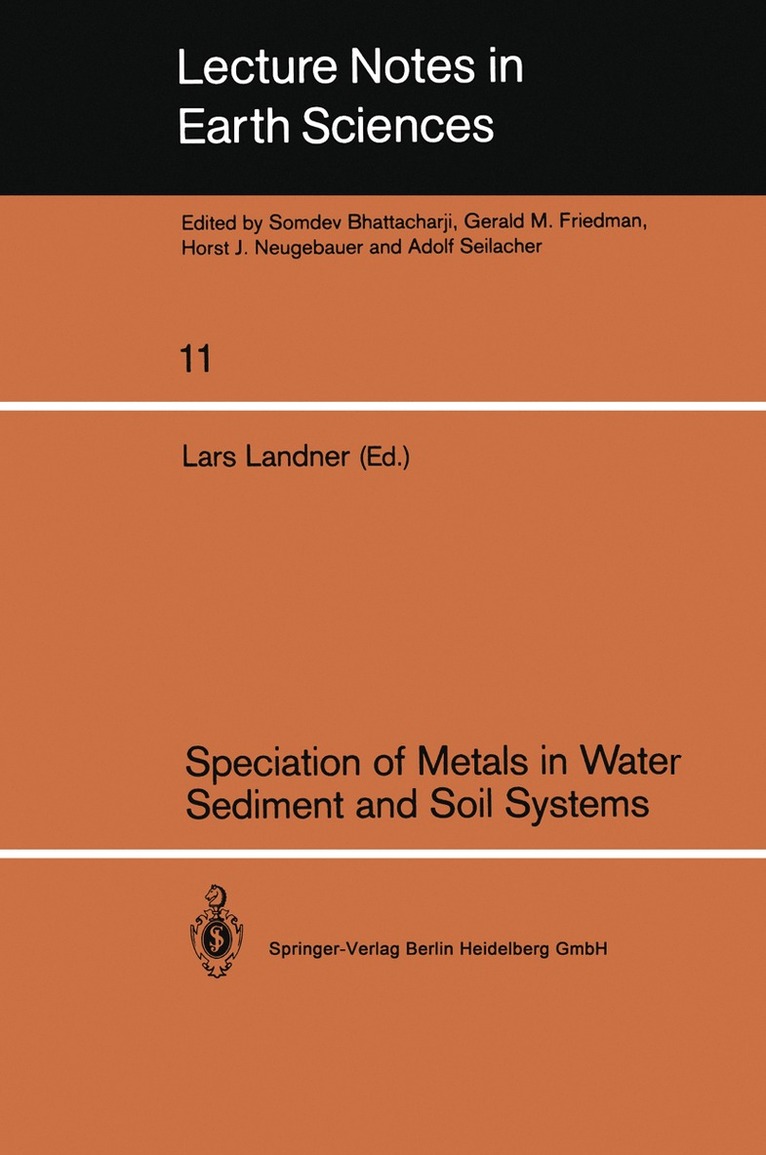
Speciation of Metals in Water, Sediment and Soil Systems
Proceedings of an International Workshop, Sunne, October 15–16, 1986
Av Lars Landner
Häftad, 1987
552 kr
Lägg i varukorg
The particular behavior of trace metals in the environment is determined by their specific physico-chemical form rather than by their total concentration. The introduction of atomic absorption spectrometry has lead to a plethora of scientific papers and reports in which metal concentrations in the …
Speciation of Metals in Water, Sediment and Soil Systems
Proceedings of an International Workshop, Sunne, October 15–16, 1986
Av Lars Landner
E-bok, 2005
734 kr
Lägg i varukorg
The particular behavior of trace metals in the environment is determined by their specific physico-chemical form rather than by their total concentration. The introduction of atomic absorption spectrometry has lead to a plethora of scientific papers and reports in which metal concentrations in the …
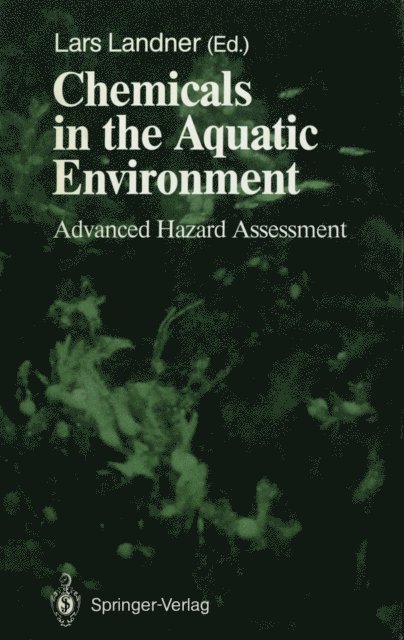
Chemicals in the Aquatic Environment
Advanced Hazard Assessment
Av Lars Landner
E-bok, 2012
1427 kr
Lägg i varukorg
Hazard assessment of a compound (xenobiotic) discharged to the aquatic environment requires data on both exposure and effects to various components of the ecosystem. The multitude of ecological gradients in the Baltic Sea is used as a background example for discussing the complexity of the issue …
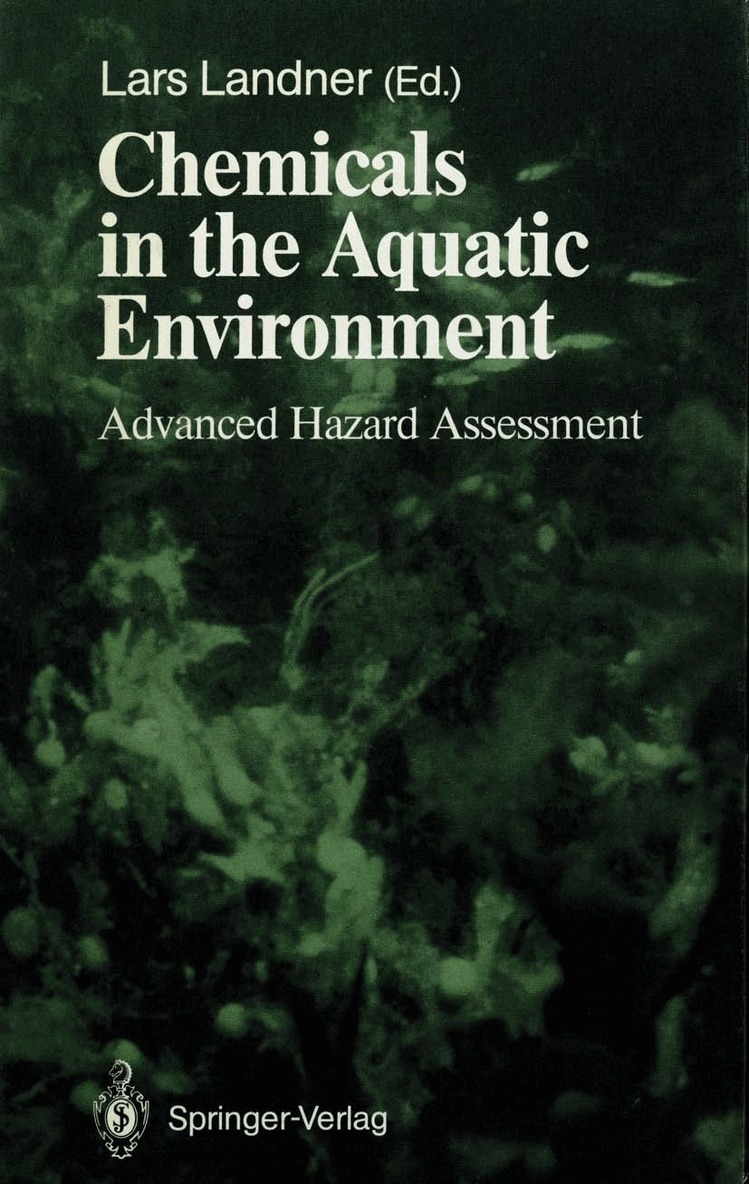
Chemicals in the Aquatic Environment
Advanced Hazard Assessment
Av Lars Landner
Häftad, 2011
1098 kr
Lägg i varukorg
Hazard assessment of a compound (xenobiotic) discharged to the aquatic environment requires data on both exposure and effects to various components of the ecosystem. The multitude of ecological gradients in the Baltic Sea is used as a background example for discussing the complexity of the issue …