Lars Mjøset - Böcker
Visar alla böcker från författaren Lars Mjøset. Handla med fri frakt och snabb leverans.
3 produkter
3 produkter
2 160 kr
Skickas inom 10-15 vardagar
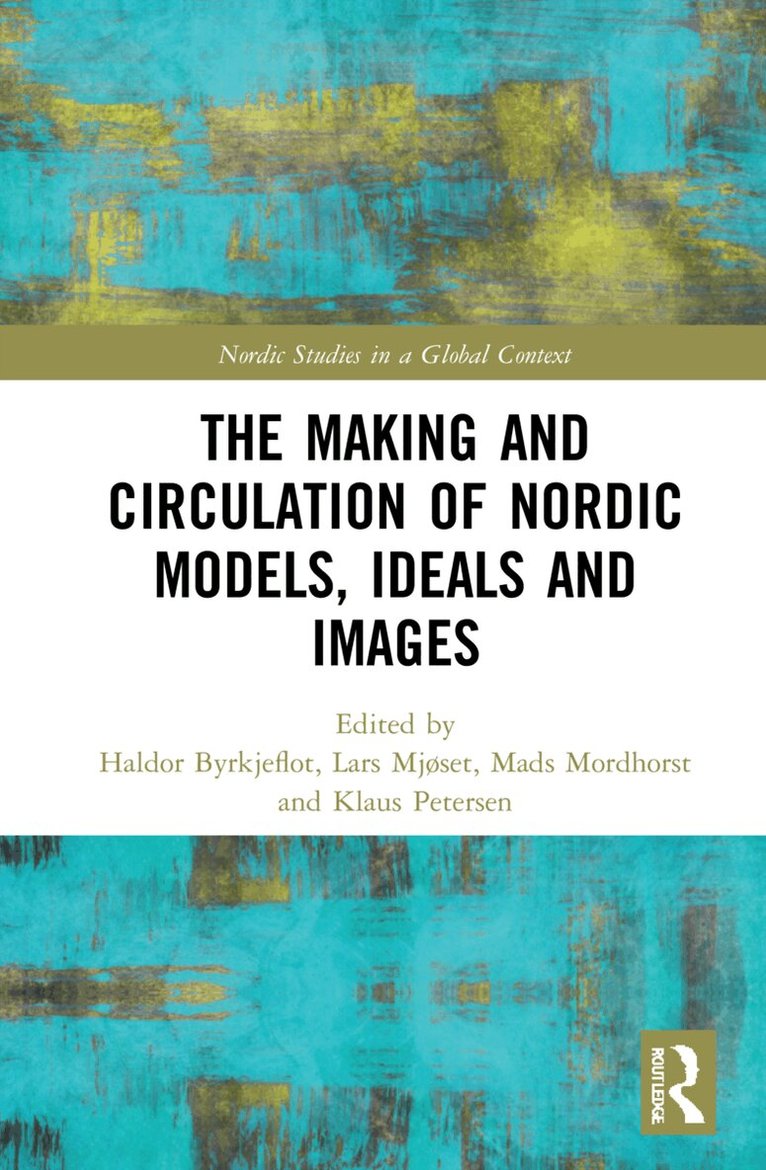
This critical and empirically based volume examines the multiple existing Nordic models, providing analytically innovative attention to the multitude of circulating ideas, images and experiences referred to as "Nordic". It addresses related paradoxes as well as patterns of circulation, claims about the exceptionality of Nordic models, and the diffusion and impact of Nordic experiences and ideas. Providing original case studies, the book further examines how the Nordic models have been constructed, transformed and circulated in time and in space. It investigates the actors and channels that have been involved in circulating models: journalists and media, bureaucrats and policy-makers, international organizations, national politicians and institutions, scholars, public diplomats and analyses where and why models have travelled. Finally, the book shows that Nordic models, perspectives, or ideas do not always originate in the Nordic region, nor do they always develop as deliberate efforts to promote Nordic interests. This book will be of key interest to Nordic and Scandinavian studies, European studies, and more broadly to history, sociology, political science, marketing, social policy, organizational theory and public management.The Open Access version of this book, available at http://www.taylorfrancis.com, has been made available under a Creative Commons Attribution-Non Commercial-No Derivatives 4.0 license.
638 kr
Skickas inom 10-15 vardagar
This critical and empirically based volume examines the multiple existing Nordic models, providing analytically innovative attention to the multitude of circulating ideas, images and experiences referred to as "Nordic". It addresses related paradoxes as well as patterns of circulation, claims about the exceptionality of Nordic models, and the diffusion and impact of Nordic experiences and ideas. Providing original case studies, the book further examines how the Nordic models have been constructed, transformed and circulated in time and in space. It investigates the actors and channels that have been involved in circulating models: journalists and media, bureaucrats and policy-makers, international organizations, national politicians and institutions, scholars, public diplomats and analyses where and why models have travelled. Finally, the book shows that Nordic models, perspectives, or ideas do not always originate in the Nordic region, nor do they always develop as deliberate efforts to promote Nordic interests. This book will be of key interest to Nordic and Scandinavian studies, European studies, and more broadly to history, sociology, political science, marketing, social policy, organizational theory and public management.The Open Access version of this book, available at http://www.taylorfrancis.com, has been made available under a Creative Commons Attribution-Non Commercial-No Derivatives 4.0 license.
Del 36 - Comparative Social Research
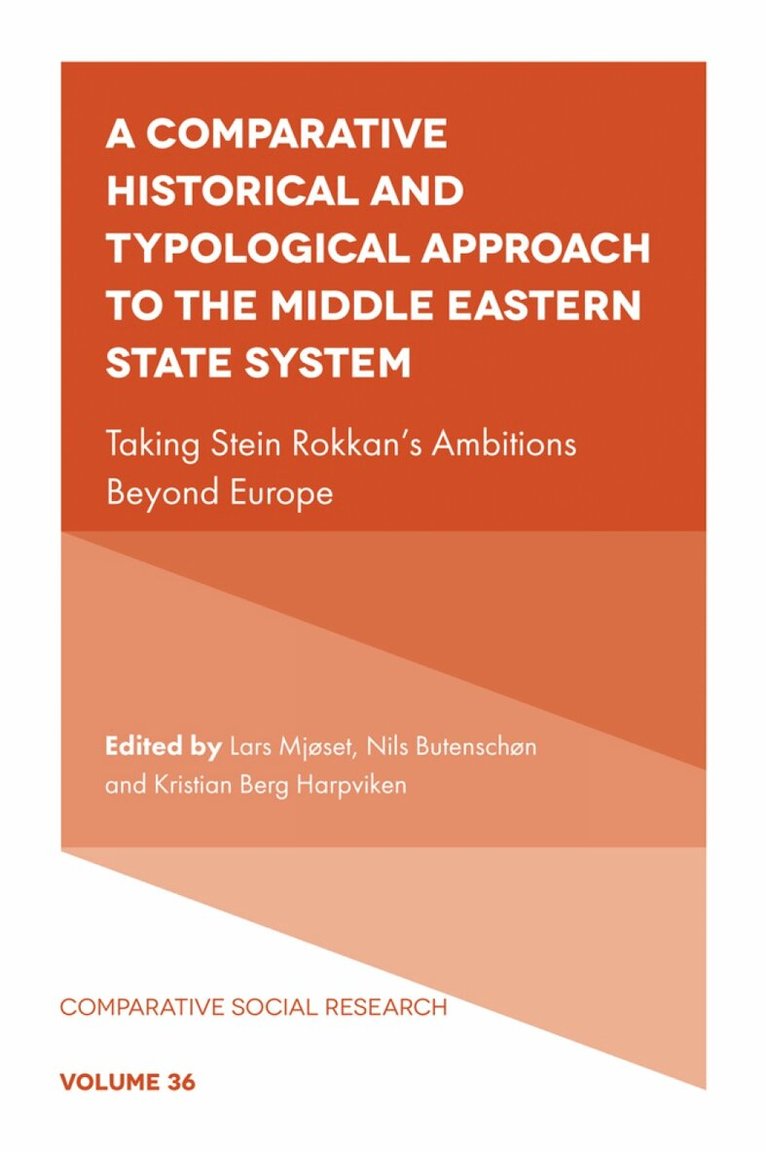
Comparative Historical and Typological Approach to the Middle Eastern State System
Taking Stein Rokkan’s Ambitions Beyond Europe
Inbunden, Engelska, 2024
1 262 kr
Skickas inom 7-10 vardagar
The study of state formation and nation building is a proud tradition. Currently, however, it is difficult to discern a unified research frontier in this field, due to a persistent gap between the more case-based historical focus seen in area studies, and more generalizing approaches inspired by the natural sciences.Showcasing the legacy of Norwegian political scientist and sociologist Stein Rokkan, this volume explores the potential of his work to address this gap. Featuring Rokkan’s lecture skeleton methodology, given in Paris 1976, but included here as the first ever English language translation, this collection brings into sharp focus how Rokkan developed a set of methodological tools that allowed the construction of regional models and typological maps for guiding paired or clustered comparisons of state formation and nation building in any world region. Acknowledging Rokkan’s key argument that relevant models and maps need to be developed through knowledge about a region’s history rather than through formal concepts alone, contributors draw on the full potential of Rokkan’s innovations by calibrating them with empirical material from a world region not analysed by Rokkan himself: the Middle East.Thoughtfully reconstructing and upgrading Rokkan’s methodology, A Comparative Historical and Typological Approach to the Middle Eastern State System ushers in a new vision in the field of state formation and nation building.