Last Mark Last – författare
Visar alla böcker från författaren Last Mark Last. Handla med fri frakt och snabb leverans.
6 produkter
6 produkter
E-bok
Engelska, 20211 622 kr
Läs direkt efter köp
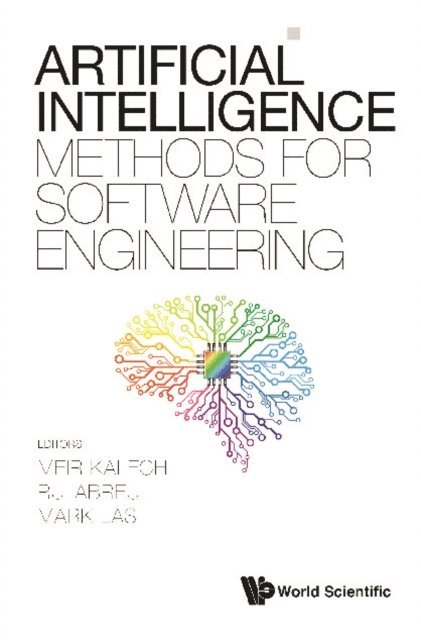
Software is an integral part of our lives today. Modern software systems are highly complex and often pose new challenges in different aspects of Software Engineering (SE).Artificial Intelligence (AI) is a growing field in computer science that has been proven effective in applying and developing AI techniques to address various SE challenges.This unique compendium covers applications of state-of-the-art AI techniques to the key areas of SE (design, development, debugging, testing, etc).All the materials presented are up-to-date. This reference text will benefit researchers, academics, professionals, and postgraduate students in AI, machine learning and software engineering.Related Link(s)
E-bok
Engelska, 2018914 kr
Läs direkt efter köp
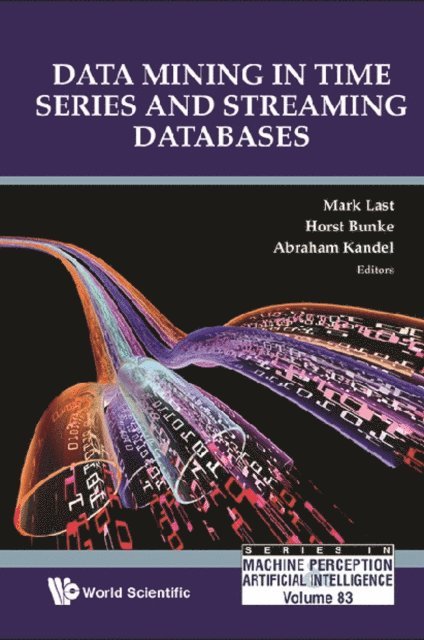
This compendium is a completely revised version of an earlier book, Data Mining in Time Series Databases, by the same editors. It provides a unique collection of new articles written by leading experts that account for the latest developments in the field of time series and data stream mining.The emerging topics covered by the book include weightless neural modeling for mining data streams, using ensemble classifiers for imbalanced and evolving data streams, document stream mining with active learning, and many more. In particular, it addresses the domain of streaming data, which has recently become one of the emerging topics in Data Science, Big Data, and related areas. Existing titles do not provide sufficient information on this topic.
E-bok
PDF, Engelska, 2005477 kr
Läs direkt efter köp
As became apparent after the tragic events of September 11, 2001, terrorist groups are increasingly using the Internet as a communication and propaganda tool where they can safely communicate with their affiliates, coordinate action plans, raise funds, and introduce new supporters to their networks. This is evident from the large number of web sites run by different terrorist organizations, though the URLs and geographical locations of these web sites are frequently moved around the globe. The wide use of the Internet by terrorists makes some people think that the risk of a major cyber-attack against the communication infrastructure is low. However, this situation may change abruptly once the terrorists decide that the Net does not serve their purposes anymore and, like any other invention of our civilization, deserves destruction.Fighting Terror in Cyberspace is a unique volume, which provides, for the first time, a comprehensive overview of terrorist threats in cyberspace along with state-of-the-art tools and technologies that can deal with these threats in the present and in the future. The book covers several key topics in cyber warfare such as terrorist use of the Internet, the Cyber Jihad, data mining tools and techniques of terrorist detection on the web, analysis and detection of terror financing, and automated identification of terrorist web sites in multiple languages. The contributors include leading researchers on international terrorism, as well as distinguished experts in information security and cyber intelligence. This book represents a valuable source of information for academic researchers, law enforcement and intelligence experts, and industry consultants who are involved in detection, analysis, and prevention of terrorist activities on the Internet.
E-bok
PDF, Engelska, 2005788 kr
Läs direkt efter köp
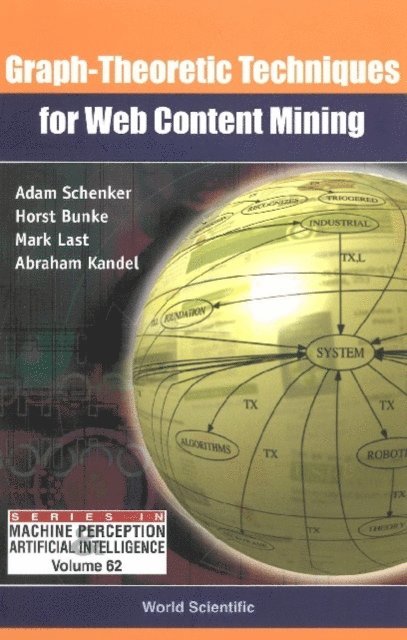
This book describes exciting new opportunities for utilizing robust graph representations of data with common machine learning algorithms. Graphs can model additional information which is often not present in commonly used data representations, such as vectors. Through the use of graph distance — a relatively new approach for determining graph similarity — the authors show how well-known algorithms, such as k-means clustering and k-nearest neighbors classification, can be easily extended to work with graphs instead of vectors. This allows for the utilization of additional information found in graph representations, while at the same time employing well-known, proven algorithms.To demonstrate and investigate these novel techniques, the authors have selected the domain of web content mining, which involves the clustering and classification of web documents based on their textual substance. Several methods of representing web document content by graphs are introduced; an interesting feature of these representations is that they allow for a polynomial time distance computation, something which is typically an NP-complete problem when using graphs. Experimental results are reported for both clustering and classification in three web document collections using a variety of graph representations, distance measures, and algorithm parameters.In addition, this book describes several other related topics, many of which provide excellent starting points for researchers and students interested in exploring this new area of machine learning further. These topics include creating graph-based multiple classifier ensembles through random node selection and visualization of graph-based data using multidimensional scaling.
E-bok
PDF, Engelska, 2004590 kr
Läs direkt efter köp
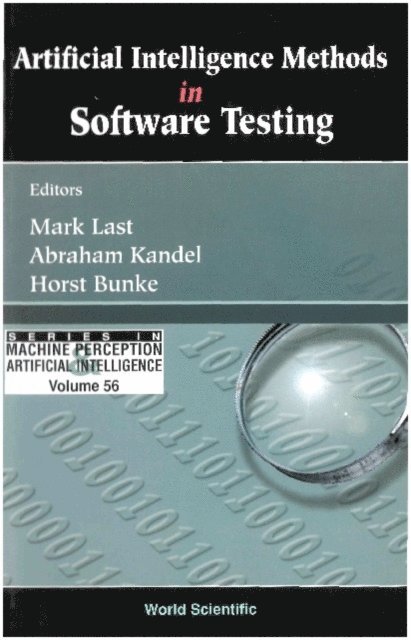
An inadequate infrastructure for software testing is causing major losses to the world economy. The characteristics of software quality problems are quite similar to other tasks successfully tackled by artificial intelligence techniques. The aims of this book are to present state-of-the-art applications of artificial intelligence and data mining methods to quality assurance of complex software systems, and to encourage further research in this important and challenging area.
E-bok
PDF, Engelska, 2004634 kr
Läs direkt efter köp
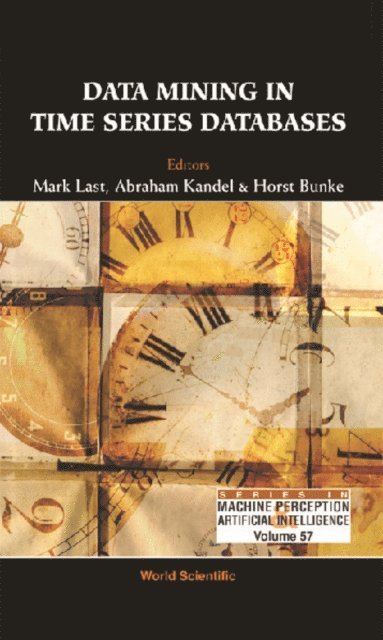
Adding the time dimension to real-world databases produces Time Series Databases (TSDB) and introduces new aspects and difficulties to data mining and knowledge discovery. This book covers the state-of-the-art methodology for mining time series databases. The novel data mining methods presented in the book include techniques for efficient segmentation, indexing, and classification of noisy and dynamic time series. A graph-based method for anomaly detection in time series is described and the book also studies the implications of a novel and potentially useful representation of time series as strings. The problem of detecting changes in data mining models that are induced from temporal databases is additionally discussed.