Latha Varadarajan - Böcker
Visar alla böcker från författaren Latha Varadarajan. Handla med fri frakt och snabb leverans.
3 produkter
3 produkter
383 kr
Skickas inom 5-8 vardagar
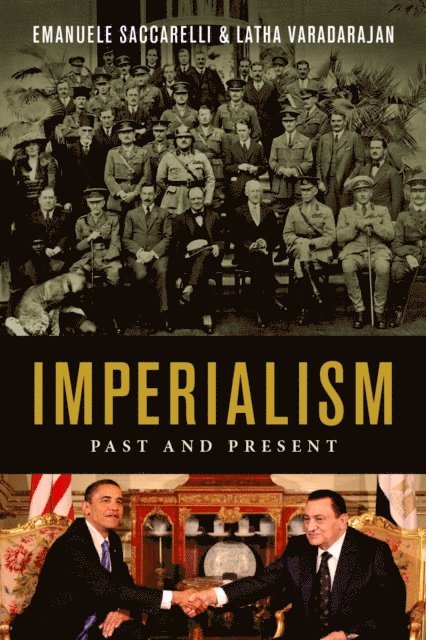
After a long hiatus, when it was seemingly banished to the wilderness of esoteric academic debate, imperialism is back as one of the buzzwords of the day. In the past decade in particular, scholars, policy-makers and political pundits have been using the term with increasing frequency in their commentary on contemporary international relations. Many have invoked it as an old specter only to nervously deny its contemporary applicability. Meanwhile, the term has continued to be applied to a diverse range of economic, political, cultural and linguistic phenomena. The sudden popularity of the term has created confusion about what it means and why we should care about it. Regardless of whether it is used as an invective or an ideal, imperialism has turned into an all-encompassing buzzword that many use, though few can really define. Imperialism Past and Present seeks to clarify the prevailing confusion and provide a clear, concise account of imperialism, as well as to introduce readers to the fundamental logic, as well as the complex manifestations of imperialism. It also aims to offer a succinct review and interpretation of the complex experiences that constituted the history of imperialism. The authors contend that imperialism remains at the heart of recent events and ongoing processes that define contemporary politics, and they look at the way that it applies in the post-Cold War period.
1 025 kr
Skickas inom 5-8 vardagar
In recent years, a significant number of developing nations have made moves to institutionalize their relationships with their transnational communities. This has occurred in a variety of ways: through new ministries for "diaspora affairs," through the granting of dual citizenship, the extension of voting rights to immigrants, and even through the creation of reserved seats in national legislatures. Such gestures re-conceive diasporas as being part of a larger "global nation," with all of the concomitant claims on institutional structures of the state. This marks a break from the past, when immigrants were ignored or denounced as traitors by their home state. It also marks the rise of what the author terms the "domestic abroad," or the reassertion of nationalist imaginary and state authority amid neo-liberal restructuring of states.Latha Varadarajan argues that studies in transnationalism have heretofore failed to grasp the importance of such phenomena, due to the field's tendency to avoid the question of capitalism and focus on the undermining of state sovereignty and the building of global civil society. In Producing the Domestic Abroad, she proposes a re-consideration of both the meaning of transnationalism and the nature of national and state identity in global politics. In order to do this, Varadarajan draws from two literatures that are rarely brought into conversation with IR scholarship: postcolonial theory and historical-materialism. She develops her argument through an analysis of the post-1947 Indian state and its dynamic relationship to the groups constituted as the "Indian diaspora" especially in the context of the neoliberal restructuring of the Indian economy.
386 kr
Skickas inom 5-8 vardagar
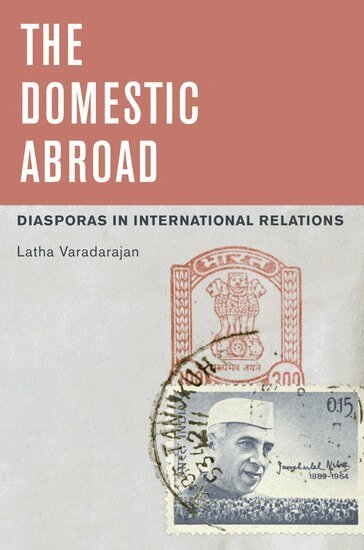
In the past few decades, and across disparate geographical contexts, states have adopted policies and initiatives aimed at institutionalizing relationships with "their" diasporas. These practices, which range from creating new ministries to granting dual citizenship, are aimed at integrating diasporas as part of a larger "global" nation that is connected to, and has claims on the institutional structures of the home state. Although links, both formal and informal, between diasporas and their presumptive homelands have existed in the past, the recent developments constitute a far more widespread and qualitatively different phenomenon.In this book, Latha Varadarajan theorizes this novel and largely overlooked trend by introducing the concept of the "domestic abroad." Varadarajan demonstrates that the remapping of the imagined boundaries of the nation, the visible surface of the phenomenon, is intrinsically connected to the political-economic transformation of the state that is typically characterized as "neoliberalism." The domestic abroad must therefore be understood as the product of two simultaneous, on-going processes: the diasporic re-imagining of the nation and the neoliberal restructuring of the state.The argument unfolds through a historically nuanced study of the production of the domestic abroad in India. The book traces the complex history and explains the political logic of the remarkable transition from the Indian state's guarded indifference toward its diaspora in the period after independence, to its current celebrations of the "global Indian nation." In doing so, The Domestic Abroad reveals the manner in which the boundaries of the nation and the extent of the authority of the state, in India and elsewhere, are dynamically shaped by the development of capitalist social relations on both global and national scales.