E-bok
PDF, Engelska, 2000419 kr
Läs direkt efter köp
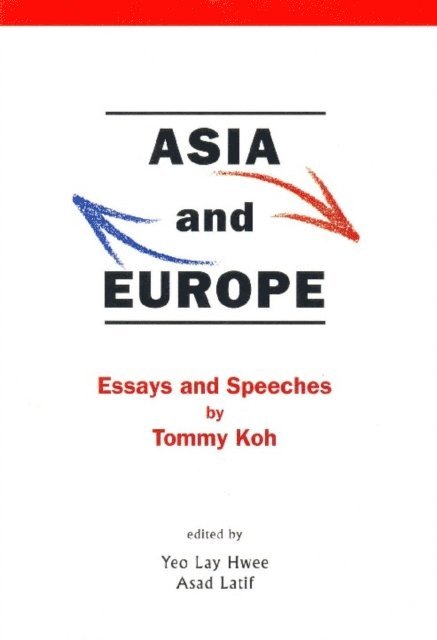
Asia''s and Europe''s discovery of each other dates back several hundred years and has undergone tremendous transformation. Their engagement was coloured by the history of colonialism, and interrupted by the heat of the Cold War. However, an important step to chart an equal partnership and deepen engagement was taken with the launch of the Asia-Europe Meeting in March 1996. The Asia-Europe Foundation (ASEF) appeared the following year as the most concrete manifestation of this newfound engagement and as an attempt to engage the civil societies of the two regions.Professor Tommy Koh, a distinguished and well-respected diplomat of our time, is Singapore''s foremost “Americanist”, having spent about two decades in America, serving as Singapore''s Permanent Representative to the United Nations and Ambassador to the United States. When he turned “Europeanist” on being appointed the Executive Director of ASEF, many of his admirers were surprised, but they had no doubts that his diplomatic skills and international stature make him the ideal person to bridge the gap between Asia and Europe.This collection of essays and speeches by Professor Tommy Koh were delivered and written in his capacity as the Executive Director of ASEF. It contains his thoughts on the three pillars of Asia-Europe relations: politics, economics, and civil society. Readers will find in this book his assessment of some of the key trends shaping the emerging world order and some crucial events affecting the transformation of Asia and Europe. He points to synergies between the two continents but does not hesitate to note differences in outlook which have to be recognised and respected. This book is an interesting contribution to the growing literature on a new partnership in the making.Tommy Koh is a Professor of Law at the National University of Singapore (NUS). He is currently Singapore''s Ambassador-at-Large and the Executive Director of the Asia-Europe Foundation. He has previously served as Dean of the Law Faculty of NUS, Ambassador to the United Nations, the United States, Canada and Mexico. He has chaired the Law of the Sea Conference and the Earth Summit. He has headed a Singapore think-tank, The Institute of Policy Studies, and served as the first Chairman of the National Arts Council. He has also served the UN as the Secretary-General''s Special Envoy to Russia, Latvia, Estonia and Lithuania, and the World Trade Organisation as the Chairman of two dispute panels.