Laura A. Millar - Böcker
Visar alla böcker från författaren Laura A. Millar. Handla med fri frakt och snabb leverans.
4 produkter
4 produkter
822 kr
Skickas inom 7-10 vardagar
473 kr
Skickas inom 7-10 vardagar
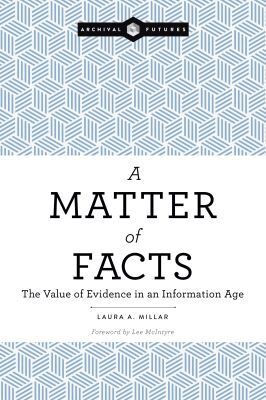
The safeguarding of authentic facts is essential, especially in this disruptive Orwellian age, where digital technologies have opened the door to a post-truth world in which “alternative facts” can be so easily accepted as valid. And because facts matter, archives matter. In this urgent manifesto, archives luminary Millar makes the case that authentic and accurate evidence is crucial in supporting and fostering a society that is respectful, democratic, and self-aware. An eye-opening treatise for the general public, an invaluable resource for archives students, and a provocative call-to-arms for working professionals, Millar’s bookexplains the concept of evidence and discusses the ways in which records, archives, and data are not just useful tools for our daily existence but also essential sources of evidence both today and in the future;includes plentiful examples that illustrate the critical role evidence plays in upholding rights, enforcing responsibilities, tracing family or community stories, and capturing and sharing memories; andexamines the impact of digital technologies on how records and information are created and used.With documentary examples ranging from Mesopotamian clay tablets to World War II photographs to today’s Twitter messages and Facebook posts, Millar’s stirring book will encourage readers to understand more fully the importance of their own records and archives, for themselves and for future generations.
991 kr
Skickas inom 5-8 vardagar
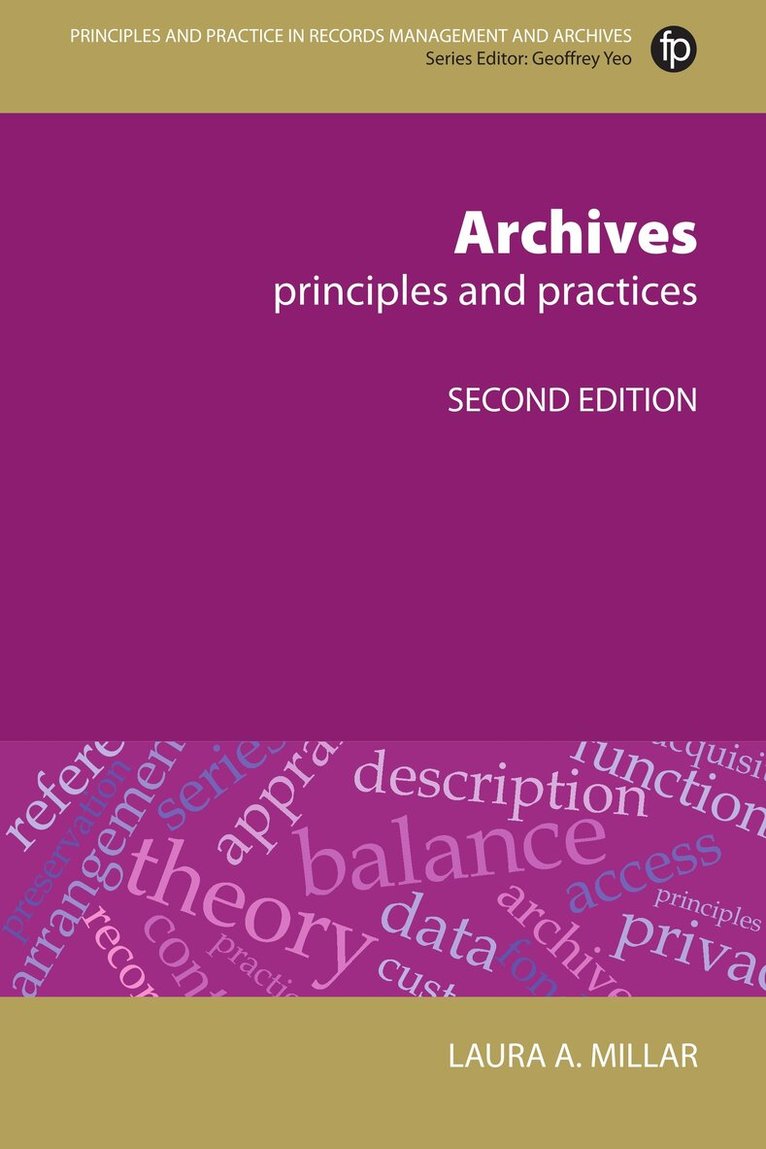
This new and extensively revised second edition offers an international perspective on archives management, providing authoritative guidance relevant to collections-based repositories and to organizations responsible for managing their own institutional archives. Written in clear language with lively examples, Archives: Principles and practices introduces core archival concepts, explains best-practice approaches and discusses the central activities that archivists need to know to ensure the documentary materials in their charge are cared for as effectively as possible. Topics addressed include:core archival principles and conceptsarchival history and the evolution of archival theoriesthe nature and diversity of archival materials and institutionsthe responsibilities and duties of the archivistissues in the management of archival institutionsthe challenges of balancing access and privacy in archival servicebest practice principles and strategic approaches to central archival tasks such as acquisition, preservation, reference and accessdetailed comparison of custodial, fonds-oriented approaches and post-custodial, functional approaches to arrangement and description.Discussion of digital archives is woven throughout the book, including consideration of the changing role of the archivist in the digital age. In recasting her book to address the impact of digital technologies on records and archives, Millar offers us an archival manual for the twenty-first century. This book will be essential reading for archival practitioners, archival studies students and professors, librarians, museum curators, local authorities, small governments, public libraries, community museums, corporations, associations and other agencies with archival responsibility.
2 053 kr
Skickas inom 5-8 vardagar
This new and extensively revised second edition offers an international perspective on archives management, providing authoritative guidance relevant to collections-based repositories and to organizations responsible for managing their own institutional archives. Written in clear language with lively examples, Archives: Principles and practices introduces core archival concepts, explains best-practice approaches and discusses the central activities that archivists need to know to ensure the documentary materials in their charge are cared for as effectively as possible. Topics addressed include:core archival principles and conceptsarchival history and the evolution of archival theoriesthe nature and diversity of archival materials and institutionsthe responsibilities and duties of the archivistissues in the management of archival institutionsthe challenges of balancing access and privacy in archival servicebest practice principles and strategic approaches to central archival tasks such as acquisition, preservation, reference and accessdetailed comparison of custodial, fonds-oriented approaches and post-custodial, functional approaches to arrangement and description.Discussion of digital archives is woven throughout the book, including consideration of the changing role of the archivist in the digital age. In recasting her book to address the impact of digital technologies on records and archives, Millar offers us an archival manual for the twenty-first century. This book will be essential reading for archival practitioners, archival studies students and professors, librarians, museum curators, local authorities, small governments, public libraries, community museums, corporations, associations and other agencies with archival responsibility.