Laura Basu - Böcker
Visar alla böcker från författaren Laura Basu. Handla med fri frakt och snabb leverans.
5 produkter
5 produkter
284 kr
Skickas inom 7-10 vardagar
From Donald Trump, to Brexit and the rise of nationalist populism across Europe, what role has the media played in shaping our current political moment?Following the news coverage of a decade-long crisis that includes the 2008 financial crash and the Great Recession, the UK deficit, the eurozone crisis, austerity and rising inequality, we see that coverage is suffering from an acute amnesia about the policies that caused the crisis in the first place. Rather than remembering its roots in the dynamics of 'free market' capitalism, the media remains devoted to a narrative of swollen public sectors, out-of-control immigration and benefits cheats. How has history been so quickly rewritten, and what does this mean for attempts to solve the economic problems?Going behind the coverage, to decode the workings of media power, Basu shows that without a rejection of neoliberal capitalism we'll be stuck in an infinite cycle of crisis.
867 kr
Skickas inom 7-10 vardagar
From Donald Trump, to Brexit and the rise of nationalist populism across Europe, what role has the media played in shaping our current political moment?Following the news coverage of a decade-long crisis that includes the 2008 financial crash and the Great Recession, the UK deficit, the eurozone crisis, austerity and rising inequality, we see that coverage is suffering from an acute amnesia about the policies that caused the crisis in the first place. Rather than remembering its roots in the dynamics of 'free market' capitalism, the media remains devoted to a narrative of swollen public sectors, out-of-control immigration and benefits cheats. How has history been so quickly rewritten, and what does this mean for attempts to solve the economic problems?Going behind the coverage, to decode the workings of media power, Basu shows that without a rejection of neoliberal capitalism we'll be stuck in an infinite cycle of crisis.
2 098 kr
Skickas inom 10-15 vardagar
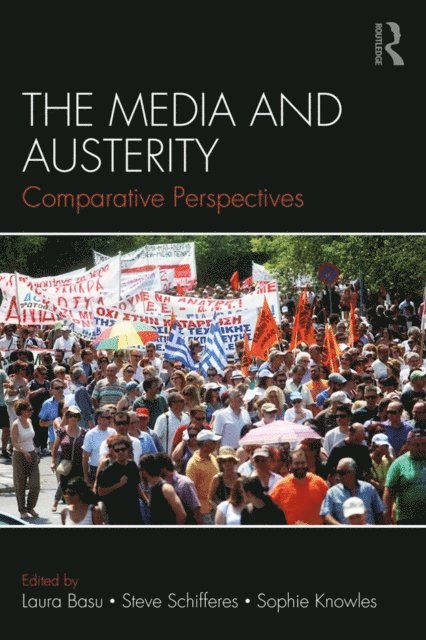
The Media and Austerity examines the role of the news media in communicating and critiquing economic and social austerity measures in Europe since 2010. From an array of comparative, historical and interdisciplinary vantage points, this edited collection seeks to understand how and why austerity came to be perceived as the only legitimate policy response to the financial crisis for nearly a decade after it began. Drawing on an international range of contributors with backgrounds in journalism, politics, history and economics, the book presents chapters exploring differing media representations of austerity from UK, US and European perspectives. It also investigates practices in financial journalism and highlights the role of social media in reporting public responses to government austerity measures. They reveal that, without a credible and coherent alternative to austerity from the political opposition, what had been an initial response to the consequences of the financial crisis, became entrenched between 2010 and 2015 in political discourse. The Media and Austerity is a clear and concise introduction for students of journalism, media, politics and finance to the connections between the media, politics and society in relation to the public perception of austerity after the 2008 global financial crash.
565 kr
Skickas inom 10-15 vardagar
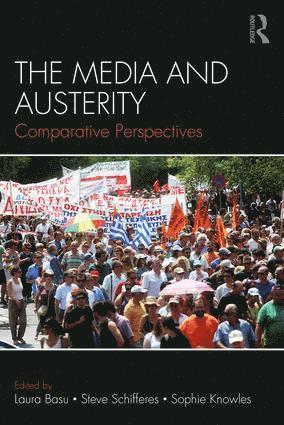
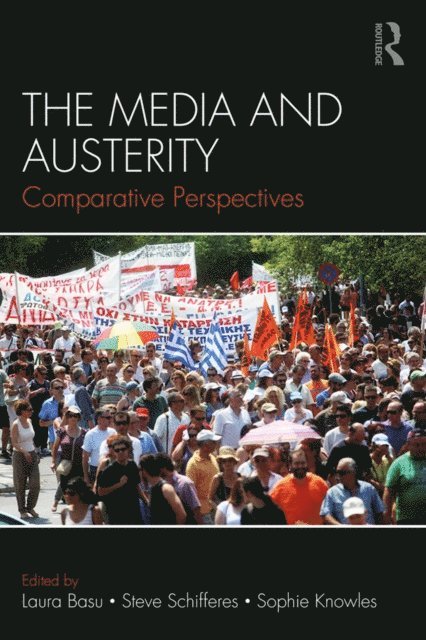
The Media and Austerity examines the role of the news media in communicating and critiquing economic and social austerity measures in Europe since 2010. From an array of comparative, historical and interdisciplinary vantage points, this edited collection seeks to understand how and why austerity came to be perceived as the only legitimate policy response to the financial crisis for nearly a decade after it began. Drawing on an international range of contributors with backgrounds in journalism, politics, history and economics, the book presents chapters exploring differing media representations of austerity from UK, US and European perspectives. It also investigates practices in financial journalism and highlights the role of social media in reporting public responses to government austerity measures. They reveal that, without a credible and coherent alternative to austerity from the political opposition, what had been an initial response to the consequences of the financial crisis, became entrenched between 2010 and 2015 in political discourse. The Media and Austerity is a clear and concise introduction for students of journalism, media, politics and finance to the connections between the media, politics and society in relation to the public perception of austerity after the 2008 global financial crash.
Del 13 - Media and Cultural Memory
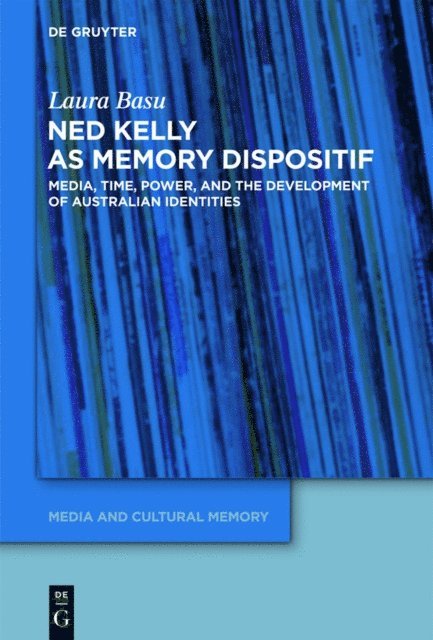
Ned Kelly as Memory Dispositif
Media, Time, Power, and the Development of Australian Identities
Inbunden, Engelska, 2012
1 865 kr
Skickas inom 5-8 vardagar
Nineteenth-century outlaw Ned Kelly is perhaps Australia's most famous historical figure. Ever since he went on the run in 1878 his story has been repeated time and again, in every conceivable medium. Although the value of his memory has been hotly contested – and arguably because of this – he remains perhaps the main national icon of Australia. Kelly's flamboyant crimes turned him into a popular hero for many Australians during his lifetime and far beyond: a symbol of freedom, anti authoritarianism, anti imperialism; a Robin Hood, a Jesse James, a Che Guevara. Others have portrayed him as a villain, a gangster, a terrorist. His latest incarnation has been as WikiLeaks founder and fellow Australian "cyber outlaw" Julian Assange. Despite the huge number of representations of Kelly – from rampant newspaper reporting of the events, to the iconic Sidney Nolan paintings, to a movie starring Mick Jagger, to contemporary urban street art – this is the first work to take this corpus of material itself as a subject of analysis. The fascinating case of this young outlaw provides an important opportunity to further our understanding of the dynamics of cultural memory. The book explains the processes by which the cultural memory of Ned Kelly was made and has developed over time, and how it has related to formations and negotiations of national identity. It breaks new ground in memory studies in the first place by showing that cultural memories are formed and develop through tangles of relations, what Basu terms memory dispositifs. In introducing the concept of the memory dispositif, this volume brings together and develops the work of Foucault, Deleuze, and Agamben on the dispositif, along with relevant concepts from the field of memory studies such as allochronism, colonial aphasia, and multidirectionality, the memory site – especially as developed by Ann Rigney – and Jan Assmann's figure of memory.Secondly, this work makes important headway in our understanding of the relationships between cultural memory and national identity, at a time when matters of identity appear to be more urgent and fraught than ever. In doing so, it shows that national identities are never purely national but are always sub- and transnational. The Ned Kelly memory dispositif has made complex and conflicting contributions to constructions of national identity. Ever since his outlawry, the identities invested in Kelly and those invested in the Australian nation have, in a two-way dynamic, fused into and strengthened each other, so that Kelly is in many ways a symbol for the national identity. Kelly has come to stand for an anti-establishment, working class, subaltern, Irish-inflected national identity. At the same time he has come to represent and enforce the whiteness, hyper-heterosexual masculinity and violence of "Australianness". Basu shows that Kelly has therefore always functioned in both radical and conservative ways, often both at once: a turbulent, Janus-faced figure.