Laura F. Edwards – författare
Visar alla böcker från författaren Laura F. Edwards. Handla med fri frakt och snabb leverans.
14 produkter
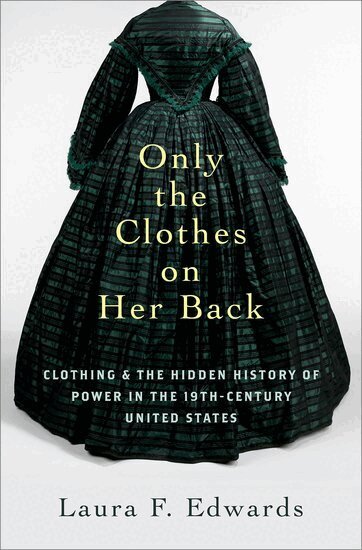
Only the Clothes on Her Back
Clothing and the Hidden History of Power in the Nineteenth-Century United States
Inbunden, 2022
503 kr
Lägg i varukorg
An innovative recasting of US legal and economic history through the power of clothing for those who lacked power and status in American society.What can dresses, bedlinens, waistcoats, pantaloons, shoes, and kerchiefs tell us about the legal status of the least powerful members of American …
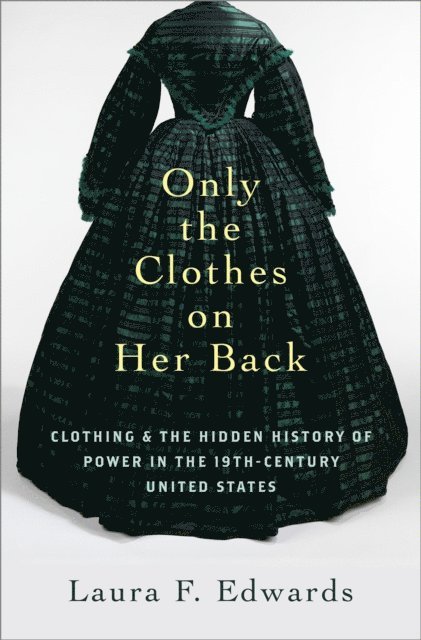
Only the Clothes on Her Back
Clothing and the Hidden History of Power in the Nineteenth-Century United States
E-bok, 2021
353 kr
Lägg i varukorg
An innovative recasting of US legal and economic history through the power of clothing for those who lacked power and status in American society. What can dresses, bedlinens, waistcoats, pantaloons, shoes, and kerchiefs tell us about the legal status of the least powerful members of American …
Only the Clothes on Her Back
Clothing and the Hidden History of Power in the Nineteenth-Century United States
E-bok, 2021
353 kr
Lägg i varukorg
An innovative recasting of US legal and economic history through the power of clothing for those who lacked power and status in American society. What can dresses, bedlinens, waistcoats, pantaloons, shoes, and kerchiefs tell us about the legal status of the least powerful members of American …
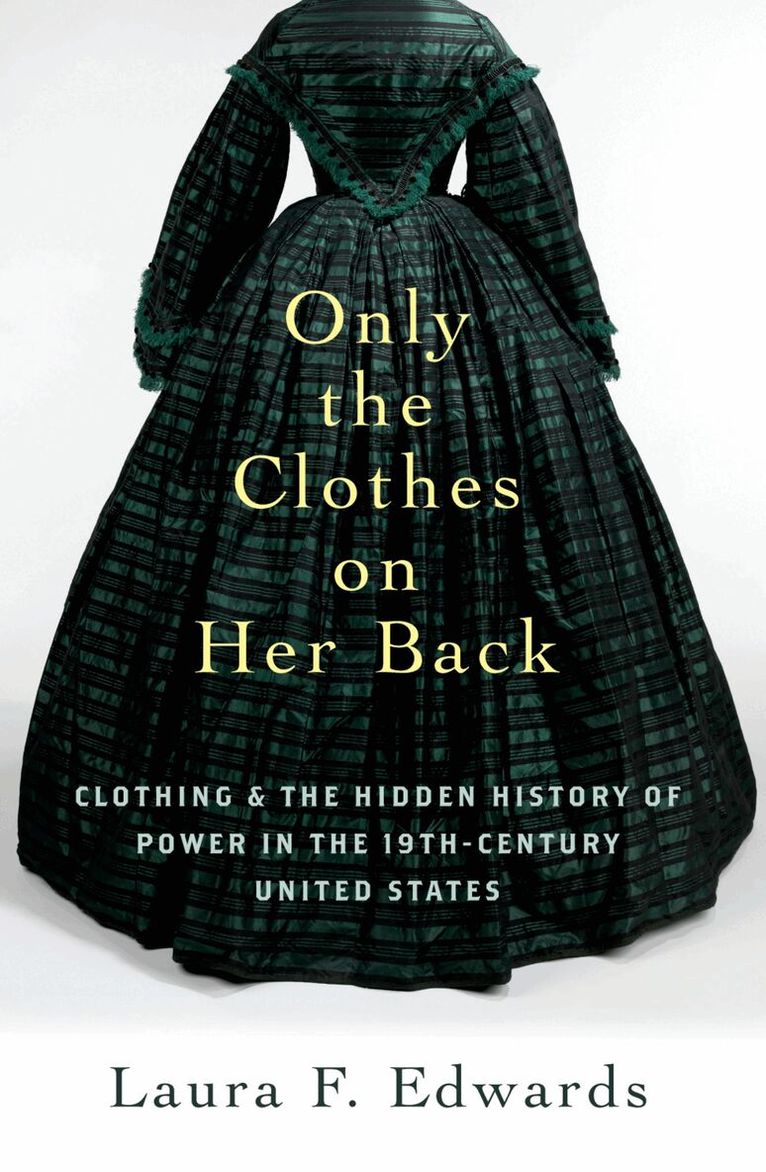
Only the Clothes on Her Back
Clothing and the Hidden History of Power in the Nineteenth-Century United States
Häftad, 2024
290 kr
Lägg i varukorg
An innovative recasting of US legal and economic history through the power of clothing for those who lacked power and status in American society.What can dresses, bedlinens, waistcoats, pantaloons, shoes, and kerchiefs tell us about the legal status of the least powerful members of American …
Calculating Worth
A History of Value in Nineteenth-Century North America
Av Joanna Cohen, Laura F. Edwards
Inbunden, 2027
1020 kr
Kommande
Explores the history of value as a concept, one that we regularly use but tend to take for granted as the monetary expression of market mechanisms. Calculating Worth, a collection of essays edited by historians Joanna Cohen and Laura F. Edwards, reshapes our concept of what “value” meant in the …
Calculating Worth
A History of Value in Nineteenth-Century North America
Av Joanna Cohen, Laura F. Edwards
Häftad, 2027
315 kr
Kommande
Explores the history of value as a concept, one that we regularly use but tend to take for granted as the monetary expression of market mechanisms. Calculating Worth, a collection of essays edited by historians Joanna Cohen and Laura F. Edwards, reshapes our concept of what “value” meant in the …
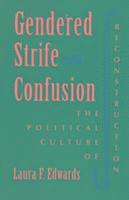
Gendered Strife and Confusion
The Political Culture of Reconstruction
Häftad, 1997
424 kr
Lägg i varukorg
Exploring the gendered dimension of political conflicts, Laura Edwards links transformations in private and public life in the era following the Civil War. Ideas about men's and women's roles within households shaped the ways groups of southerners-elite and poor, whites and blacks, Democrats and …
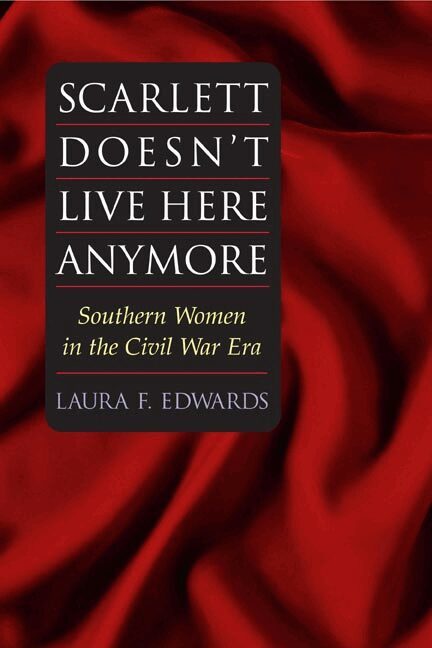
Scarlett Doesn't Live Here Anymore
SOUTHERN WOMEN in the CIVIL WAR ERA
Häftad, 2004
196 kr
Lägg i varukorg
Scarlett Doesn't Live Here Anymore is a dramatic history of the South in the years leading up to and following the Civil War: a history that focuses on the women, black and white, rich and poor, who made up the fabric of southern life before the war and remade themselves and their world after …
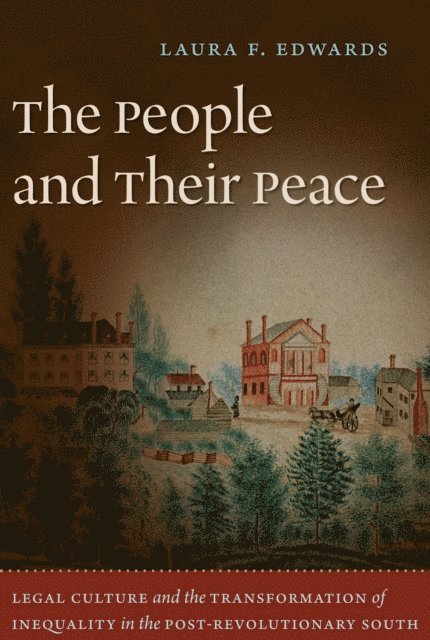
People and Their Peace
Legal Culture and the Transformation of Inequality in the Post-Revolutionary South
Häftad, 2009
486 kr
Lägg i varukorg
This book deals with the changes in the legal logic of slavery, race, and gender. In the half-century following the Revolutionary War, the logic of inequality underwent a profound transformation within the southern legal system. Drawing on extensive archival research in North and South Carolina, …
A Legal History of the Civil War and Reconstruction
A Nation of Rights
Inbunden, 2015
1391 kr
Lägg i varukorg
Although hundreds of thousands of people died fighting in the American Civil War, perhaps the war's biggest casualty was the nation's legal order. A Legal History of the Civil War and Reconstruction explores the implications of this major change by bringing legal history into dialogue with the …
A Legal History of the Civil War and Reconstruction
A Nation of Rights
Häftad, 2015
377 kr
Lägg i varukorg
Although hundreds of thousands of people died fighting in the American Civil War, perhaps the war's biggest casualty was the nation's legal order. A Legal History of the Civil War and Reconstruction explores the implications of this major change by bringing legal history into dialogue with the …
Legal History of the Civil War and Reconstruction
A Nation of Rights
E-bok, 2015
370 kr
Lägg i varukorg
Although hundreds of thousands of people died fighting in the American Civil War, perhaps the war''s biggest casualty was the nation''s legal order. A Legal History of the Civil War and Reconstruction explores the implications of this major change by bringing legal history into dialogue with the …
Legal History of the Civil War and Reconstruction
A Nation of Rights
E-bok, 2015
370 kr
Lägg i varukorg
Although hundreds of thousands of people died fighting in the American Civil War, perhaps the war''s biggest casualty was the nation''s legal order. A Legal History of the Civil War and Reconstruction explores the implications of this major change by bringing legal history into dialogue with the …
People and Their Peace
Legal Culture and the Transformation of Inequality in the Post-Revolutionary South
E-bok, 2014
500 kr
Lägg i varukorg
In the half-century following the Revolutionary War, the logic of inequality underwent a profound transformation within the southern legal system. Drawing on extensive archival research in North and South Carolina, Laura F. Edwards illuminates those changes by revealing the importance of localized …