Laura M. Castelli – författare
Visar alla böcker från författaren Laura M. Castelli. Handla med fri frakt och snabb leverans.
8 produkter
8 produkter
1 372 kr
Skickas
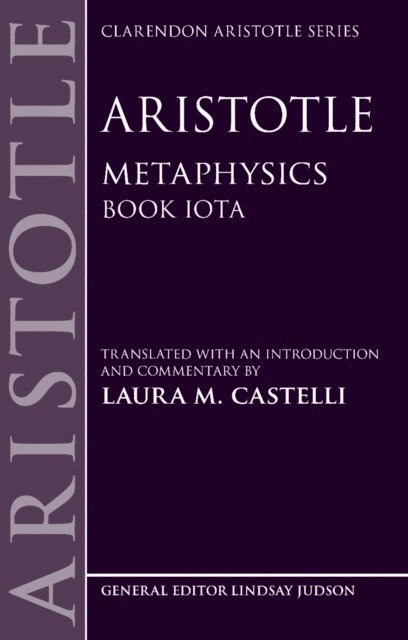
The Clarendon Aristotle Series is designed for both students and professionals. It provides accurate translations of selected Aristotelian texts, accompanied by incisive commentaries that focus on philosophical problems and issues. The volumes in the series have been widely welcomed and favourably reviewed. Important new titles are being added to the series, and a number of well-established volumes are being reissued with revisions and/or supplementary material.Laura M. Castelli presents a new translation and comprehensive commentary of the tenth book (Iota) of Aristotle's Metaphysics, which provides Aristotle's most systematic account of what it is for something to be one, what it is for something to be a unit of measurement, what contraries are, and what the function of contraries is in shaping the structure of reality into genera and species. There are some objective difficulties in making sense of Iota as a part of the Metaphysics and as a piece of Aristotelian philosophy. Castelli's Introduction tackles such general difficulties, while the commentary provides a detailed analysis of the arguments, of the more specific issues and of the philosophical points emerging from Aristotle's text. The English translation, based on Ross' critical edition, is meant as a tool for readers with or without knowledge of ancient Greek.
522 kr
Skickas inom 7-10 vardagar
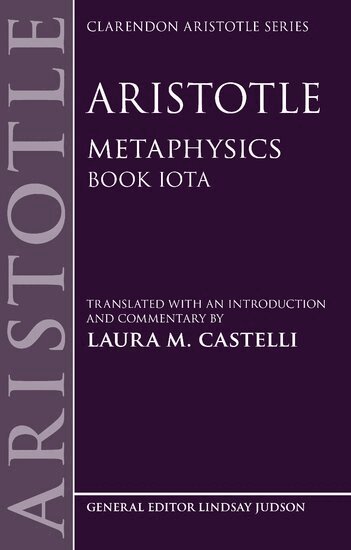
The Clarendon Aristotle Series is designed for both students and professionals. It provides accurate translations of selected Aristotelian texts, accompanied by incisive commentaries that focus on philosophical problems and issues. The volumes in the series have been widely welcomed and favourably reviewed. Important new titles are being added to the series, and a number of well-established volumes are being reissued with revisions and/or supplementary material.Laura M. Castelli presents a new translation and comprehensive commentary of the tenth book (Iota) of Aristotle's Metaphysics, which provides Aristotle's most systematic account of what it is for something to be one, what it is for something to be a unit of measurement, what contraries are, and what the function of contraries is in shaping the structure of reality into genera and species. There are some objective difficulties in making sense of Iota as a part of the Metaphysics and as a piece of Aristotelian philosophy. Castelli's Introduction tackles such general difficulties, while the commentary provides a detailed analysis of the arguments, of the more specific issues and of the philosophical points emerging from Aristotle's text. The English translation, based on Ross' critical edition, is meant as a tool for readers with or without knowledge of ancient Greek.
546 kr
Kommande
This volume collects ten revised and translated essays by Bruno Centrone, one of Italy's leading scholars of ancient philosophy. Together they trace a rich and coherent intellectual narrative from Plato's metaphysics, ethics, and psychology to their reinterpretation to later Pythagoreanizing writings. Centrone's studies combine meticulous philological accuracy with philosophical depth, shedding new light on Plato's conception of truth, being, virtue, and the soul, as well as on the complex processes through which later thinkers reshaped Platonic doctrines. A particular strength of the book lies in its treatment of post-Hellenistic pseudo-Pythagorean texts, for which Centrone's work remains foundational. By collecting and making these landmark studies available in English, this volume provides an essential resource for scholars, graduate students, and libraries, and a crucial bridge between Italian and anglophone traditions of scholarship on ancient philosophy.
1 477 kr
Kommande
This volume collects ten revised and translated essays by Bruno Centrone, one of Italy's leading scholars of ancient philosophy. Together they trace a rich and coherent intellectual narrative from Plato's metaphysics, ethics, and psychology to their reinterpretation to later Pythagoreanizing writings. Centrone's studies combine meticulous philological accuracy with philosophical depth, shedding new light on Plato's conception of truth, being, virtue, and the soul, as well as on the complex processes through which later thinkers reshaped Platonic doctrines. A particular strength of the book lies in its treatment of post-Hellenistic pseudo-Pythagorean texts, for which Centrone's work remains foundational. By collecting and making these landmark studies available in English, this volume provides an essential resource for scholars, graduate students, and libraries, and a crucial bridge between Italian and anglophone traditions of scholarship on ancient philosophy.
1 492 kr
Skickas inom 10-15 vardagar
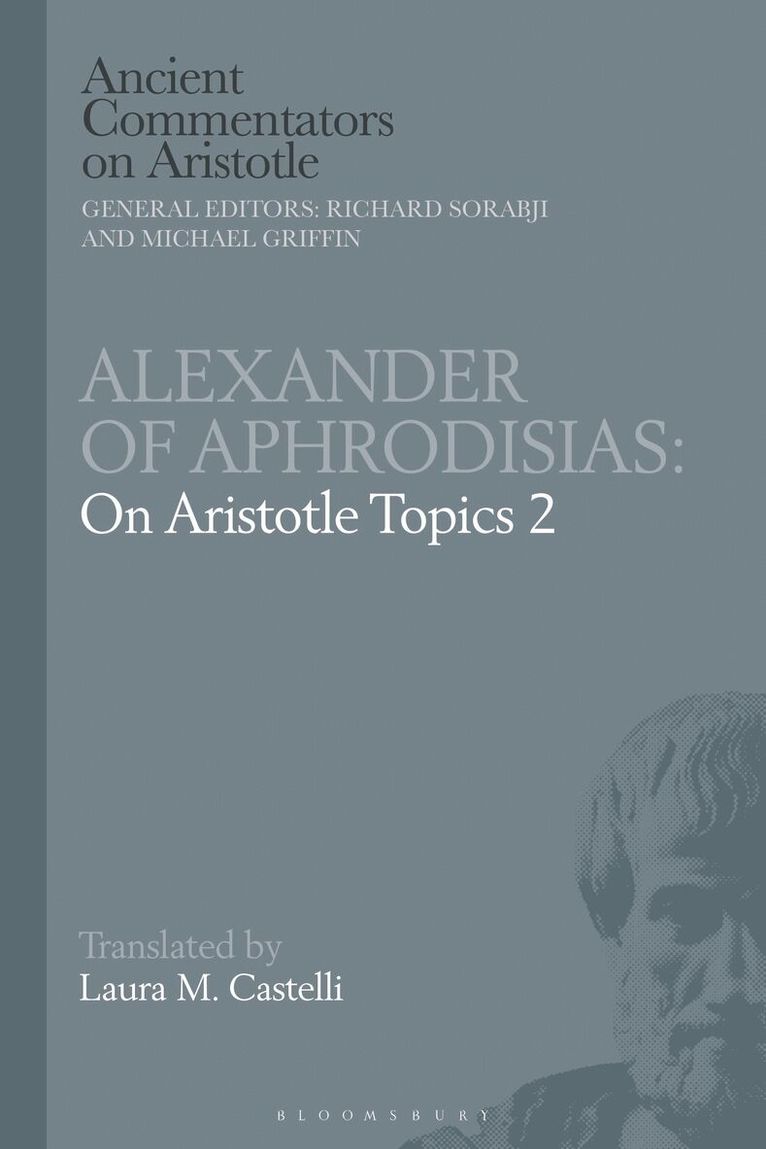
Aristotle’s Topics is a handbook for dialectic, which can be understood as a philosophical debate between a questioner and a respondent. In book 2, Aristotle mainly develops strategies for making deductions about ‘accidents’, which are properties that might or might not belong to a subject (for instance, Socrates has five fingers, but might have had six), and about properties that simply belong to a subject without further specification.In the present commentary, here translated into English for the first time, Alexander develops a careful study of Aristotle’s text. He preserves objections and replies from other philosophers whose work is now lost, such as the Stoics. He also offers an invaluable picture of the tradition of Aristotelian logic down to his time, including innovative attempts to unify Aristotle’s guidance for dialectic with his general theory of deductive argument (the syllogism), found in the Analytics.The work will be of interest not only for its perspective on ancient logic, rhetoric, and debate, but also for its continuing influence on argument in the Middle Ages and later.
439 kr
Skickas inom 10-15 vardagar
Aristotle’s Topics is a handbook for dialectic, which can be understood as a philosophical debate between a questioner and a respondent. In book 2, Aristotle mainly develops strategies for making deductions about ‘accidents’, which are properties that might or might not belong to a subject (for instance, Socrates has five fingers, but might have had six), and about properties that simply belong to a subject without further specification.In the present commentary, here translated into English for the first time, Alexander develops a careful study of Aristotle’s text. He preserves objections and replies from other philosophers whose work is now lost, such as the Stoics. He also offers an invaluable picture of the tradition of Aristotelian logic down to his time, including innovative attempts to unify Aristotle’s guidance for dialectic with his general theory of deductive argument (the syllogism), found in the Analytics.The work will be of interest not only for its perspective on ancient logic, rhetoric, and debate, but also for its continuing influence on argument in the Middle Ages and later.
1 289 kr
Skickas inom 10-15 vardagar
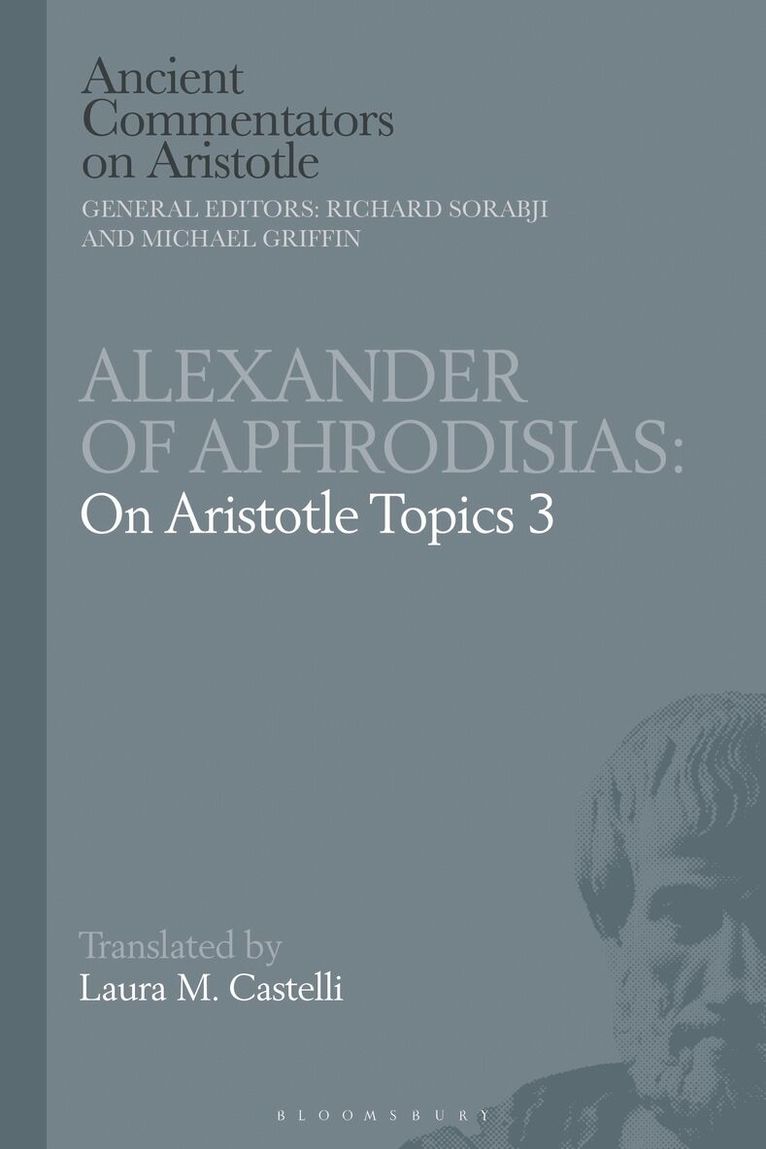
Aristotle's Topics is a handbook for dialectic, i.e. the exercise for philosophical debates between a questioner and a respondent. Alexander takes the Topics as a sort of handbook teaching how to defend and how attack any philosophical claim against philosophical adversaries. In book 3, Aristotle develops strategies for arguing about comparative claims, in which properties are said to belong to subjects to a greater, lesser, or equal degree. Aristotle illustrates the different argumentative patterns that can be used to establish or refute a comparative claim through one single example: whether something is more or less or equally to be chosen or to be avoided than something else. In his commentary on Topics 3, here translated for the first time into English, Alexander of Aphrodisias spells out Aristotle’s text by referring to issues and examples from debates with other philosophical school (especially: the Stoics) of his time. The commentary provides new evidence for Alexander’s views on the logic of comparison and is a relatively neglected source for Peripatetic ethics in late antiquity. This volume will be valuable reading for students of Aristotle and of the developments of Peripatetic logic and ethics in late antiquity.
412 kr
Skickas inom 10-15 vardagar
Aristotle's Topics is a handbook for dialectic, i.e. the exercise for philosophical debates between a questioner and a respondent. Alexander takes the Topics as a sort of handbook teaching how to defend and how attack any philosophical claim against philosophical adversaries. In book 3, Aristotle develops strategies for arguing about comparative claims, in which properties are said to belong to subjects to a greater, lesser, or equal degree. Aristotle illustrates the different argumentative patterns that can be used to establish or refute a comparative claim through one single example: whether something is more or less or equally to be chosen or to be avoided than something else. In his commentary on Topics 3, here translated for the first time into English, Alexander of Aphrodisias spells out Aristotle’s text by referring to issues and examples from debates with other philosophical school (especially: the Stoics) of his time. The commentary provides new evidence for Alexander’s views on the logic of comparison and is a relatively neglected source for Peripatetic ethics in late antiquity. This volume will be valuable reading for students of Aristotle and of the developments of Peripatetic logic and ethics in late antiquity.