Laura Quintana - Böcker
Visar alla böcker från författaren Laura Quintana. Handla med fri frakt och snabb leverans.
3 produkter
3 produkter
1 476 kr
Skickas inom 10-15 vardagar
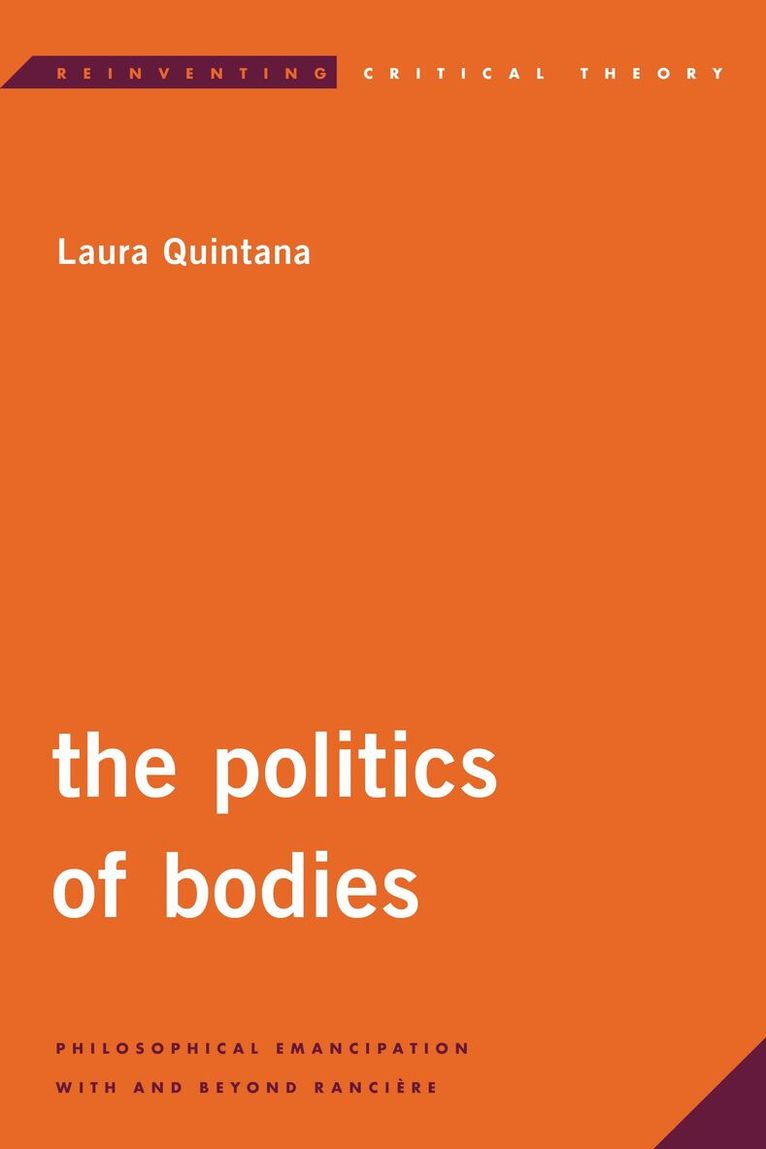
Is it due to lack of critical agency that precarious persons opt, time and again, for political views that contribute to their marginalization? How should we understand that alleged loss of critical agency and how could it be countered? Influential perspectives in critical theory have answered these questions by highlighting how certain ideological mechanisms, incorporated thoughtlessly by the most vulnerable bodies, function to obscure their interests and the causes of the condition they find themselves in. Through an original interpretation of Jacques Rancière’s thought, but also going beyond it, The Politics of Bodies establishes a different horizon of reflection. Laura Quintana’s main hypothesis is that the lack of critical agency today has more to do with a loss of the desire for transformation, fostered by neoliberal consensual dynamics, than with techniques of deceit and manipulation. In developing her interpretation of Rancière’s thought, Quintana provides an analysis of certain aesthetic-political and socioeconomic conditions of the historical present, anchored mainly in Latin America. Thus, she addresses the corporeal transformations produced by emancipatory practices, the ways in which they affect configurations of power, and the manner in which they can be disseminated in and, in turn, alter the political landscape.
515 kr
Skickas inom 10-15 vardagar
Is it due to lack of critical agency that precarious persons opt, time and again, for political views that contribute to their marginalization? How should we understand that alleged loss of critical agency and how could it be countered? Influential perspectives in critical theory have answered these questions by highlighting how certain ideological mechanisms, incorporated thoughtlessly by the most vulnerable bodies, function to obscure their interests and the causes of the condition they find themselves in. Through an original interpretation of Jacques Rancière’s thought, but also going beyond it, The Politics of Bodies establishes a different horizon of reflection. Laura Quintana’s main hypothesis is that the lack of critical agency today has more to do with a loss of the desire for transformation, fostered by neoliberal consensual dynamics, than with techniques of deceit and manipulation. In developing her interpretation of Rancière’s thought, Quintana provides an analysis of certain aesthetic-political and socioeconomic conditions of the historical present, anchored mainly in Latin America. Thus, she addresses the corporeal transformations produced by emancipatory practices, the ways in which they affect configurations of power, and the manner in which they can be disseminated in and, in turn, alter the political landscape.
Neoliberal Techniques of Social Suffering
Political Resistance and Critical Theory from Latin America and Spain
Inbunden, Engelska, 2023
1 009 kr
Skickas inom 10-15 vardagar
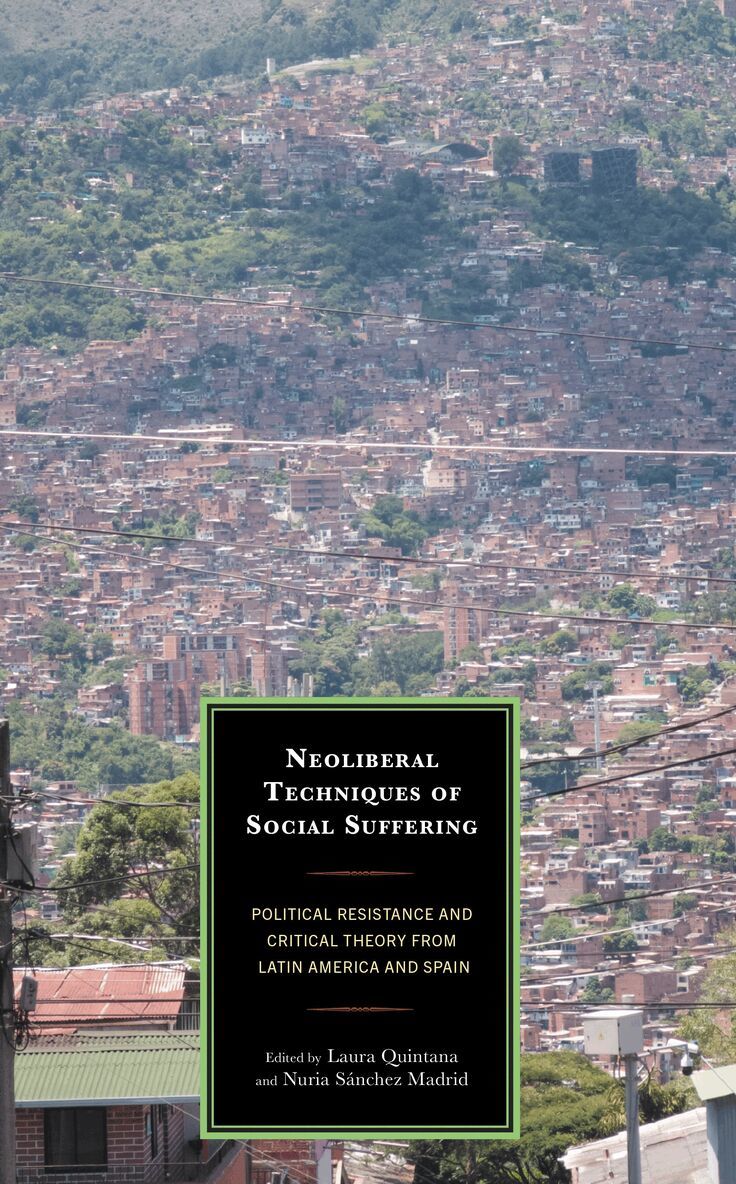
Neoliberal Techniques of Social Suffering: Political Resistance and Critical Theory from Latin America and Spain is the result of the critical and political commitment of various Latin American and Spanish philosophers who share a critical approach to the global “stealth revolution” in recent decades, where neoliberalism has forced the well-being and reproduction of life to adapt to a system devastating for both humans and non-humans. The authors voice the shared concern of contemporary Spanish and Latin American societies to build new conceptions of the public and the common through mobilizing affects usually disavowed in political theory. If, in Ancient Greece, the idea of strengthening the most vulnerable and weakest was deplored as the art of sophists, this collection edited by Laura Quintana and Nuria Sánchez Madrid explores the other side of our social world to revive grassroots strategies of resistance and emancipation, which are able to bring about new distributions of power, welfare, and discursive legitimation and to extend our goal of creating a radically democratic world.