Lauren B. Resnick – författare
465 kr
Skickas inom 7-10 vardagar
865 kr
Skickas inom 7-10 vardagar
728 kr
Skickas inom 5-8 vardagar
2 077 kr
Skickas inom 10-15 vardagar
509 kr
Läs direkt efter köp
In the 1960s and early 1970s, converging scientific and social movements had generated increasing concern over the meaning of the term intelligence. Traditional definitions, rooted in the history of intelligence testing and school selection practices, had come under challenge as experimental psychology turned increasingly to the study of human cognitive processes and as understanding of the influence of culture on patterns of thinking grew.
Originally published in 1976, the theme of the book is an examination of cognitive and adaptive processes involved in intelligent behavior and a look at how these processes might be related to tested intelligence. The book contains sections on intelligence from the psychometric viewpoint, computer simulations of intelligent behavior, studies of intelligence as social and biological adaptation, and intelligence analyzed in terms of basic cognitive processes. In a number of the chapters the constructs and methods of modern information-processing psychology are used in their analyses of intelligence. As the reader will discover, the divisions of the book do not necessarily represent competing viewpoints, but rather multiple windows on the phenomenon of human intelligence. Today it can be read and enjoyed in its historical context.
505 kr
Läs direkt efter köp
In the 1960s and early 1970s, converging scientific and social movements had generated increasing concern over the meaning of the term intelligence. Traditional definitions, rooted in the history of intelligence testing and school selection practices, had come under challenge as experimental psychology turned increasingly to the study of human cognitive processes and as understanding of the influence of culture on patterns of thinking grew.
Originally published in 1976, the theme of the book is an examination of cognitive and adaptive processes involved in intelligent behavior and a look at how these processes might be related to tested intelligence. The book contains sections on intelligence from the psychometric viewpoint, computer simulations of intelligent behavior, studies of intelligence as social and biological adaptation, and intelligence analyzed in terms of basic cognitive processes. In a number of the chapters the constructs and methods of modern information-processing psychology are used in their analyses of intelligence. As the reader will discover, the divisions of the book do not necessarily represent competing viewpoints, but rather multiple windows on the phenomenon of human intelligence. Today it can be read and enjoyed in its historical context.
1 620 kr
Skickas inom 10-15 vardagar
437 kr
Skickas inom 10-15 vardagar
836 kr
Läs direkt efter köp
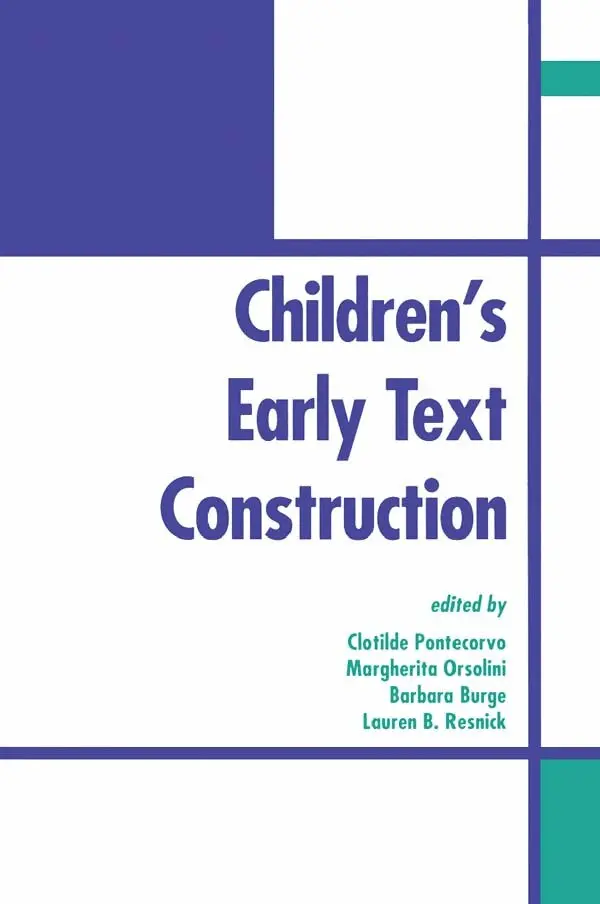
For decades, research on children''s literacy has been dominated by questions of how children learn to read. Especially among Anglophone scholars, cognitive and psycholinguistic research on reading has been the only approach to studying written language education. Echoing this, debates on methods of teaching children to read have long dominated the educational scene. This book presents an alternative view. In recent years, writing has emerged as a central aspect of becoming literate. Research in cognitive psychology has shown that writing is a highly complex activity involving a degree of planning unknown in everyday conversational uses of language. At the same time, developmental studies have revealed that when young children are asked to "write," they show a surprisingly sophisticated understanding of the representational constraints of alphabetic writing systems. They show this understanding long before they can read conventional writing on their own. The rich structure of meanings involved in the word text provided the glue that brought together a group of scholars from several disciplines in an international workshop held in Rome. Reflecting the state of the field at the time, the majority of the workshop participants were scholars working in languages other than English, especially the romance languages. Their work mirrors a linguistic and psychological research tradition that Anglophone scholars knew little of until recently. This volume provides English-language readers with updated versions of the papers presented at the meeting. The topics discussed at the workshop are represented in the chapters as follows: * the relationship between acquisition of language and familiarity with written texts; * the reciprocal "permeability" between spoken and written language; * the initial phases of text construction by children; and * the educational conditions that facilitate written language acquisition and writing practice.
836 kr
Läs direkt efter köp
For decades, research on children''s literacy has been dominated by questions of how children learn to read. Especially among Anglophone scholars, cognitive and psycholinguistic research on reading has been the only approach to studying written language education. Echoing this, debates on methods of teaching children to read have long dominated the educational scene. This book presents an alternative view. In recent years, writing has emerged as a central aspect of becoming literate. Research in cognitive psychology has shown that writing is a highly complex activity involving a degree of planning unknown in everyday conversational uses of language. At the same time, developmental studies have revealed that when young children are asked to "write," they show a surprisingly sophisticated understanding of the representational constraints of alphabetic writing systems. They show this understanding long before they can read conventional writing on their own. The rich structure of meanings involved in the word text provided the glue that brought together a group of scholars from several disciplines in an international workshop held in Rome. Reflecting the state of the field at the time, the majority of the workshop participants were scholars working in languages other than English, especially the romance languages. Their work mirrors a linguistic and psychological research tradition that Anglophone scholars knew little of until recently. This volume provides English-language readers with updated versions of the papers presented at the meeting. The topics discussed at the workshop are represented in the chapters as follows: * the relationship between acquisition of language and familiarity with written texts; * the reciprocal "permeability" between spoken and written language; * the initial phases of text construction by children; and * the educational conditions that facilitate written language acquisition and writing practice.
2 096 kr
Skickas inom 10-15 vardagar
2 096 kr
Skickas inom 10-15 vardagar
2 663 kr
Läs direkt efter köp