Laurence M. Geary – författare
Visar alla böcker från författaren Laurence M. Geary. Handla med fri frakt och snabb leverans.
3 produkter
3 produkter
Inbunden, Engelska, 2004
597 kr
Tillfälligt slut
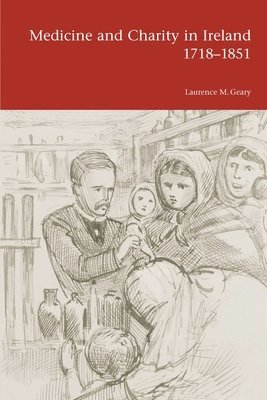
In this illuminating social history of medicine and charity in Ireland over almost 150 years from 1718 until just after the Great Famine, Laurence M. Geary shows how illness and poverty reacted upon each other. The poverty resulting from great population growth that continued until the arrival of potato blight in 1845 had a severe effect on the health of the country's population, and the Famine itself caused around one million deaths from starvation and disease. This was a period of great change in medical and charitable services. In the eighteenth century the sick had come to be regarded as the deserving poor, therefore having a better claim to public assistance than those whose poverty was the result of their own dissipation, idleness or vice. A network of charities evolved in Ireland to provide free medical aid to the sick poor. The first voluntary hospital in Dublin opened in 1718 and Geary traces the establishment and development of voluntary hospitals and county infirmaries throughout the country.These had a strong Anglican ethos and bias, but after Catholic emancipation in 1829 the nepotism, sectarianism and divisive politics that were rife in these organisations came under increasing scrutiny. Medical practitioners saw considerable progress in the development of a regulated profession. Geary describes developments in policy making and legislation, culminating in the 1851 Medical Charities Act, which he describes as part of a process that characterised the century and more under review in this book: the unrelenting pressure on philanthropy and private medical charity and the inexorable shift from voluntarism to an embryonic system of state medicine.
Häftad, Engelska, 2004
338 kr
Tillfälligt slut
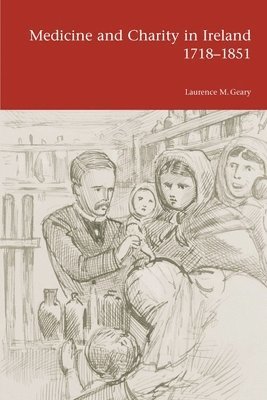
In this illuminating social history of medicine and charity in Ireland over almost 150 years from 1718 until just after the Great Famine, Laurence M. Geary shows how illness and poverty reacted upon each other. The poverty resulting from great population growth that continued until the arrival of potato blight in 1845 had a severe effect on the health of the country's population, and the Famine itself caused around one million deaths from starvation and disease. This was a period of great change in medical and charitable services. In the eighteenth century the sick had come to be regarded as the deserving poor, therefore having a better claim to public assistance than those whose poverty was the result of their own dissipation, idleness or vice. A network of charities evolved in Ireland to provide free medical aid to the sick poor. The first voluntary hospital in Dublin opened in 1718 and Geary traces the establishment and development of voluntary hospitals and county infirmaries throughout the country.These had a strong Anglican ethos and bias, but after Catholic emancipation in 1829 the nepotism, sectarianism and divisive politics that were rife in these organisations came under increasing scrutiny. Medical practitioners saw considerable progress in the development of a regulated profession. Geary describes developments in policy making and legislation, culminating in the 1851 Medical Charities Act, which he describes as part of a process that characterised the century and more under review in this book: the unrelenting pressure on philanthropy and private medical charity and the inexorable shift from voluntarism to an embryonic system of state medicine.
Häftad, Engelska, 2005
338 kr
Tillfälligt slut
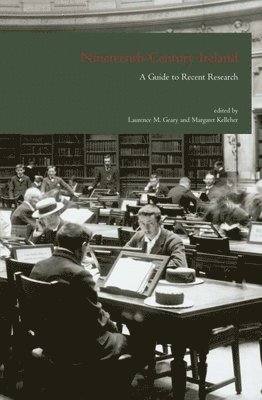
Interest in nineteenth-century studies has never been greater, and contrasts sharply with previous neglect of many aspects of that century's history and culture. These essays by leading scholars assess and interpret developments from 1990 onwards in the field of nineteenth-century Irish studies, and from a wide range of disciplinary perspectives. The book covers political, social, religious and women's history and historical geography as well as anthropological and sociological studies of nineteenth-century Ireland. Further chapters cover nineteenth-century music, art history, literature in English, Gaelic culture and language and the Irish diaspora. This will be an invaluable research tool and reference book for many years to come.