Laurence R. Harris – författare
Visar alla böcker från författaren Laurence R. Harris. Handla med fri frakt och snabb leverans.
8 produkter
8 produkter
1 353 kr
Tillfälligt slut
The world is divided into objects: things that are distinct from their backgrounds and that can move or be moved. Objects are food and prey and threats, as well as neutral items, and it is critical to be able to see them. How the form of an object is distinguished is one of the most basic, yet least understood, topics of research in vision perception. The object-defining system needs to operate in the real world, where objects and viewers move, and where the sceneis cluttered, rarely offering a clear, unobscured view of any object. How are we able to see and define objects using the complex pattern of light falling on the retina? An object becomes visible if it differs sufficiently from its surroundings in its luminance, color, texture, motion, or depth.Although the processes that use these different cues are quite distinct, research has shown that they share some organizational principles. Seeing Spatial Form, is dedicated to David Martin Regan who has made so many contributions to our understanding of how we see objects. Its chapters bring together ideas from some of the world's leading researchers in form vision to explain what we know about distinguishing form. The book includes a CD-ROM, which contains additional demonstrationsand color images that considerably enhance the chapter contents. Seeing Spatial Form will be an invaluable resource for student and professional researchers in vision science, cognitive psychology, and neuroscience.
1 636 kr
Skickas inom 10-15 vardagar
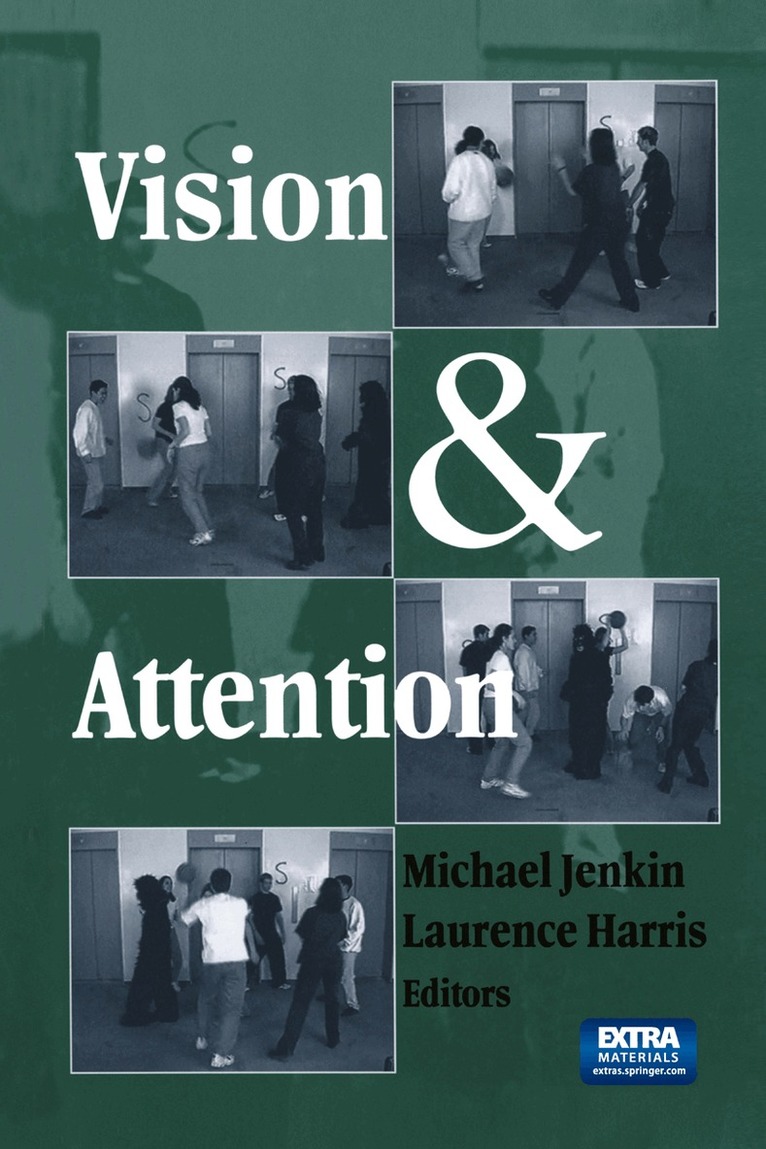
It has become apparent that vision is not a passive process working on the retinal image like a film to record a perfect copy as the perception. Instead, higher-level cognitive processes such as expectancies, memories and experience play a critical, almost overriding role. This book is a review and summary of the tremendous advances that have been made in recent years on the effect of attention on visual perception. The book will appeal to vision scientists as well as to people involved in using visual processes in computer animations, display design or the sensory systems of machines. Physiologists and neuroscientists interested in any aspect of sensory or motor processes will also find this a very useful and broad-ranging volume.
601 kr
Skickas inom 7-10 vardagar
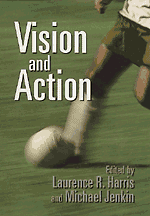
The visual processes involved in moving, reaching, grasping, and playing sports are complex interactions. For example, the action of moving the head provides useful cues to help interpret the visual information. Simultaneously, vision can provide important information about the actions and their control. This becomes a reiterative process. This process, and the interactions between vision and action, are the foci of this volume. This book contains contributions from scientists who are leaders in each of the several facets of the subject. Examples of the types of action considered vary from moving the eyes and head and body, as in looking around or walking, to complex actions such as driving a car, catching a ball, or playing table tennis. Graduate students and researchers in vision science, as well as physiologists and neuroscientists interested in any aspect of sensory or motor processes, will find this a useful and broad-ranging book.
1 625 kr
Skickas inom 7-10 vardagar
The visual processes involved in moving, reaching, grasping, and playing sports are complex interactions. For example, the action of moving the head provides useful cues to help interpret the visual information. Simultaneously, vision can provide important information about the actions and their control. This becomes a reiterative process. This process, and the interactions between vision and action, are the foci of this volume. This book contains contributions from scientists who are leaders in each of the several facets of the subject. Examples of the types of action considered vary from moving the eyes and head and body, as in looking around or walking, to complex actions such as driving a car, catching a ball, or playing table tennis. Graduate students and researchers in vision science, as well as physiologists and neuroscientists interested in any aspect of sensory or motor processes, will find this a useful and broad-ranging book.
1 571 kr
Tillfälligt slut
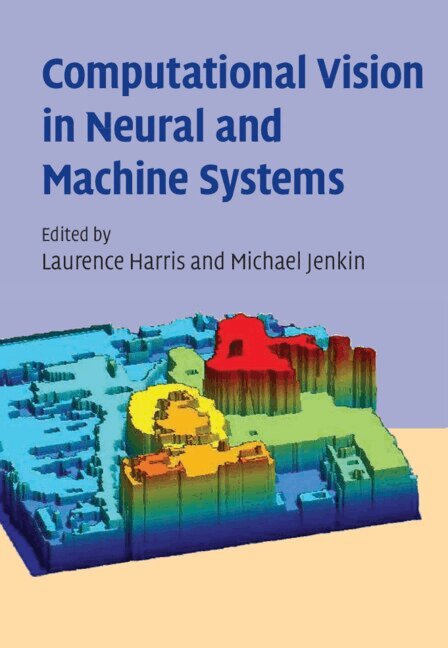
Computational vision deals with the underlying mathematical and computational models for how visual information is processed. Whether the processing is biological or machine, there are fundamental questions related to how the information is processed. How should information be represented? How should information be transduced in order to highlight features of interest while suppressing noise and other artefacts of the image capture process? Computational Vision in Neural and Machine Systems address these and other questions in 13 chapters, divided into three sections, which overlap between biological and computational systems: dynamical systems; attention, motion, and eye-movements; and stereovision. The editors have brought together the best and brightest minds in the field of computational vision, combining research from both biology and computing and enhancing the developing synergy between computational and biological visual modelling communities. Aimed at researchers and graduate students in computational or biological vision, neuroscience, and psychology.
232 kr
Skickas inom 7-10 vardagar
This Element reviews the current state of what is known about the visual and vestibular contributions to our perception of self-motion and orientation with an emphasis on the central role that gravity plays in these perceptions. The Element then reviews the effects of impoverished challenging environments that do not provide full information that would normally contribute to these perceptions (such as driving a car or piloting an aircraft) and inconsistent challenging environments where expected information is absent, such as the microgravity experienced on the International Space Station.
748 kr
Skickas inom 7-10 vardagar
This Element reviews the current state of what is known about the visual and vestibular contributions to our perception of self-motion and orientation with an emphasis on the central role that gravity plays in these perceptions. The Element then reviews the effects of impoverished challenging environments that do not provide full information that would normally contribute to these perceptions (such as driving a car or piloting an aircraft) and inconsistent challenging environments where expected information is absent, such as the microgravity experienced on the International Space Station.
1 811 kr
Skickas inom 7-10 vardagar
Biological and machine systems exist within a complex and changing three-dimensional world. We appear to have no difficulty understanding this world, but how do we go about forming a perceptual model of it? Centred around three key themes: depth processing and stereopsis; motion and navigation in 3D; and natural scene perception, this volume explores the latest cutting-edge research into the perception of three dimension environments. It features contributions from top researchers in the field, presenting both biological and computational perspectives. Topics covered include binocular perception; blur and perceived depth; stereoscopic motion in depth; and perceiving and remembering the shape of visual space. This unique book will provide students and researchers with an overview of ongoing research as well as perspectives on future developments in the field. Colour versions of a selection of the figures are available at www.cambridge.org/9781107001756.