Laurent de Sutter – författare
Visar alla böcker från författaren Laurent de Sutter. Handla med fri frakt och snabb leverans.
26 produkter
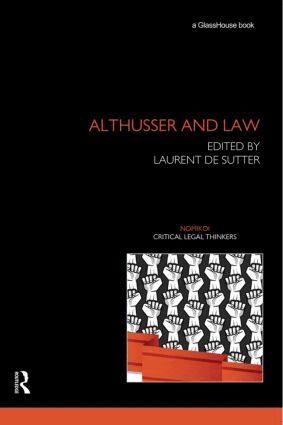
Althusser and Law
Inbunden, 2013
2311 kr
Lägg i varukorg
Althusser and Law is the first book specifically dedicated to the place of law in Louis Althusser’s philosophy. The growing importance of Althusser’s philosophy in contemporary debates on the left has - for practical and political, as well theoretical reasons - made a sustained consideration of his …
Althusser and Law
Häftad, 2014
907 kr
Lägg i varukorg
Althusser and Law is the first book specifically dedicated to the place of law in Louis Althusser’s philosophy. The growing importance of Althusser’s philosophy in contemporary debates on the left has - for practical and political, as well theoretical reasons - made a sustained consideration of his …
Althusser and Law
E-bok, 2013
1051 kr
Lägg i varukorg
Althusser and Law is the first book specifically dedicated to the place of law in Louis Althusser’s philosophy. The growing importance of Althusser’s philosophy in contemporary debates on the left has - for practical and political, as well theoretical reasons - made a sustained consideration of …
Althusser and Law
E-bok, 2013
1074 kr
Lägg i varukorg
Althusser and Law is the first book specifically dedicated to the place of law in Louis Althusser’s philosophy. The growing importance of Althusser’s philosophy in contemporary debates on the left has - for practical and political, as well theoretical reasons - made a sustained consideration of …
Zizek and Law
Häftad, 2016
912 kr
Lägg i varukorg
The very first book dedicated to Slavoj Zizek’s theoretical treatment of law, this book gathers widely recognized Zizek scholars as well as legal theorists to offer a sustained analysis of the place of law in Zizek’s work. Whether it is with reference to symbolic law, psychoanalytical law, …
Zizek and Law
Inbunden, 2015
2519 kr
Lägg i varukorg
The very first book dedicated to Slavoj Zizek’s theoretical treatment of law, this book gathers widely recognized Zizek scholars as well as legal theorists to offer a sustained analysis of the place of law in Zizek’s work. Whether it is with reference to symbolic law, psychoanalytical law, …
Zizek and Law
E-bok, 2015
988 kr
Lägg i varukorg
The very first book dedicated to Slavoj Zizek’s theoretical treatment of law, this book gathers widely recognized Zizek scholars as well as legal theorists to offer a sustained analysis of the place of law in Zizek’s work. Whether it is with reference to symbolic law, psychoanalytical law, …
Zizek and Law
E-bok, 2015
988 kr
Lägg i varukorg
The very first book dedicated to Slavoj Zizek’s theoretical treatment of law, this book gathers widely recognized Zizek scholars as well as legal theorists to offer a sustained analysis of the place of law in Zizek’s work. Whether it is with reference to symbolic law, psychoanalytical law, …
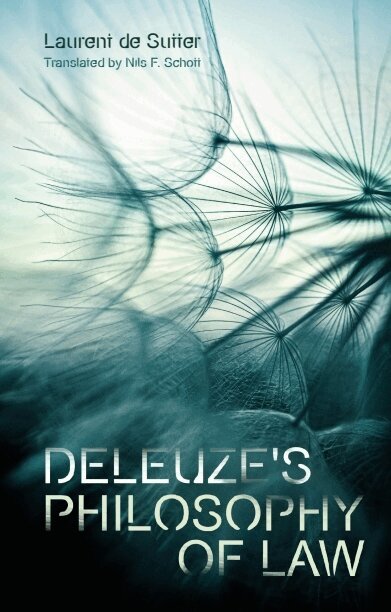
Deleuze's Philosophy of Law
Häftad, 2023
264 kr
Kommande
Aggregates and assesses Deleuze's claims about law, decision, judgement and related themes for the first timeDevelops a complete and self-sustaining Deleuzian philosophy of law where others have found only fragmentationExamines and uses various interdisciplinary connections, including law and …
Deleuze's Philosophy of Law
Inbunden, 2021
1682 kr
Lägg i varukorg
The most radical philosophy of law of our time. Gilles Deleuze has provided the most fascinating account of law of the twentieth century. Yet it is hidden in a just a few clues dispersed throughout his work and no complete reconstruction of it has ever been produced. Laurent de Sutter gathers all …
Deleuze's Philosophy of Law
E-bok, 2021
315 kr
Lägg i varukorg
Gilles Deleuze has provided the most fascinating account of law of the 20th century. Yet it is hidden in a just a few clues dispersed throughout his work and no complete reconstruction of it has ever been produced before. Laurent de Sutter gathers all the elements that compose Deleuze’s philosophy …
Deleuze's Philosophy of Law
E-bok, 2021
315 kr
Lägg i varukorg
Gilles Deleuze has provided the most fascinating account of law of the 20th century. Yet it is hidden in a just a few clues dispersed throughout his work and no complete reconstruction of it has ever been produced before. Laurent de Sutter gathers all the elements that compose Deleuze’s philosophy …
Narcocapitalism
Life in the Age of Anaesthesia
Inbunden, 2017
538 kr
Lägg i varukorg
What do the invention of anaesthetics in the middle of the nineteenth century, the Nazis' use of cocaine, and the development of Prozac have in common? The answer is that they're all products of the same logic that defines our contemporary era: 'the age of anaesthesia'. Laurent de Sutter shows how …
Narcocapitalism
Life in the Age of Anaesthesia
Häftad, 2017
217 kr
Lägg i varukorg
What do the invention of anaesthetics in the middle of the nineteenth century, the Nazis' use of cocaine, and the development of Prozac have in common? The answer is that they're all products of the same logic that defines our contemporary era: 'the age of anaesthesia'. Laurent de Sutter shows how …
Narcocapitalism
Life in the Age of Anaesthesia
E-bok, 2017
245 kr
Lägg i varukorg
What do the invention of anaesthetics in the middle of the nineteenth century, the Nazis'' use of cocaine, and the development of Prozac have in common? The answer is that they''re all products of the same logic that defines our contemporary era: ''the age of anaesthesia''. Laurent de Sutter shows …
After Law
Inbunden, 2020
698 kr
Lägg i varukorg
Law is the most sacred fetish of our time. From radicals to conservatives, there is no militant, activist or thinker who would consider doing without it. But the history of our fascination with law is long and complex, and reaches deeper into our culture than we might think.In After Law, Laurent de …
After Law
Häftad, 2020
231 kr
Lägg i varukorg
Law is the most sacred fetish of our time. From radicals to conservatives, there is no militant, activist or thinker who would consider doing without it. But the history of our fascination with law is long and complex, and reaches deeper into our culture than we might think.In After Law, Laurent de …
After Law
E-bok, 2020
261 kr
Lägg i varukorg
Law is the most sacred fetish of our time. From radicals to conservatives, there is no militant, activist or thinker who would consider doing without it. But the history of our fascination with law is long and complex, and reaches deeper into our culture than we might think. In After Law , Laurent …
Superweak
Thinking in the 21st Century
Inbunden, 2025
751 kr
Lägg i varukorg
We have become superheroes. Nothing can resist us anymore: not persons, ideas, facts, realities, or beings. We owe our superhuman strength to a tool we have taken up that submits everything to the scrutiny of our judgment: critique. After its first formulation at the end of the sixteenth century, …
Superweak
Thinking in the 21st Century
Häftad, 2025
260 kr
Lägg i varukorg
We have become superheroes. Nothing can resist us anymore: not persons, ideas, facts, realities, or beings. We owe our superhuman strength to a tool we have taken up that submits everything to the scrutiny of our judgment: critique. After its first formulation at the end of the sixteenth century, …
Superweak
Thinking in the 21st Century
E-bok, 2025
284 kr
Lägg i varukorg
We have become superheroes. Nothing can resist us anymore: not persons, ideas, facts, realities, or beings. We owe our superhuman strength to a tool we have taken up that submits everything to the scrutiny of our judgment: critique. After its first formulation at the end of the sixteenth century, …
Magia
Una metafísica del vínculo social
E-bok, 2023
102 kr
Lägg i varukorg
¿Qué pasaría si el derecho fuera la última manifestación de la magia en un mundo que creía poder prescindir de ella? Este es el curioso interrogante que da pie a este este breve aunque intenso ensayo. Laurent de Sutter se propone indagar, a partir de la aparición del concepto de «vínculo social» en …
Elogio del peligro
E-bok, 2024
121 kr
Lägg i varukorg
No hay nada que temer porque todo es peligroso. Solo este aprendizaje podrá quizás reconciliarnos con la prodigiosa amplitud del acto de pensamiento.El peligro nos rodea, habita en nuestro quehacer cotidiano y nos angustia cuando se nos escapa. Ante esto solo buscamos una cosa: seguridad. Pero este …
Decepcionar es un placer
E-bok, 2026
128 kr
Lägg i varukorg
¡Me decepcionaste! ¿Quién podría recuperarse de semejante acusación? ¿Y quién, además, no ha recurrido a ella alguna vez? Somos seres que no dejamos de decepcionar y de ser decepcionados. Sin embargo, los moralistas lo han repetido hasta la saciedad: decepcionarse es, sobre todo, ser víctima de …