Laurie Bassi – författare
Visar alla böcker från författaren Laurie Bassi. Handla med fri frakt och snabb leverans.
2 produkter
2 produkter
Inbunden, Engelska, 1997
511 kr
Skickas inom 5-8 vardagar
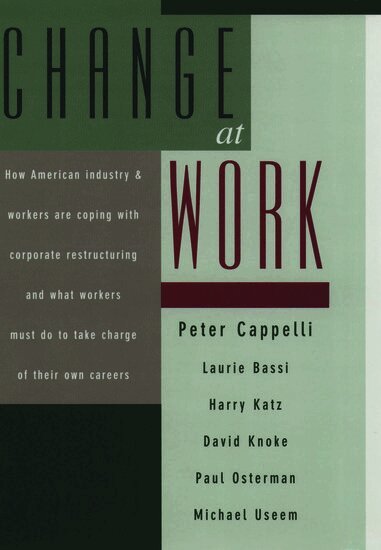
This book illuminates what is really happening in the American workplace. The contributors explain how the widespread restructuring of American firms--usually resulting in a reduction of the workforce to cut costs--has had a profound impact on the lives of workers.The book explains how the new relationship requires high skill levels, but does not provide training for them. Workers themselves now must take charge of their personal development instead of relying on their employers. Their alienation from their firms is compounded by the large disparity between the pay of top managers and that of workers. The future is uncertain, but the authors argue that the traditional relationship between employer and employees will continue to erode.
E-bok
PDF, Engelska, 1997327 kr
Läs direkt efter köp
A far-reaching transformation is taking place in the US in the relationship between employers and employees. The lessons learned from Japan and from "best practice" companies like IBM about how job security, training, and internal development can improve employee commitment and performance have given way to a new set of lessons about how companies can redue fixed costs, increase flexibility, and improve performance by eliminating the elaborate employment systems that prepared employees for long careers in the company.Where the old arrangement protected employees from outside market forces, the new ones drag the market right back in through downsizing, contingent workforces, hiring on the outside for new skills, and compensation contingent on overall organizational performance. New work systems that reengineer processes and empower employees "flatten" the organizational chart, cutting management jobs in particular and reducing opportunities for career development. The new arrangements shift many of the risks of business from the firm to the employees and make employees, rather than employers, responsible for developing their own skills and careers. They also increase the demands placed on workers while reducing what they receive back for their efforts. While morale is down and stress is up, employee performance seems to be rising largely because of fear driven by the shortage of good jobs.Change at Work explores the theme that employees have paid the price for the widespread restructuring of American firms as illustrated by reduced security, greater effort and hours, and reduced morale. In this important study--commissioned by the National Planning Asociation''s Committee on New American Realities--the authors consider how individuals and employers need to adapt to the new arrangements as well as the implicatioons for important policy issues such as how skills will be developed where the attachment to the firms is sharply reduced.The future is uncertain, but the authors argue that the traditional relationship between employer and employee will continue to erode, making this work essential reading for managers concerned with the profound impact corporate restructuring has had on the lives of workers.