Laurie S. Starkey – författare
641 kr
Läs direkt efter köp
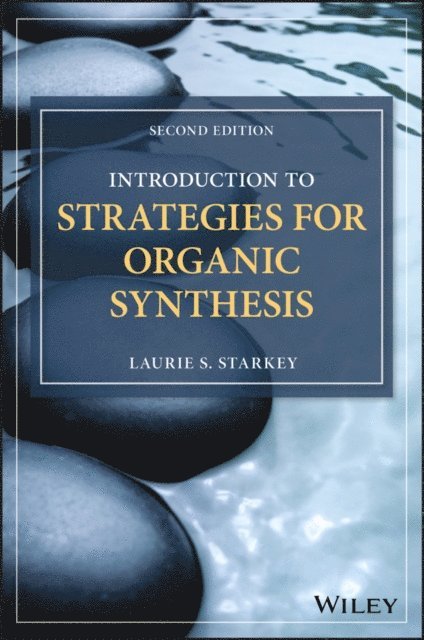
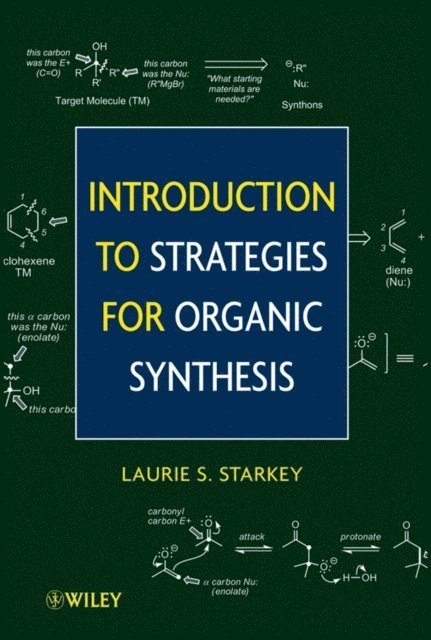
Organic synthesis is an advanced but important field of organic chemistry, however resources for advanced undergraduates and graduate students moving from introductory organic chemistry courses to organic synthesis research are scarce. Introduction to Strategies for Organic Synthesis is designed to fill this void, teaching practical skills for making logical retrosynthetic disconnections, while reviewing basic organic transformations, reactions, and reactivities.
Divided into seven parts that include sections on Retrosynthesis and Protective Groups; Overview of Organic Transformations; Synthesis of Monofunctional Target Molecules; Synthesis of Target Molecules with Two Functional Groups; Synthesis of Aromatic Target Molecules; Synthesis of Compounds Containing Rings; and Predicting and Controlling Stereochemistry, the book covers everything students need to successfully perform retrosynthetic analyses of target molecule synthesis.
Starting with a review of functional group transformations, reagents, and reaction mechanisms, the book demonstrates how to plan a synthesis, explaining functional group analysis and strategic disconnections. Incorporating a review of the organic reactions covered, it also demonstrates each reaction from a synthetic chemist''s point of view, to provide students with a clearer understanding of how retrosynthetic disconnections are made.
Including detailed solutions to over 300 problems, worked-through examples and end-of-chapter comprehension problems, Introduction to Strategies for Organic Synthesis serves as a stepping stone for students with an introductory knowledge of organic chemistry looking to progress to more advanced synthetic concepts and methodologies.
870 kr
Läs direkt efter köp
Bridging the Gap Between Organic Chemistry Fundamentals and Advanced Synthesis Problems
Introduction to Strategies of Organic Synthesis bridges the knowledge gap between sophomore-level organic chemistry and senior-level or graduate-level synthesis to help students more easily adjust to a synthetic chemistry mindset. Beginning with a thorough review of reagents, functional groups, and their reactions, this book prepares students to progress into advanced synthetic strategies. Major reactions are presented from a mechanistic perspective and then again from a synthetic chemist’s point of view to help students shift their thought patterns and teach them how to imagine the series of reactions needed to reach a desired target molecule.
Success in organic synthesis requires not only familiarity with common reagents and functional group interconversions, but also a deep understanding of functional group behavior and reactivity. This book provides clear explanations of such reactivities and explicitly teaches students how to make logical disconnections of a target molecule.
This new Second Edition of Introduction to Strategies for Organic Synthesis:
Reviews fundamental organic chemistry concepts including functional group transformations, reagents, stereochemistry, and mechanisms Explores advanced topics including protective groups, synthetic equivalents, and transition-metal mediated coupling reactions Helps students envision forward reactions and backwards disconnections as a matter of routine Gives students confidence in performing retrosynthetic analyses of target molecules Includes fully-worked examples, literature-based problems, and over 450 chapter problems with detailed solutions Provides clear explanations in easy-to-follow, student-friendly language Focuses on the strategies of organic synthesis rather than a catalogue of reactions and modern reagentsThe prospect of organic synthesis can be daunting at the outset, but this book serves as a useful stepping stone to refresh existing knowledge of organic chemistry while introducing the general strategies of synthesis. Useful as both a textbook and a bench reference, this text provides value to graduate and advanced undergraduate students alike.
870 kr
Läs direkt efter köp
Bridging the Gap Between Organic Chemistry Fundamentals and Advanced Synthesis Problems
Introduction to Strategies of Organic Synthesis bridges the knowledge gap between sophomore-level organic chemistry and senior-level or graduate-level synthesis to help students more easily adjust to a synthetic chemistry mindset. Beginning with a thorough review of reagents, functional groups, and their reactions, this book prepares students to progress into advanced synthetic strategies. Major reactions are presented from a mechanistic perspective and then again from a synthetic chemist’s point of view to help students shift their thought patterns and teach them how to imagine the series of reactions needed to reach a desired target molecule.
Success in organic synthesis requires not only familiarity with common reagents and functional group interconversions, but also a deep understanding of functional group behavior and reactivity. This book provides clear explanations of such reactivities and explicitly teaches students how to make logical disconnections of a target molecule.
This new Second Edition of Introduction to Strategies for Organic Synthesis:
Reviews fundamental organic chemistry concepts including functional group transformations, reagents, stereochemistry, and mechanisms Explores advanced topics including protective groups, synthetic equivalents, and transition-metal mediated coupling reactions Helps students envision forward reactions and backwards disconnections as a matter of routine Gives students confidence in performing retrosynthetic analyses of target molecules Includes fully-worked examples, literature-based problems, and over 450 chapter problems with detailed solutions Provides clear explanations in easy-to-follow, student-friendly language Focuses on the strategies of organic synthesis rather than a catalogue of reactions and modern reagentsThe prospect of organic synthesis can be daunting at the outset, but this book serves as a useful stepping stone to refresh existing knowledge of organic chemistry while introducing the general strategies of synthesis. Useful as both a textbook and a bench reference, this text provides value to graduate and advanced undergraduate students alike.
798 kr
Skickas inom 5-8 vardagar
626 kr
Läs direkt efter köp
626 kr
Läs direkt efter köp
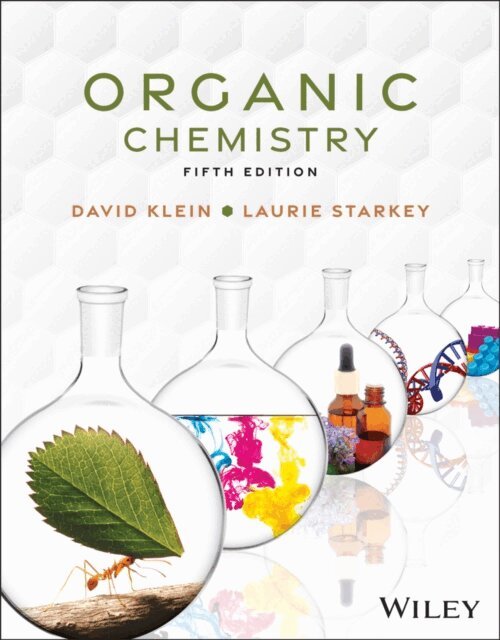
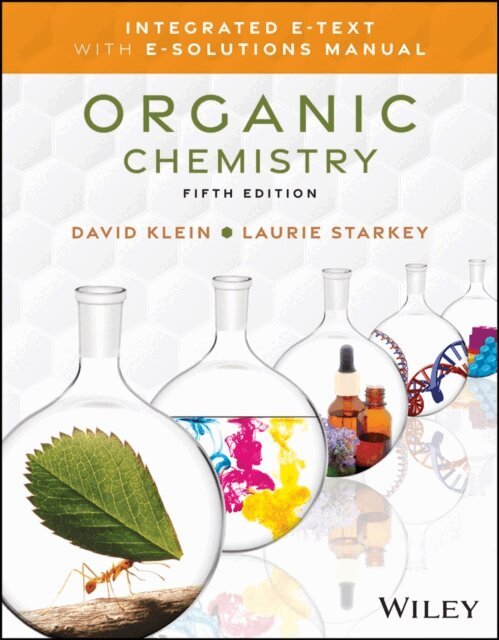
In the 5th Edition of Organic Chemistry, David Klein continues to set the standard for how students learn by building on his innovative SkillBuilder approach - enabling learners to effectively grasp the complex language of organic chemistry through structured, guided practice.
Joining David Klein for this edition as an author is longtime collaborator Laurie Starkey (Cal Poly Pomona), whose classroom creativity, digital expertise, and positive teaching style bring a fresh perspective to Organic Chemistry. Her contributions enhance the proven SkillBuilder method, infusing it with new pedagogically relevant photo examples that make the material even more accessible and engaging for students.
The new edition is thoughtfully updated with extensive content revisions, refined SkillBuilders, and fresh examples—all shaped by valuable feedback from instructors. It also introduces a wider range of diverse examples, vivid illustrations, and practical applications tailored to both Organic Chemistry I and II. Together, Klein and Starkey have crafted a comprehensive and dynamic resource that blends proven techniques with fresh insights, ensuring the best learning experience for students.