Lawrence Lessig – författare
Visar alla böcker från författaren . Handla med fri frakt och snabb leverans.
19 produkter
19 produkter
E-bok
Engelska, 2019101 kr
Läs direkt efter köp
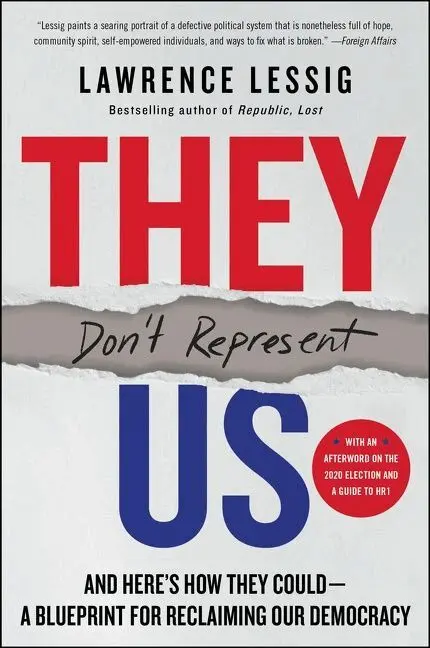
WITH A NEW FOREWORD ABOUT THE 2020 ELECTION"This urgent book offers not only a clear-eyed explanation of the forces that broke our politics, but a thoughtful and, yes, patriotic vision of how we create a government that''s truly by and for the people."—DAVID DALEY, bestselling author of Ratf**ked and UnriggedIn the vein of On Tyranny and How Democracies Die, the bestselling author of Republic, Lost argues with insight and urgency that our democracy no longer represents us and shows that reform is both necessary and possible.America''s democracy is in crisis. Along many dimensions, a single flaw—unrepresentativeness—has detached our government from the people. And as a people, our fractured partisanship and ignorance on critical issues drive our leaders to stake out ever more extreme positions.In They Don''t Represent Us, Harvard law professor Lawrence Lessig charts the way in which the fundamental institutions of our democracy, including our media, respond to narrow interests rather than to the needs and wishes of the nation''s citizenry. But the blame does not only lie with "them"—Washington''s politicians and power brokers, Lessig argues. The problem is also "us." "We the people" are increasingly uninformed about the issues, while ubiquitous political polling exacerbates the problem, reflecting and normalizing our ignorance and feeding it back into the system as representative of our will.What we need, Lessig contends, is a series of reforms, from governmental institutions to the public itself, including:- A move immediately to public campaign funding, leading to more representative candidates- A reformed Electoral College, that gives the President a reason to represent America as a whole- A federal standard to end partisan gerrymandering in the states - A radically reformed Senate- A federal penalty on states that don''t secure to their people an equal freedom to vote- Institutions that empower the people to speak in an informed and deliberative wayA soul-searching and incisive examination of our failing political culture, this nonpartisan call to arms speaks to every citizen, offering a far-reaching platform for reform that could save our democracy and make it work for all of us.
Häftad, Engelska, 2005
339 kr
Skickas inom 3-6 vardagar
Häftad, Engelska, 2009
339 kr
Skickas inom 3-6 vardagar
E-bok
PDF, Engelska, 2019279 kr
Läs direkt efter köp
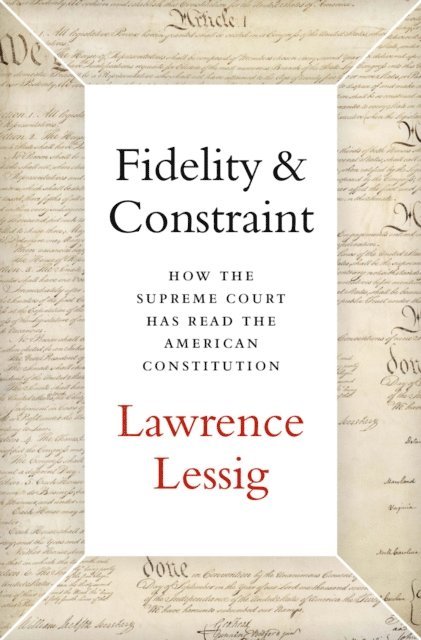
The fundamental fact about our Constitution is that it is old -- the oldest written constitution in the world. The fundamental challenge for interpreters of the Constitution is how to read that old document over time. In Fidelity & Constraint, legal scholar Lawrence Lessig explains that one of the most basic approaches to interpreting the constitution is the process of translation. Indeed, some of the most significant shifts in constitutional doctrine are products of the evolution of the translation process over time. In every new era, judges understand their translations as instances of "interpretive fidelity," framed within each new temporal context. Yet, as Lessig also argues, there is a repeatedly occurring countermove that upends the process of translation. Throughout American history, there has been a second fidelity in addition to interpretive fidelity: what Lessig calls "fidelity to role." In each of the cycles of translation that he describes, the role of the judge -- the ultimate translator -- has evolved too. Old ways of interpreting the text now become illegitimate because they do not match up with the judge''s perceived role. And when that conflict occurs, the practice of judges within our tradition has been to follow the guidance of a fidelity to role. Ultimately, Lessig not only shows us how important the concept of translation is to constitutional interpretation, but also exposes the institutional limits on this practice. The first work of both constitutional and foundational theory by one of America''s leading legal minds, Fidelity & Constraint maps strategies that both help judges understand the fundamental conflict at the heart of interpretation whenever it arises and work around the limits it inevitably creates.
279 kr
Läs direkt efter köp
The fundamental fact about our Constitution is that it is old -- the oldest written constitution in the world. The fundamental challenge for interpreters of the Constitution is how to read that old document over time. In Fidelity & Constraint, legal scholar Lawrence Lessig explains that one of the most basic approaches to interpreting the constitution is the process of translation. Indeed, some of the most significant shifts in constitutional doctrine are products of the evolution of the translation process over time. In every new era, judges understand their translations as instances of "interpretive fidelity," framed within each new temporal context. Yet, as Lessig also argues, there is a repeatedly occurring countermove that upends the process of translation. Throughout American history, there has been a second fidelity in addition to interpretive fidelity: what Lessig calls "fidelity to role." In each of the cycles of translation that he describes, the role of the judge -- the ultimate translator -- has evolved too. Old ways of interpreting the text now become illegitimate because they do not match up with the judge''s perceived role. And when that conflict occurs, the practice of judges within our tradition has been to follow the guidance of a fidelity to role. Ultimately, Lessig not only shows us how important the concept of translation is to constitutional interpretation, but also exposes the institutional limits on this practice. The first work of both constitutional and foundational theory by one of America''s leading legal minds, Fidelity & Constraint maps strategies that both help judges understand the fundamental conflict at the heart of interpretation whenever it arises and work around the limits it inevitably creates.
Inbunden, Engelska, 2019
369 kr
Skickas inom 3-6 vardagar
Inbunden, Engelska, 2018
203 kr
Skickas inom 5-8 vardagar
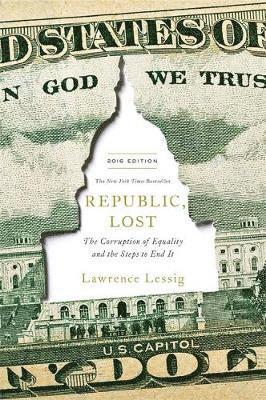
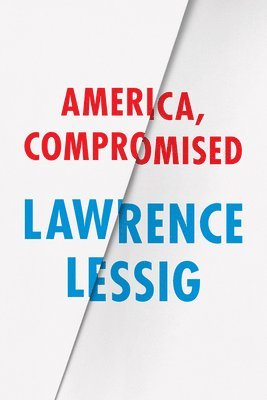
“There is not a single American awake to the world who is comfortable with the way things are.” So begins Lawrence Lessig's sweeping indictment of contemporary American institutions and the corruption that besets them. We can all see it—from the selling of Congress to special interests to the corporate capture of the academy. Something is wrong. It’s getting worse. And it’s our fault. What Lessig shows, brilliantly and persuasively, is that we can’t blame the problems of contemporary American life on bad people, as our discourse all too often tends to do. Rather, he explains, “We have allowed core institutions of America’s economic, social, and political life to become corrupted. Not by evil souls, but by good souls. Not through crime, but through compromise.” Every one of us, every day, making the modest compromises that seem necessary to keep moving along, is contributing to the rot at the core of American civic life. Through case studies of Congress, finance, the academy, the media, and the law, Lessig shows how institutions are drawn away from higher purposes and toward money, power, quick rewards—the first steps to corruption. Lessig knows that a charge so broad should not be levied lightly, and that our instinct will be to resist it. So he brings copious, damning detail gleaned from years of research, building a case that is all but incontrovertible: America is on the wrong path. If we don’t acknowledge our own part in that, and act now to change it, we will hand our children a less perfect union than we were given. It will be a long struggle. This book represents the first steps.
Inbunden, Engelska, 2024
211 kr
Skickas inom 5-8 vardagar
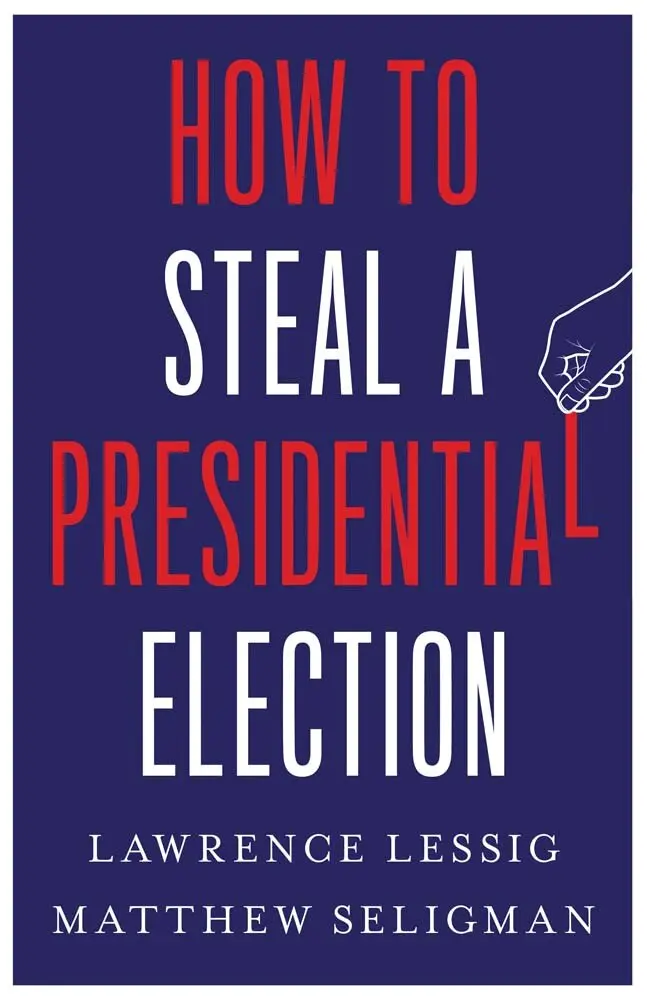
From two distinguished experts on election law, an alarming look at how the American presidency could be stolen—by entirely legal means “Their new book asks whether a second Trump attempt to subvert democracy could succeed. Their answer makes for uncomfortable reading.”—Ed Pilkington, The Guardian Even in the fast and loose world of the Trump White House, the idea that a couple thousand disorganized protestors storming the U.S. Capitol might actually prevent a presidential succession was farfetched. Yet perfectly legal ways of overturning election results actually do exist, and they would allow a political party to install its own candidate in place of the true winner. Lawrence Lessig and Matthew Seligman work through every option available for subverting a presumptively legitimate result—from vice-presidential intervention to election decertification and beyond. While many strategies would never pass constitutional muster, Lessig and Seligman explain how some might. They expose correctable weaknesses in the system, including one that could be corrected only by the Supreme Court. Any strategy aimed at hacking a presidential election is a threat to democracy. This book is a clarion call to shore up the insecure system for electing the president before American democracy is forever compromised.
Häftad, Engelska, 2002
250 kr
Skickas inom 3-6 vardagar
Häftad, Engelska, 2006
468 kr
Skickas inom 3-6 vardagar
There's a common belief that cyberspace cannot be regulated-that it is, in its very essence, immune from the government's (or anyone else's) control. Code , first published in 2000, argues that this belief is wrong. It is not in the nature of cyberspace to be unregulable cyberspace has no nature." It only has code-the software and hardware that make cyberspace what it is. That code can create a place of freedom-as the original architecture of the Net did-or a place of oppressive control. Under the influence of commerce, cyberspace is becoming a highly regulable space, where behaviour is much more tightly controlled than in real space. But that's not inevitable either. We can-we must-choose what kind of cyberspace we want and what freedoms we will guarantee. These choices are all about architecture: about what kind of code will govern cyberspace, and who will control it. In this realm, code is the most significant form of law, and it is up to lawyers, policymakers, and especially citizens to decide what values that code embodies. Since its original publication, this seminal book has earned the status of a minor classic. This second edition, or Version 2.0, has been prepared through the author's wiki, a web site that allows readers to edit the text, making this the first reader-edited revision of a popular book.
E-bok
Engelska, 200499 kr
Läs direkt efter köp
Lawrence Lessig, “the most important thinker on intellectual property in the Internet era” (The New Yorker), masterfully argues that never before in human history has the power to control creative progress been so concentrated in the hands of the powerful few, the so-called Big Media. Never before have the cultural powers- that-be been able to exert such control over what we can and can’t do with the culture around us. Our society defends free markets and free speech; why then does it permit such top-down control? To lose our long tradition of free culture, Lawrence Lessig shows us, is to lose our freedom to create, our freedom to build, and, ultimately, our freedom to imagine.
E-bok
Engelska, 2002104 kr
Läs direkt efter köp
The Internet revolution has come. Some say it has gone. In The Future of Ideas, Lawrence Lessig explains how the revolution has produced a counterrevolution of potentially devastating power and effect. Creativity once flourished because the Net protected a commons on which widest range of innovators could experiment. But now, manipulating the law for their own purposes, corporations have established themselves as virtual gatekeepers of the Net while Congress, in the pockets of media magnates, has rewritten copyright and patent laws to stifle creativity and progress.Lessig weaves the history of technology and its relevant laws to make a lucid and accessible case to protect the sanctity of intellectual freedom. He shows how the door to a future of ideas is being shut just as technology is creating extraordinary possibilities that have implications for all of us. Vital, eloquent, judicious and forthright, The Future of Ideas is a call to arms that we can ill afford to ignore.From the Trade Paperback edition.
Häftad, Engelska, 2008
334 kr
Skickas inom 10-15 vardagar
Lawrence Lessig, the reigning authority on intellectual property in the Internet age, spotlights the newest and possibly the most harmful culture war-a war waged against our children and others who create and consume art. Copyright laws have ceased to perform their original, beneficial role: protecting artists' creations while allowing them to build on previous creative works. In fact, our system now criminalises those very actions. By embracing "read-write culture," which allows its users to create art as readily as they consume it, we can ensure that creators get the support-artistic, commercial, and ethical-that they deserve and need. Indeed, we can already see glimmers of a new hybrid economy that combines the profit motives of traditional business with the "sharing economy" evident in such websites as Wikipedia and YouTube. The hybrid economy will become ever more prominent in every creative realm-from news to music-and Lessig shows how we can and should use it to benefit those who make and consume culture. Remix is an urgent, eloquent plea to end a war that harms our children and other intrepid creative users of new technologies.It also offers an inspiring vision of the post-war world where enormous opportunities await those who view art as a resource to be shared openly rather than a commodity to be hoarded.
E-bok
Engelska, 2008271 kr
Läs direkt efter köp
This book is available as open access through the Bloomsbury Open Access programme and is available on www.bloomsburycollections.com.Lawrence Lessig, the reigning authority on intellectual property in the Internet age, spotlights the newest and possibly the most harmful culture war-a war waged against our children and others who create and consume art. Copyright laws have ceased to perform their original, beneficial role: protecting artists'' creations while allowing them to build on previous creative works. In fact, our system now criminalises those very actions. By embracing "read-write culture," which allows its users to create art as readily as they consume it, we can ensure that creators get the support-artistic, commercial, and ethical-that they deserve and need. Indeed, we can already see glimmers of a new hybrid economy that combines the profit motives of traditional business with the "sharing economy" evident in such websites as Wikipedia and YouTube. The hybrid economy will become ever more prominent in every creative realm-from news to music-and Lessig shows how we can and should use it to benefit those who make and consume culture.Remix is an urgent, eloquent plea to end a war that harms our children and other intrepid creative users of new technologies. It also offers an inspiring vision of the post-war world where enormous opportunities await those who view art as a resource to be shared openly rather than a commodity to be hoarded.
E-bok
Engelska, 200888 kr
Läs direkt efter köp
The reigning authority on intellectual property in the Internet age, Lawrence Lessig spotlights the newest and possibly the most harmful culture war?a war waged against those who create and consume art. America?s copyright laws have ceased to perform their original, beneficial role: protecting artists? creations while allowing them to build on previous creative works. In fact, our system now criminalizes those very actions. Remix is an urgent, eloquent plea to end a war that harms every intrepid, creative user of new technologies. It also offers an inspiring vision of the postwar world where enormous opportunities await those who view art as a resource to be shared openly rather than a commodity to be hoarded.
Inbunden, Engelska, 2015
353 kr
Skickas inom 5-8 vardagar
Häftad, Engelska, 2015
245 kr
Skickas inom 5-8 vardagar
Häftad, Norska, 2015
241 kr
Skickas inom 5-8 vardagar